How Many Exercises per Muscle Group Do You Need?
How many exercises per muscle group: 1–2 per workout and 2–4 per week for most lifters. Why weekly sets decide it, and which pairings cover a muscle.
- Published
- Reading time
- 6 min
- By
- LiftDecode
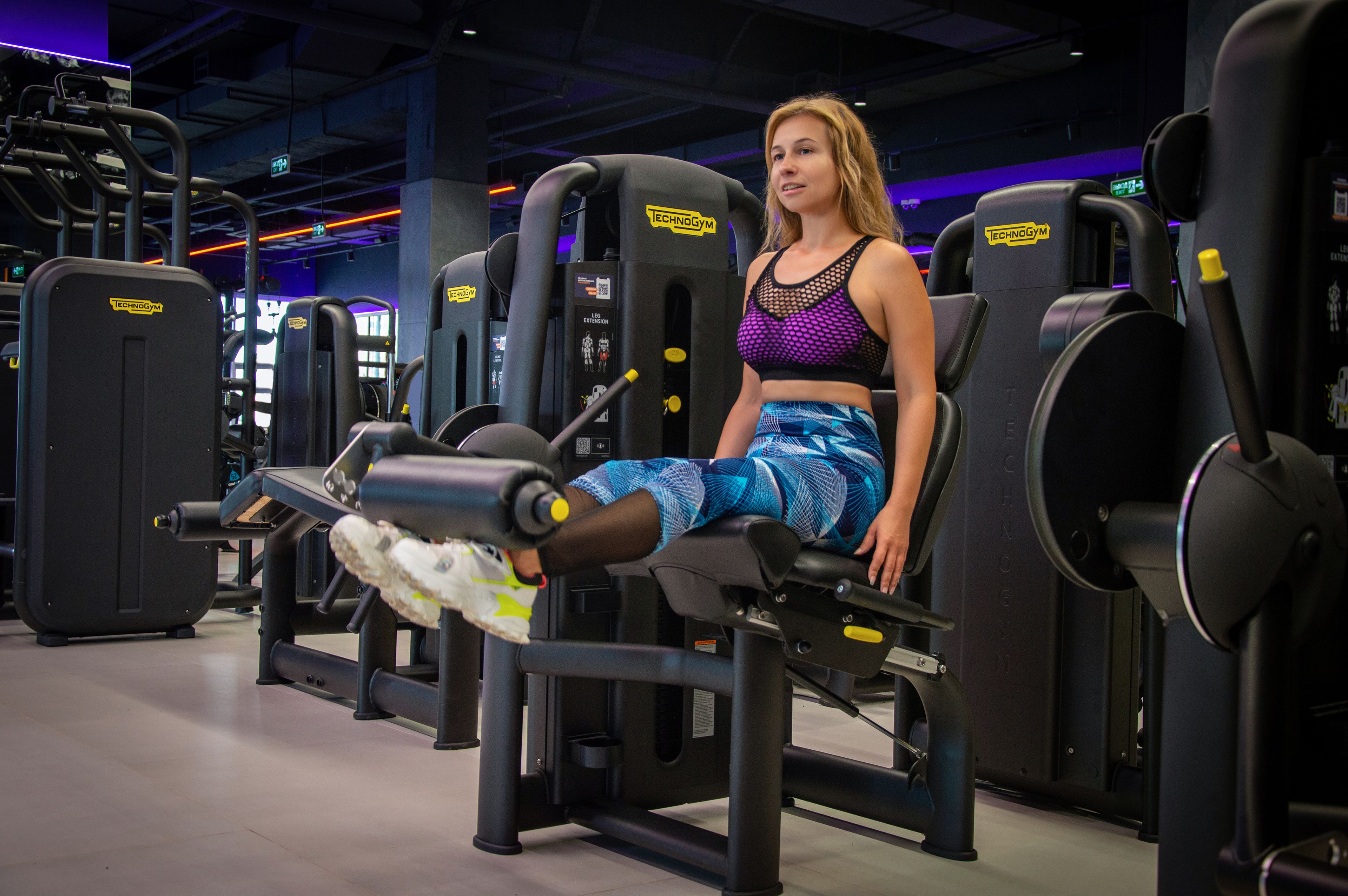
Most lifters need 1–2 exercises per muscle group per workout and 2–4 per week. Weekly hard sets drive growth, so choose enough exercises to deliver about 10–20 sets per muscle from different angles. More exercises usually spread those sets too thin for you to progress. For more help building a routine, see the hypertrophy programming hub.
How many exercises per muscle group do you need?
Usually 1–2 per workout and 2–4 per week. Work backward from weekly sets: about 10–20 hard sets per muscle, split into 3–4 sets per exercise, gives you 3–5 exercise slots a week—often the same 2–3 exercises repeated across sessions. For a deeper look at volume, read how many sets per muscle group per week.
At least 10 weekly sets per muscle appear necessary to maximize growth, while 12–20 is a useful range for trained men. A minimum of 4 sets per week can still produce gains, so you can scale the dose to your experience and schedule (Schoenfeld, Ogborn & Krieger, 2017; Baz-Valle et al., 2022; Iversen et al., 2021).
For example, 12 weekly chest sets at 3 sets per exercise gives you four slots:
- Bench press: 3 sets, twice a week.
- Incline dumbbell press: 3 sets, twice a week.
- Total: 12 weekly sets across two exercises.
If you’re a beginner, one compound exercise per muscle in a session is often enough. The exercise count tends to rise with experience because you can benefit from more weekly sets, not because every muscle needs a long list of movements.
Why use more than one exercise for a muscle?
Because one lift rarely grows every part of a muscle equally. Ten weeks of squats alone didn’t grow the rectus femoris—the quad muscle that also crosses the hip—or the hamstrings, while seated leg curls and overhead triceps extensions produced greater growth than their comparison exercises.
- In a 12-week study, varying quad exercises grew all four heads; groups that kept one unchanging exercise showed no significant growth in some regions (Fonseca et al., 2014).
- After 10 weeks of full or half squats, rectus femoris and hamstring volumes were unchanged (Kubo et al., 2019).
- Hamstring volume increased 14% with seated curls versus 9% with lying curls (Maeo et al., 2021).
- Triceps volume increased 19.9% with overhead extensions versus 13.9% with the arm at the side, as in a pushdown (Maeo et al., 2023).
Use pairings that load a muscle through different positions. Squat or leg press with leg extensions; a hip hinge with seated leg curls; pushdowns with overhead extensions. These pairings can train muscle at a long muscle length, meaning the muscle is stretched while producing force. For practical ideas on quad and hamstring training, see how to get bigger legs.

Can too many exercises hurt your progress?
Yes. A 2022 systematic review found that planned variation can help, but redundant exercises and frequent, random rotation may blunt gains. Six chest exercises of two sets each can leave too little work on each movement to make your progress easy to track.
The review covered eight studies with 241 young men; it found systematic variation enhanced regional growth and strength, while excessive random variation may compromise gains (Kassiano et al., 2022). If you do only 1–2 sets per exercise, week-to-week improvement can be hard to see, and your load may stop rising. Keep the focus on progressive overload when you can't add weight.
The fifth and sixth exercise for the same muscle also happen when you’re tired, which can make your sets sloppy. If the weekly set target is already covered, put those sets into your first two exercises and progress them.
How many exercises should you do per workout?
Usually 4–8 exercises in total, depending on your split. LiftDecode’s recommendations are 5–7 for a full-body session, 4–6 for upper/lower or push/pull/legs, and 4–6 for a body-part session focused on one or two muscles.
- Full-body: 5–7 exercises, usually one for each major muscle group.
- Upper/lower or push/pull/legs: 4–6 exercises.
- Body-part split: 4–6 exercises for one or two muscles.
In one study, seven exercises took trained men about 13 minutes at one set each, 40 minutes at three sets, or 68 minutes at five sets (Schoenfeld et al., 2019). Put multi-joint lifts first when time is short; Iversen and colleagues recommend prioritizing bilateral multi-joint exercises (Iversen et al., 2021). If your session keeps running long, use this guide to workout length.
How often should you change exercises?
Rarely, and on purpose. Keep main exercises for at least one 6–12-week training block, a LiftDecode recommendation, and change one when it stalls, hurts, or leaves a region under-trained. Random weekly rotation is the “muscle confusion” trap.
- Keep the exercises you can perform consistently and track.
- Swap one when it stalls, hurts, or misses a region you want to train.
- Choose a similar movement, such as a dumbbell incline press for a barbell incline press, so the training stimulus and log stay comparable.
A 2022 review supports systematic variation and cautions that frequent, excessive changes may hinder adaptation (Kassiano et al., 2022). If you keep changing the plan before you can judge progress, program hopping may be the bottleneck.
Exercises per muscle by experience, based on weekly hard sets at roughly 3–4 sets per exercise:
| Lifter | Weekly hard sets per muscle | Exercises per muscle per workout | Different exercises per muscle per week | Example (quads) |
|---|---|---|---|---|
| Beginner (first year) | ~6–10 | 1 | 1–2 | Squat twice a week |
| Intermediate | 10–20 | 1–2 | 2–3 | Squat + leg extension; leg press on a second day |
| Advanced or lagging muscle | 15–20+ | 2–3 | 3–4 | Squat, leg press, leg extension, split squat across two days |
| Short on time | 4+ | 1 (multi-joint) | 1–2 | Leg press or squat only |
The set ranges reflect findings on weekly volume (Schoenfeld et al., 2017; Baz-Valle et al., 2022; Iversen et al., 2021). The exercise counts and examples are LiftDecode recommendations; the leg-extension pairing reflects research on squat coverage.
If you’ve got two or three good exercises per muscle and still aren’t growing, exercise choice may not be the bottleneck. Find out what’s really stalling you and identify which part of your training needs attention.
FAQ
Is 4 exercises per muscle group enough?
Per week, yes; for most lifters, that’s plenty. Per workout, it’s usually more than you need: four exercises at 3–4 sets each means 12–16 sets in one session. Split the work over two sessions to keep later sets higher quality.
Are 7 exercises per workout too much?
Not automatically. Seven exercises can make sense on a full-body day, with one for each major muscle group; in one study, seven exercises of three sets took about 40 minutes (Schoenfeld et al., 2019). Seven exercises for a single muscle group is too much for most lifters.
Is one exercise per muscle enough?
For a beginner, yes. Later, one lift can leave parts of a muscle under-trained: 10 weeks of squats didn’t grow the rectus femoris or hamstrings (Kubo et al., 2019). Add a second exercise that trains the muscle at a different length or joint angle.
Should I do the same exercises every week?
Mostly, yes. Keeping your main exercises for 6–12 weeks gives you time to add weight and see progress. A 2022 review found that random, frequent exercise changes can blunt gains, so change an exercise when it stalls or hurts, rather than just because you’re bored.
Written and maintained by LiftDecode. Training and nutrition education for healthy adults, not medical advice — if you have a health condition or an injury, talk to a professional who can examine you.