How to Build Upper Chest: What Actually Moves It
How to build upper chest muscle: why it lags, the incline angle that works best, whether push-ups help, and a weekly plan with exercises, sets and reps.
- Published
- Reading time
- 6 min
- By
- LiftDecode

To build your upper chest, make incline pressing on a 30–45° bench your first chest exercise twice a week, for about 6 hard sets, and keep some flat pressing for the rest of your chest. In a training study, incline pressing grew the upper chest more than flat bench. The rest is dose, effort, and progression.
Why is my upper chest not growing?
For a lifter who already trains chest, the usual causes are pressing mostly flat, using an incline so steep that the shoulders take over, doing too few hard chest sets, and stopping sets far from failure. Genetics and muscle shape come last. The upper chest is the clavicular head of the pectoralis major, which starts at the collarbone and helps raise your arm forward. If your progress has stalled more broadly, how to gain muscle when it's stopped coming easy can help you check the larger picture.
| Rank | Cause | Self-check | Fix |
|---|---|---|---|
| 1 | Pressing mostly flat | Fewer than ~4 incline sets a week? | Incline press first, twice a week |
| 2 | Incline too steep | Bench above 45°, shoulders burning more than chest? | Lower to 30–45° |
| 3 | Too small a chest dose | Under ~10 hard chest sets a week? | 10–12 sets across 2 days |
| 4 | Easy sets, no progression | Same incline weight and reps for 2+ months? | Stop 0–2 reps from failure; add reps, then load |
| 5 | Whole body not growing | Bodyweight flat for months? | Fix intake first |
Angle is the easiest place to start because you can change it right away. Then check your weekly dose and effort; you can’t change your muscle’s shape.
Does incline pressing really build the upper chest more?
Yes. In an 8-week study of untrained men, incline bench pressing grew the upper chest significantly more than flat benching, while growth in the middle and lower chest was similar. Flat bench still builds the whole chest; incline adds more at the top.
- The training study compared 47 untrained men, with muscle thickness measured in 30. Participants trained once weekly, building from 4 to 6 sets of 8–12-rep maximum effort.
- The incline group pressed at 44° and had a greater upper-chest thickness increase than the flat bench and combined-training groups. Growth at middle and lower chest sites was similar across groups.
- All three groups gained similar isometric strength. The clavicular fibers run from the collarbone and help lift your arm forward and up, which incline pressing loads more. Keep one flat or low-incline press for the rest of your chest.
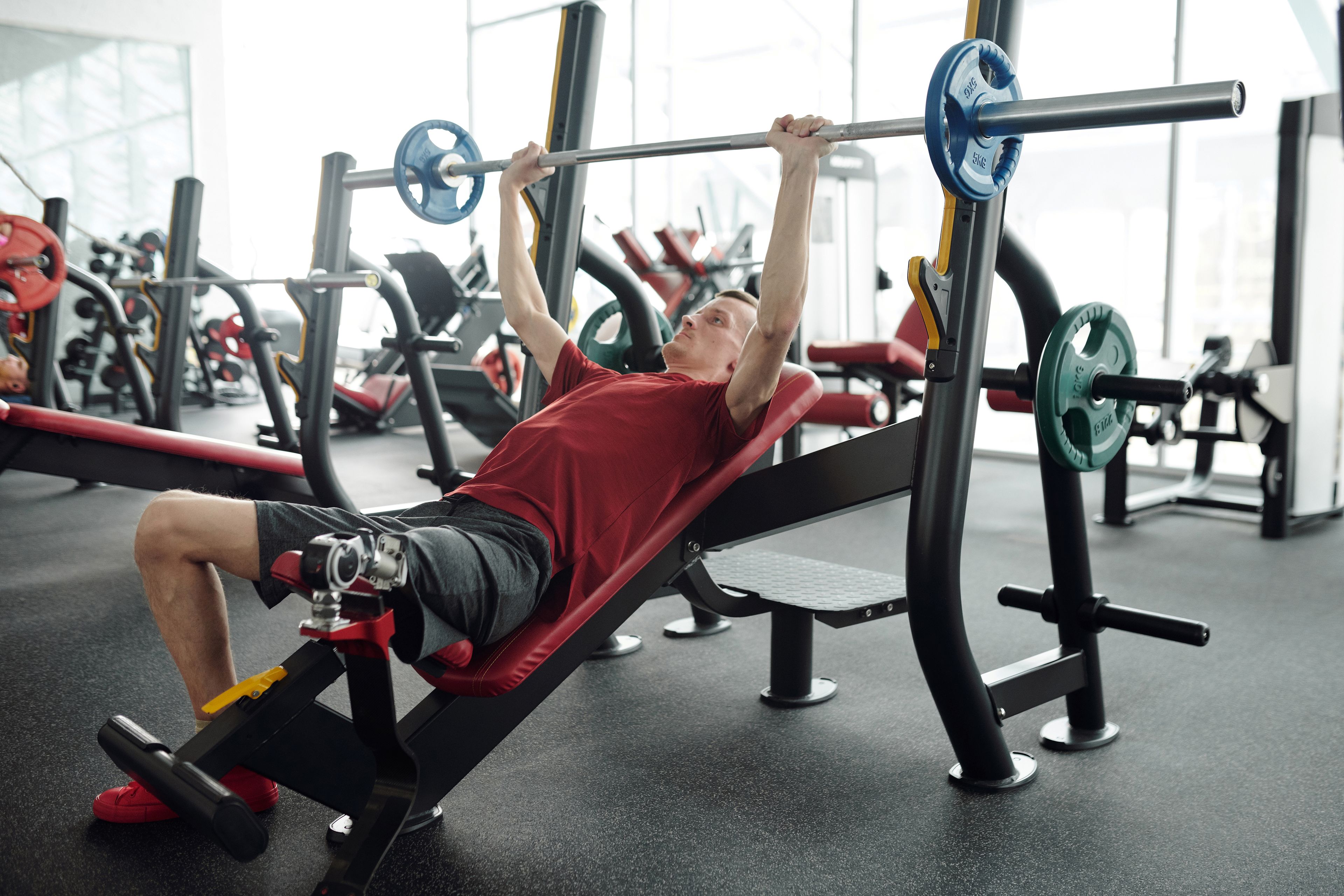
What incline angle is best for the upper chest?
Around 30–45°. Upper-chest muscle activity peaked at 30° in an EMG study of trained lifters, while steeper angles shifted more work to the front delts. The training study that measured growth used 44°, so either end of that range is a reasonable choice.
- In a study of 30 trained adults, muscle activity was measured at 0°, 15°, 30°, 45°, and 60°. Upper-pectoral activity was highest at 30°; middle and lower chest activity was highest at 0°.
- The front delts showed their highest activity at 60°. Above 45°, deltoid activity rose and pectoral performance fell. EMG measures muscle activity, not growth, but it helps rule out angles that turn the press into mostly shoulder work.
- Keep the angle consistent through a training block so you can track progress. Review bench press form if your setup makes it hard to keep the press on your chest.
Can push-ups build your upper chest?
Push-ups can build the chest about as well as bench pressing at a similar load, if your sets are hard. Feet-elevated push-ups are a reasonable home option for shifting the angle upward. A hundred easy push-ups a day is unlikely to do much for a trained lifter.
- In an 8-week study of 18 young men, push-ups adjusted to match 40% of bench 1RM produced similar chest and triceps thickness increases and strength gains to bench presses at that load.
- Effort matters: hypertrophy tends to increase as sets approach failure (Robinson et al., 2024). A few hard sets beat many easy ones.
- Feet elevation is a practical way to create an upward angle at home; it’s a programming choice based on the angle data, not a tested result from that push-up study.
What does a weekly upper-chest plan look like?
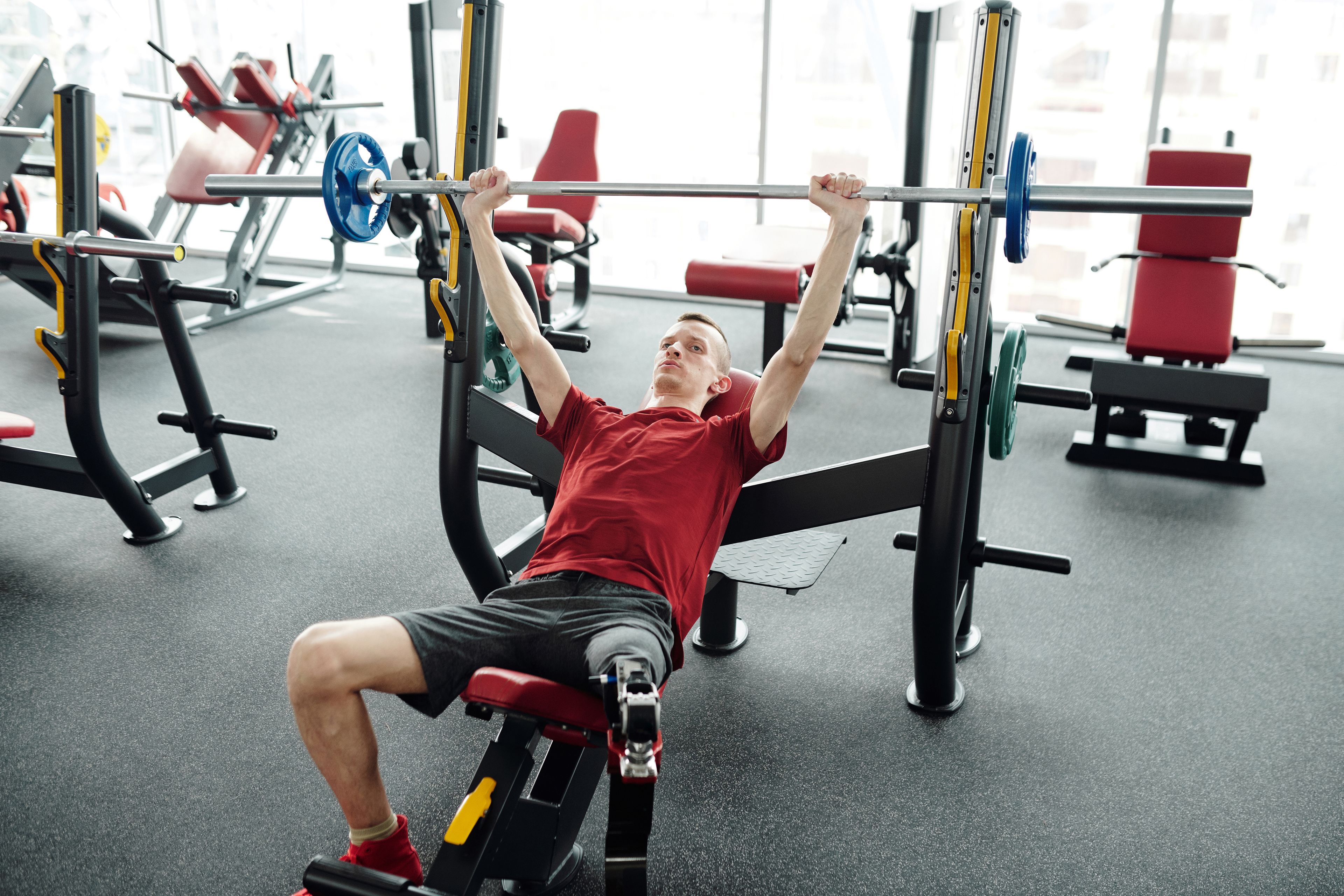
Start both of your weekly chest sessions with an incline press. About 6 hard incline sets and 10–12 chest sets total is a useful starting dose. Work mostly in 6–12 reps, finish sets 0–2 reps from failure, and add reps before weight.
- Day 1: Incline barbell or dumbbell press at 30–45°, 3–4 × 6–10; flat bench or machine press, 2–3 × 6–10.
- Day 2: Incline dumbbell or machine press, 3 × 8–12; incline fly or low-to-high cable fly, 2–3 × 12–15. Choose between free weights and machines based on what you can perform consistently.
- Use double progression: once you hit the top of the rep range on every set, add 5 lb (2.5 kg) to the barbell or move to the next dumbbell.
- Judge the result after 8–12 weeks. Each additional weekly set was associated with about 0.37% more growth in a volume analysis; if progress stalls while bodyweight is rising, try adding 2 weekly sets.
What if your upper chest still won't grow?
If you’ve pressed on an incline, hard and progressively, for three months without a change, look at whole-body factors: flat bodyweight, stalled main lifts, or short sleep. A lagging area can be the first sign of a general stall. Review why you're not gaining muscle anywhere.
- Compare your 7-day average bodyweight with eight weeks ago.
- Compare your incline press log with eight weeks ago.
- If incline pressing hurts your shoulder, lower the angle and load. If pain persists, see a physiotherapist or doctor.
A flat upper chest is often a symptom, not the disease. The LiftDecode diagnosis asks quick, one-tap questions about your training, eating, and recovery, ranks your real bottlenecks, and shows which suspects you can stop worrying about. If several things look stalled, find out what's actually limiting your growth.
FAQ
Is the upper chest hard to build?
It’s not unusually hard; it’s often under-trained. Many lifters press flat, which favors the middle and lower chest. In a training study, incline pressing grew the upper chest significantly more than flat bench (Chaves et al., 2020). Put incline pressing first, twice a week.
How do you hit the top of the chest?
Press on an incline of about 30–45°. Upper-chest muscle activity peaked at 30° in trained lifters, while steeper angles shifted work to the front delts (Rodríguez-Ridao et al., 2020). Incline dumbbell, barbell, or machine presses all work; choose one you can progress.
How long does it take to build upper chest?
Expect visible change over two to three months of consistent incline work, not weeks. In an 8-week study, beginners grew their upper chest measurably with incline pressing; experienced lifters may grow more slowly. Track your incline press log and take a monthly photo in the same light.
Will 100 push-ups a day build chest?
Only if they’re hard. Push-ups can build the chest about as well as bench pressing at a similar load (Kikuchi & Nakazato, 2017), but growth depends on sets taken close to failure. A few hard sets progressed over time beat a hundred easy reps.
Written and maintained by LiftDecode. Training and nutrition education for healthy adults, not medical advice — if you have a health condition or an injury, talk to a professional who can examine you.