Mechanical Tension: The Main Driver of Muscle Growth
Mechanical tension is the force muscle fibres feel under load, and it's the main trigger for growth. How to create more of it, and why weight isn't everything.
- Published
- Reading time
- 7 min
- By
- LiftDecode
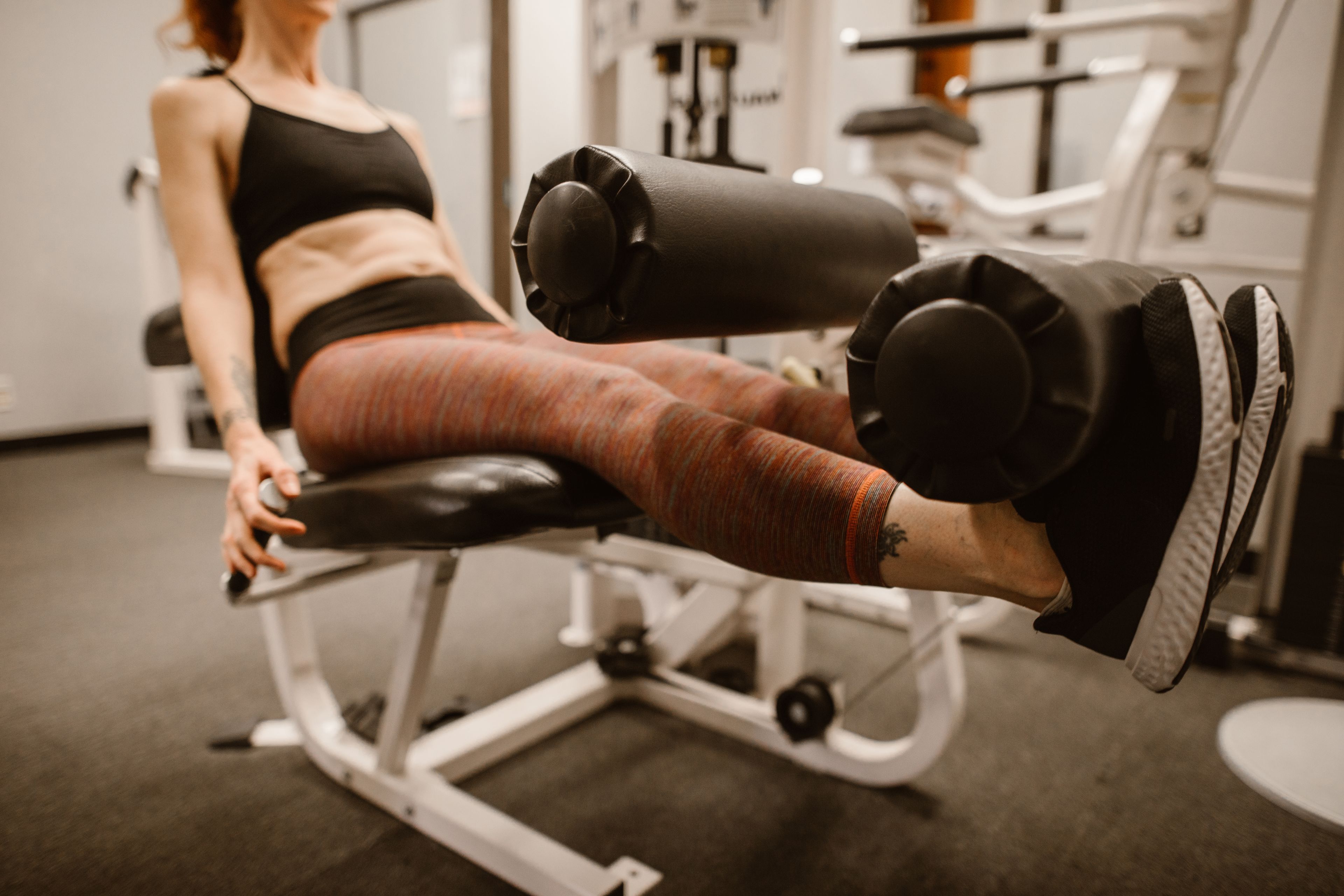
Mechanical tension is the pulling force muscle fibers experience when they contract against resistance. It’s considered the main trigger for muscle growth: fibers sense that force and switch on signaling that raises muscle protein synthesis. You create it with heavy loads or with lighter loads taken close to failure, and more of it when the muscle works at long lengths.
What is mechanical tension?
Mechanical tension is the force carried by the muscle fibers themselves as they contract against a load. It isn’t the weight on the bar: how much tension a fiber feels depends on how many fibers are working, how hard each is working, and the muscle’s position and range of motion.
Think of a muscle fiber like a rope under load. The weight tells you what the bar is carrying; it doesn’t tell you how much force each working fiber feels. Leverage and muscle length can make two exercises with the same weight load a muscle very differently.
- A fiber only experiences tension if it’s recruited to help with the movement.
- Overhead triceps extensions used 34–39% less weight than neutral-arm extensions, yet whole-triceps growth was +19.9% versus +13.9% (Maeo et al., 2023).
- The target is force on the working muscle, not a particular number on the plates. For related terms, browse more lifting terms.
Why is mechanical tension the main driver of muscle growth?
Because it’s a signal muscle is built to detect. Of the three classic candidates—tension, muscle damage, and metabolic stress—mechanical signals have the strongest case as the primary trigger, damage appears nonessential, and evidence for metabolites is indirect.
A 2010 review said all three factors can play a role (Schoenfeld, 2010). A later review identified mechanical signals as the prime candidates and muscle damage as probably nonessential; it described mTORC1, a growth-signaling switch inside the cell, as a key mechanism for protein synthesis (Wackerhage et al., 2019).
- Think of what hypertrophy is as the result; tension is a leading signal that helps drive it.
- In the gym, prioritize hard, full-range reps over chasing a pump or soreness.
- Muscle damage and metabolic stress may play roles, but neither is a better target than challenging the muscle.

How do you create mechanical tension in a set?
Recruit as many muscle fibers as possible and make them work hard. Heavy loads do that from the first rep; lighter loads get there near the end, as fatigue forces bigger motor units to join in. That’s why a set of 20 can build muscle if it ends close to failure.
A motor unit is a motor neuron and the muscle fibers it controls. The size principle means smaller motor units are recruited before larger ones as force demand rises (Henneman’s size principle). Heavy sets bring high-threshold units in early; on lighter sets, they join as fatigue builds.
- On a light set, stopping at 8 reps when you could do 20 skips the hard final reps.
- Across loads at or above about 30% of your one-rep max, growth can be similar when sets are hard (Schoenfeld et al., 2021).
- Growth tends to increase as sets end closer to failure (Robinson et al., 2024).
- See how many reps build muscle for more on choosing a rep range.
| Lever | Why it raises tension | Evidence | In practice |
|---|---|---|---|
| Heavier load | Recruits high-threshold motor units from the first rep | Heavy and moderate loads can both grow muscle when sets are hard (Schoenfeld et al., 2021) | 5–10 reps on compound lifts |
| Closer to failure | Fatigue brings bigger motor units into light and moderate sets | Growth rises as sets end closer to failure (Robinson et al., 2024) | End most sets with 0–3 reps left |
| Longer muscle length | The muscle works while stretched | Seated versus prone leg curls: +14% versus +9%; overhead versus neutral triceps: +19.9% versus +13.9% (Maeo et al., 2021, Maeo et al., 2023) | Seated curls, overhead extensions, deep squats, RDLs |
| Full, controlled reps | Keeps the load on the muscle through the range | LiftDecode guidance | Avoid bouncing out of the bottom; keep your range as load rises |
| Progression over time | The same tension stops being a new signal | LiftDecode guidance | Add reps, then load |
Does training at long muscle lengths add more tension?
It appears to. When an exercise trains a muscle in a more stretched position, growth has been greater in two comparisons, even with less weight. Seated leg curls outgrew prone leg curls for hamstrings, and overhead extensions outgrew neutral-arm triceps extensions.
- In a 12-week study, seated curls increased whole-hamstring volume by 14% versus 9% with prone curls (Maeo et al., 2021).
- In another 12-week study, overhead extensions increased whole-triceps volume by 19.9% versus 13.9% with neutral-arm extensions (Maeo et al., 2023).
- Try variations that load the stretched position, such as seated curls, overhead extensions, deep squats, and Romanian deadlifts. Don’t cut the bottom of the range as the weight climbs.
Both studies involved 20–21 healthy adults over 12 weeks, so this is a promising principle, not a settled rule for every muscle or lifter.

Mechanical tension vs time under tension: what's the difference?
Mechanical tension is how much force each fiber feels; time under tension is how long a set lasts. Slowing reps makes the set longer but usually means using less weight, so it doesn’t reliably add tension.
- Growth was similar across rep durations from 0.5 to 8 seconds; very slow reps over 10 seconds appeared less effective (Schoenfeld, Ogborn & Krieger, 2015).
- For more on duration, see time under tension.
Is soreness a sign of mechanical tension?
No. Soreness mostly reflects how unaccustomed the work was, especially with a new or eccentric-heavy exercise, and it fades as you adapt even though each set still creates tension. After eccentric leg curls, an untrained control leg’s semitendinosus T2, an MRI marker of swelling and damage, rose 52% at 72 hours, versus 4% and 6% in trained legs (Maeo et al., 2021).
- A new exercise, a big volume jump, lots of slow lowering, or returning after a layoff can bring on DOMS.
- Muscle damage probably isn’t essential for growth (Wackerhage et al., 2019).
- Don’t use soreness as your scorecard; track whether reps or load progress. Read does soreness mean muscle growth.
How does too little tension stall muscle growth?
If sets stop well short of failure, the reps that recruit your biggest fibers never happen. If your range shrinks, the muscle stops working at long lengths; if load and reps don’t climb, the same tension stops being a new signal.
- Do your last reps actually slow down?
- Has your squat depth or curl range shortened as the weight went up?
- Have your working weights or reps risen in the last 4–6 weeks?
Take sets closer to failure, film a set to check your range, and use a progression rule: add reps, then load. Too little tension is one reason growth stalls, but it can be tangled up with weekly sets, food, and sleep. Find out which part of your training is limiting growth.
FAQ
How do you trigger mechanical tension?
Make the target muscle produce high force with as many fibers as possible: use a challenging load, take sets close to failure so your biggest motor units join in, and train through a full range that includes the stretched position. Then progress reps or weight over time so the tension keeps rising.
Do muscles get bigger from mechanical tension?
Yes. It’s considered the primary trigger: fibers sense tension and ramp up protein synthesis, mainly through mTORC1 signaling. A 2019 review concluded mechanical signals are prime candidates for starting growth, while muscle damage is probably not essential (Wackerhage et al., 2019).
What is mechanical tension vs time under tension?
Mechanical tension is how much force each fiber feels; time under tension is how long the set lasts. Slower reps usually mean less weight, so they don’t reliably add tension. Growth was similar across rep durations from 0.5 to 8 seconds, while very slow reps over 10 seconds looked worse (Schoenfeld et al., 2015).
Why do I get DOMS so bad?
Usually because the work was new to you: a new exercise, a big jump in sets, lots of slow lowering, or a return after a break. Soreness fades as you adapt, even though each set still creates tension. Judge progress by reps and weight, not by how sore you are.
Written and maintained by LiftDecode. Training and nutrition education for healthy adults, not medical advice — if you have a health condition or an injury, talk to a professional who can examine you.