How to Progressive Overload (Even When You Can't Add Weight)
What progressive overload is, and how to do it with every lever — reps, load, sets, range of motion, effort, frequency — plus a simple rule to follow.
- Published
- Reading time
- 6 min
- By
- LiftDecode
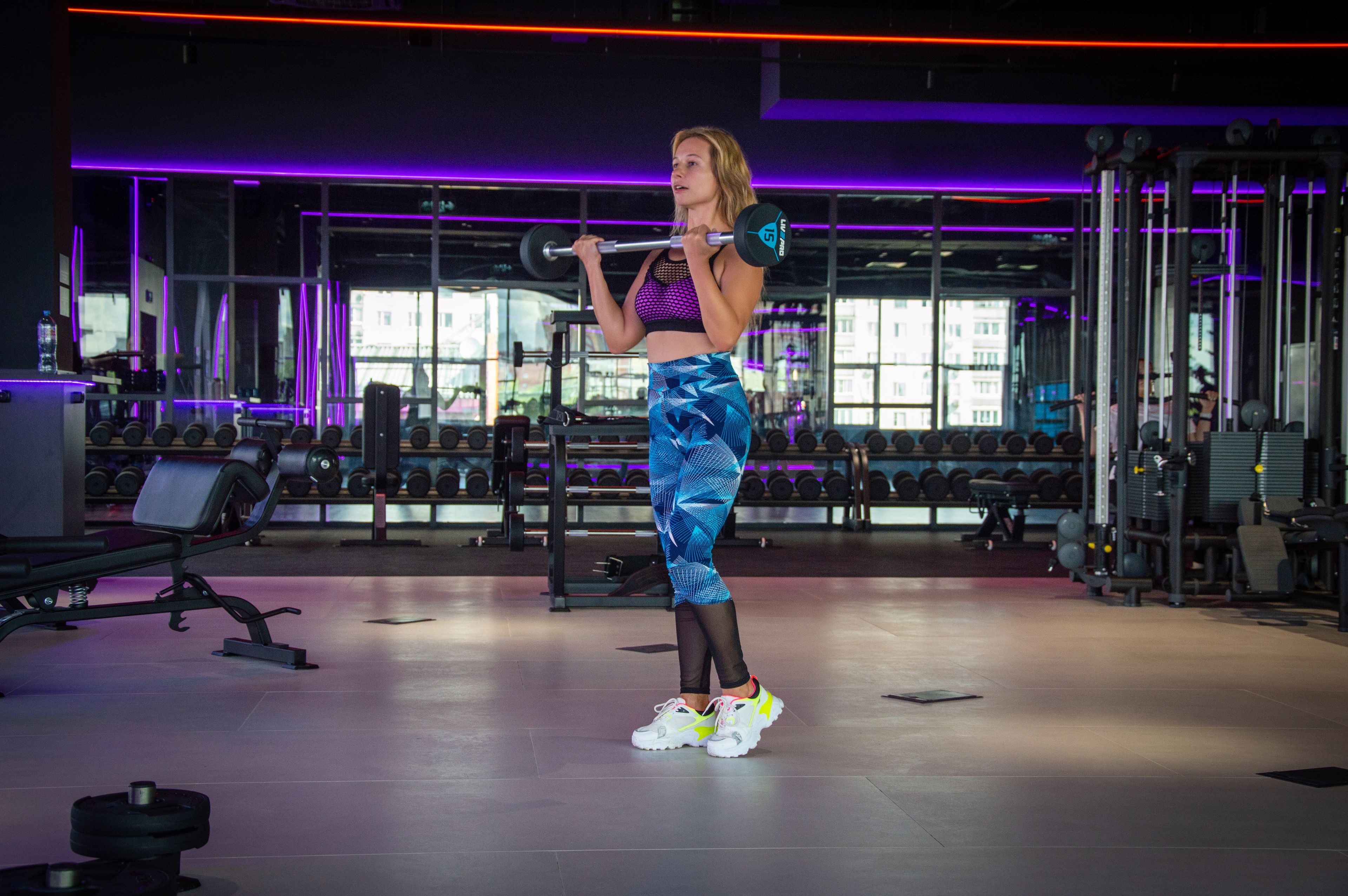
Progressive overload means making your training gradually harder over time—through more reps, more weight, more sets, more range of motion, or more effort—so your muscles have a reason to keep adapting. The simplest method is to choose a rep range, add reps until every set reaches the top, then add the smallest weight jump and start again.
What is progressive overload?
Progressive overload means training gets gradually harder over time so your body keeps adapting. A workload you handle comfortably is no longer a reason to grow. The idea dates to Thomas DeLorme’s 1944 rehabilitation work with soldiers at Gardiner General Hospital in Chicago and still underpins effective training (Wikipedia).
For your program, the useful definition is simple: beat your logbook in a measurable way, on a schedule, by following a written rule. Without one, it’s easy to use the same weights for months and wonder why progress stalled. For more context, start with our hypertrophy training guide.
What are the ways to progressive overload?
There are six real levers: reps, load, sets, range of motion, effort, and frequency—pull them roughly in that order. Slowing your tempo beyond normal control and cutting rest below a minute make sets harder, but don’t count as better overload.
| Lever | How to apply it | Evidence | Watch out for |
|---|---|---|---|
| Reps | Add reps at the same weight within a range | Rep and load progression gave similar gains over 8 weeks (Plotkin et al., 2022) | Keep rep quality consistent |
| Load | Add 2–10% when you exceed the target by 1–2 reps (ACSM, 2009) | NASM suggests 2–5% upper body, 5–10% lower body (NASM) | Jumps can be too large on small lifts |
| Sets | Add one weekly set per muscle when reps or load stall | Gains rise with weekly sets, with diminishing returns (Pelland et al., 2026) | Don’t outrun recovery |
| Range of motion | Use a deeper or longer range, never a shorter one | Full range benefited lower-body growth versus partial range (Schoenfeld & Grgic, 2020) | Respect pain at end range |
| Effort | Finish sets closer to failure, such as 3 RIR to 1 RIR | Growth improves closer to failure; strength is similar across RIR (Robinson et al., 2024) | Don’t grind every set |
| Frequency | Train the muscle or lift one more day per week | Frequency benefits strength more than muscle growth (Pelland et al., 2026) | Allow recovery between sessions |
| Tempo (doesn’t count) | Keep a controlled, standard tempo | Reps lasting 0.5–8 seconds produce similar growth; over 10 seconds is worse (Schoenfeld et al., 2015) | “Harder” doesn’t mean better |
| Shorter rest (doesn’t count) | Rest at least 60–90 seconds | Resting over 60 seconds offers a small benefit; beyond about 90 seconds adds none (Singer et al., 2024) | Don’t make later sets worse |
How do you progressive overload, step by step?
Keep your exercises, set a rep range and effort target, log every set, and beat last session by a rep. When every set reaches the top of the range—or beats it by two reps twice running—add the smallest jump.
- Choose one or two exercises per muscle and keep them for 8–12 weeks.
- Use 6–10 reps for compound lifts and 10–20 for small isolation lifts; aim for 1–2 reps in reserve (RIR), meaning you could complete that many more reps.
- Log the weight and reps for every set; beat the logbook by at least one rep somewhere each session.
- Once all sets reach the range’s top, add about 2–5% for upper-body lifts or 5–10% for lower-body lifts (NASM). The American College of Sports Medicine (ACSM) recommends a 2–10% increase when you exceed the target by one or two reps (ACSM, 2009).
- If reps stall for two or three sessions, add one set for that muscle and check your recovery.
What does progressive overload look like with real numbers?
On a squat, overload is mostly load: do 3×5 at 225 lb (102 kg), then add 5 lb (2.5 kg) when all fifteen reps are clean. On a lateral raise, it’s mostly reps, because the next dumbbell may mean a 25% jump.
- Squat: 3×5 at 225 lb (102 kg) → 230 lb (104 kg), where you get a set of four → repeat 230 lb (104 kg) until you reach 3×5 → 235 lb (107 kg).
- Lateral raise, 12–20 rep range: 20 lb (9 kg) for 12, 11, and 10 reps → build to 20, 20, and 20 → 25 lb (11 kg) for 12, 11, and 10.
The 20-to-25 lb jump is 25% of the starting weight. A wider rep range gives you room to build capacity before making that jump.
How do you progressive overload when you can't add weight?
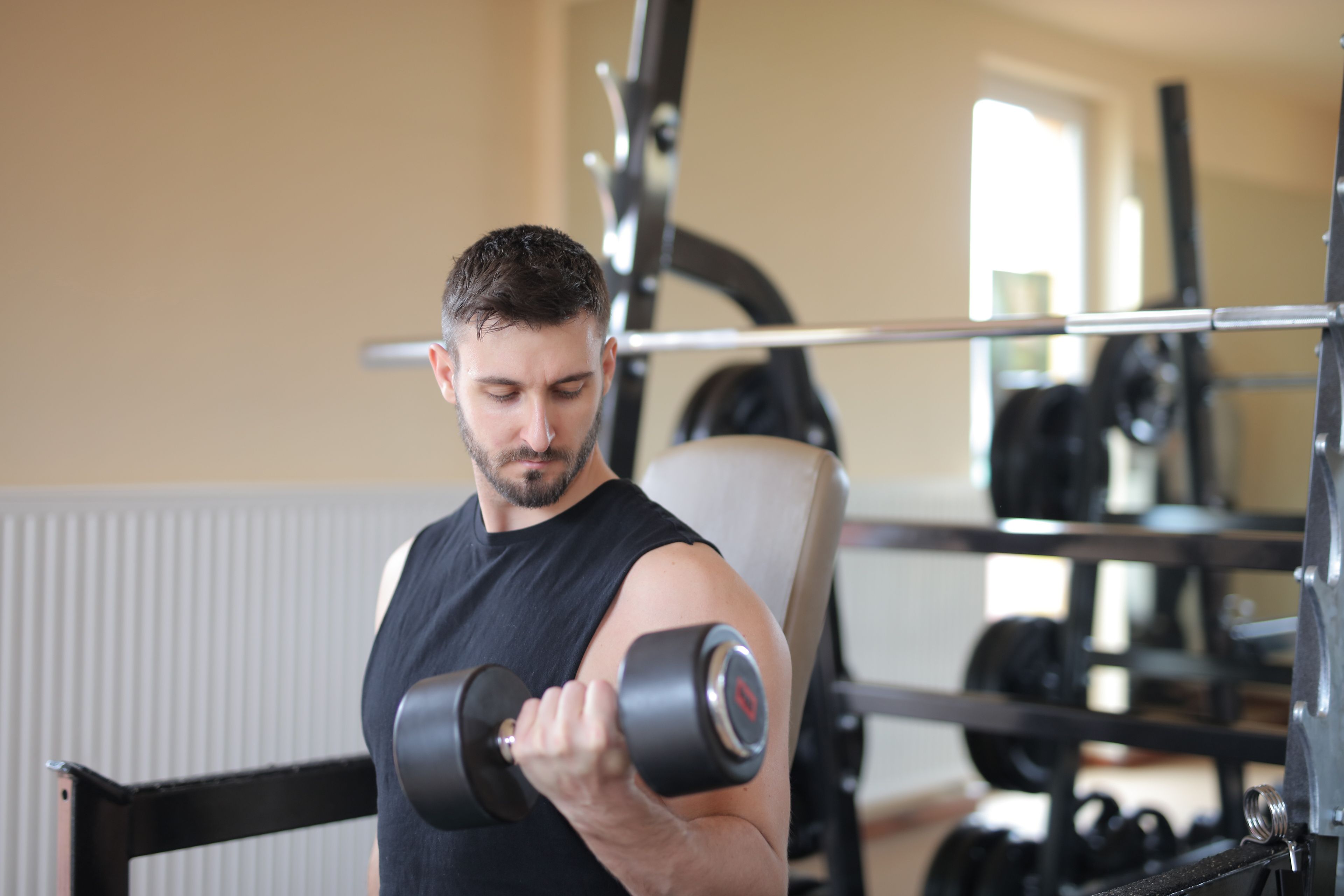
Use the other levers: add reps within a wider range, add a set, lengthen your range of motion, or finish sets a rep closer to failure. A controlled trial found that rep progression builds muscle about as well as load progression (Plotkin et al., 2022).
- Widen isolation work to 12–20 or 15–25 reps so you can build toward the next dumbbell.
- Use microplates of 1–2.5 lb (0.5–1 kg) for barbell pressing; the plate calculator shows how to load them.
- Add a set when reps stall; consider another training day if you train that muscle only once a week.
- At home, choose a harder variation with more range, such as deficit push-ups or deeper split squats. This is double progression: build reps first, then increase the load or difficulty.
Why does progressive overload stop working?
It rarely stops working—something else gets in the way: accumulated fatigue, short sleep, eating in a deficit, too little weekly training, or changing exercises so often there’s nothing to beat. If no lever moves for three weeks, fix the limiter, not the method.
- If fatigue has built up, consider a deload week.
- If you keep switching exercises, stick with a stable selection long enough to compare sessions.
- If sleep, food, or pain limits your training, address that ceiling before demanding more from the program.
- If weekly volume may be too low, review how many sets per muscle per week.
If no lever has moved in three weeks, the method isn’t the problem. Find what’s blocking your progress: fatigue, training dose, food, sleep, or program structure may be the place to start.
FAQ
What is the 2 for 2 rule for progressive overload?
If you can do two more reps than your target on the final set in two consecutive workouts, add weight next time. NASM suggests about 2–5% for upper-body and 5–10% for lower-body exercises (NASM).
Can you progressive overload without adding weight?
Yes. Add reps, sets, range of motion, effort, or training days. In an eight-week trial with 43 trained lifters, adding reps at a fixed weight produced gains similar to adding weight (Plotkin et al., 2022).
What is the 5-3-1 rule in the gym?
It usually refers to Jim Wendler’s 5/3/1 program, a specific strength program with built-in progression, rather than a general rule for progressive overload. The useful question is whether the program’s progression still fits what is limiting you.
Does slowing down your reps count as progressive overload?
Not really. Reps lasting 0.5 to 8 seconds produce similar growth, while very slow reps lasting over 10 seconds are worse (Schoenfeld et al., 2015). Keep a controlled tempo as your standard, then progress reps or load.
Written and maintained by LiftDecode. Training and nutrition education for healthy adults, not medical advice — if you have a health condition or an injury, talk to a professional who can examine you.