Skinny Fat: How to Fix It Without Bulking or Cutting Forever
Skinny fat is a muscle shortage, not a fat surplus. How to check if you're skinny fat, why cutting or bulking alone fails, and the plan that fixes it.
- Published
- Reading time
- 7 min
- By
- LiftDecode
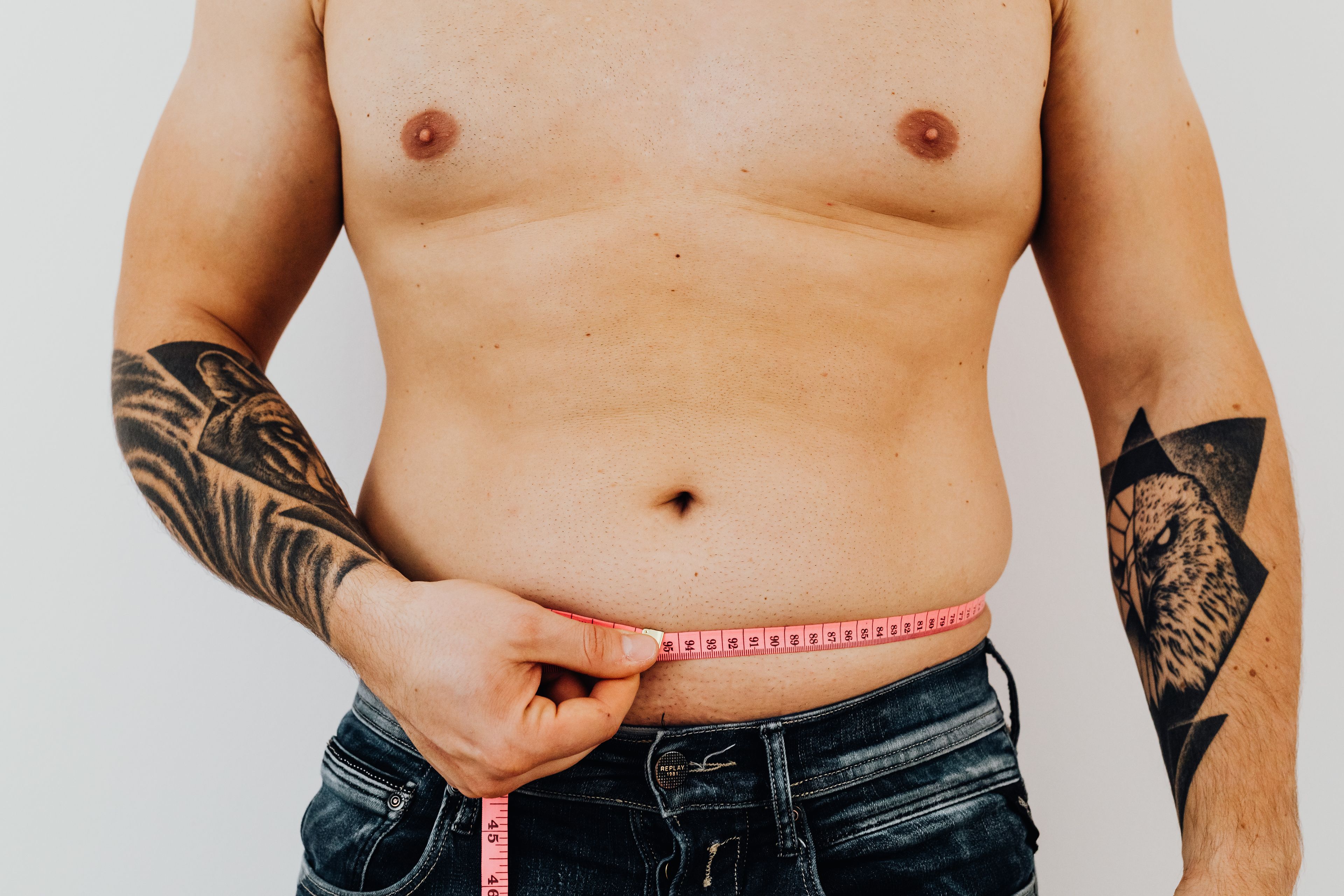
Skinny fat means a normal-looking body weight carrying too little muscle and too much fat for that weight—researchers call it normal weight obesity. The fix is not a hard cut or a dirty bulk. It is a few months of progressive lifting and high protein at about maintenance calories, so your muscle goes up while your waist comes down.
What does "skinny fat" actually mean?
“Skinny fat” is the everyday name for normal weight obesity: a body mass index in the normal range but body fat in the obese range. You may look slim in clothes, but with little muscle under the fat, your body looks soft rather than lean.
BMI compares weight with height, so it cannot distinguish muscle from fat. The normal range is 18.5–24.9. In a study of more than 6,100 US adults with normal BMI, the researchers defined high body fat as above 23.1% in men and 33.3% in women (Romero-Corral et al., 2010).
In that study, normal-weight adults with high body fat had about four times the prevalence of metabolic syndrome as lean adults; women also had 2.2-fold higher cardiovascular mortality risk. Those are population associations, not a diagnosis. If you’re worried, ask a doctor to check your blood pressure, blood sugar and lipids.
The practical problem is “not enough muscle for my frame”—and lifting is how you build it. That frame isn’t a fixed body type either. If gaining muscle has stopped coming easily, start with how to gain muscle when it has stopped coming easy.
How do you know if you're skinny fat?
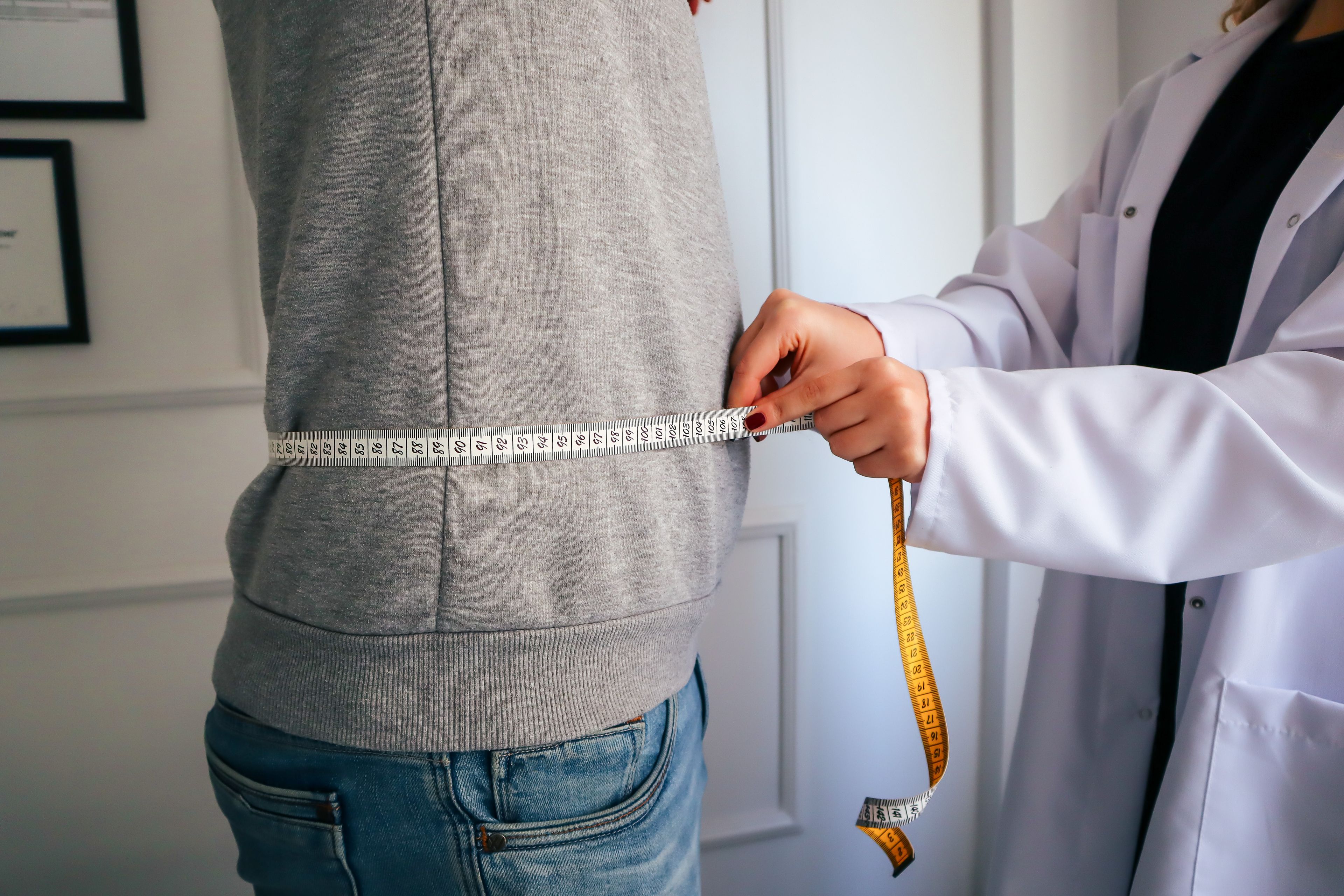
You’re probably skinny fat if your weight is in the normal range, your waist is at least half your height, and you haven’t trained consistently enough to be strong. The waist check is the most useful single number you can take at home.
- Check whether your weight or BMI is in the normal range.
- Measure your waist relaxed, after breathing out, midway between your lowest rib and the top of your hip bone. Divide waist by height.
- For example, at 5'10" (70 in / 178 cm), a waist of 35 in (89 cm) or more gives a ratio of 0.5 or higher.
- Consider your training history and strength. Low strength and no consistent training are practical signs, not research cutoffs.
A review of 78 studies across 14 countries found an average waist-to-height risk boundary of 0.50 for both men and women (Browning, Hsieh & Ashwell, 2010). NICE advises adults with a BMI below 35 to keep their waist under half their height (NICE, 2022).
Should you cut, bulk or recomp?
Most skinny-fat lifters should recomp at maintenance first. Cutting alone makes you smaller without adding the missing muscle; bulking alone can add fat before you have much muscle to show for it. Early in training, you can build muscle without a big surplus.
In a four-week trial, young men who trained hard while eating a large deficit and 2.4 g of protein per kg gained 1.2 kg (2.6 lb) of lean mass and lost 4.8 kg (10.6 lb) of fat. Those eating 1.2 g/kg gained only 0.1 kg of lean mass (Longland et al., 2016). A review also found recomposition documented in trained lifters (Barakat et al., 2020). That supports building muscle in a deficit, but it doesn’t mean you need one.
LiftDecode’s practical decision rule, anchored to the 0.50 waist-to-height boundary, is:
- At 0.50–0.55, recomp around maintenance.
- Above about 0.55, use a small deficit and keep lifting.
- Below 0.50, with strength gains slowing, switch to a lean bulk.
If cutting, aim for the slow end of the 0.5–1% of body weight per week range to help retain muscle (Helms, Aragon & Fitschen, 2014). For a bulk, aim to gain 0.25–0.5% per week on roughly a 10–20% surplus (Iraki et al., 2019). Skip what a dirty bulk really does; learn who can build muscle in a calorie deficit.
What training fixes skinny fat?
Use a three-day full-body plan built around squats, hinges, presses and rows, with about 10 hard sets per muscle each week. Hard means finishing most sets with one to three reps left in the tank, or reps in reserve (RIR).
Alternate A and B: week one is A-B-A; week two is B-A-B. The rep ranges and RIR are targets.
| Day | Exercise | Sets × reps | Reps in reserve |
|---|---|---|---|
| A | Back squat (or goblet squat) | 3 × 6–8 | 1–3 |
| A | Bench press (or push-up) | 3 × 6–8 | 1–3 |
| A | Chest-supported row | 3 × 8–10 | 1–2 |
| A | Romanian deadlift | 2 × 8–10 | 2 |
| A | Lateral raise | 2 × 12–15 | 0–2 |
| B | Trap-bar or conventional deadlift | 3 × 5 | 2–3 |
| B | Overhead press | 3 × 6–8 | 1–3 |
| B | Lat pulldown or pull-up | 3 × 8–12 | 1–2 |
| B | Bulgarian split squat | 2 × 8–10 each leg | 1–2 |
| B | Incline dumbbell press | 2 × 8–12 | 1–2 |
| B | Dumbbell curl + cable pushdown | 2 × 10–12 each | 0–2 |
LiftDecode’s template gives most major muscles about 8–12 hard sets a week, in line with volume research; each extra weekly set was associated with slightly more growth (Schoenfeld, Ogborn & Krieger, 2017). Rest 2–3 minutes on the first two lifts and 60–90 seconds on the rest.
- When every set reaches the top of its rep range, add 5 lb (2.5 kg) to lower-body lifts or 2.5–5 lb (1–2 kg) to upper-body lifts.
- If you can’t add weight, use progressive overload when you can't add weight.
- Walk if you like, but keep lifting as the foundation.

What should you eat to fix skinny fat?
Eat around maintenance calories and about 1.6 g of protein per kg of body weight (0.7 g per lb) each day, split across three or four meals of 20–40 g. Protein is the number that can’t slip; calories just need to stay steady.
- Muscle gains plateaued around 1.62 g/kg/day in a meta-analysis of 49 trials (Morton et al., 2018). Up to about 2.2 g/kg is reasonable in a deficit; general guidance for exercisers is 1.4–2.0 g/kg daily, with 20–40 g per meal (Jäger et al., 2017).
- At 160 lb (73 kg), aim for about 115–130 g of protein daily—for example, four meals of roughly 30 g.
- Find maintenance by keeping your weight steady for two weeks or using a body recomposition calculator. Count weekends too.
- Women can use the same plan. Hard sets can build similar muscle across different loads, though heavier loads build strength faster (Schoenfeld et al., 2017).
How do you know it's working?
Judge by your waist and logbook, not the scale. If your waist shrinks or holds while your main lifts climb every couple of weeks, it’s working—even if your weight stays the same. That flat scale is why skinny fat can feel “hard to lose.”
- Measure your waist weekly under the same conditions and compare four-week trends; take photos every four weeks.
- Look for your main lifts to rise at least every 2–3 weeks.
- When your waist is under half your height and your lifts stop rising week to week, switch to a lean bulk. Follow how to lean bulk without getting fat.
- If lifts stay flat for three or more weeks and your waist isn’t moving, check your effort, protein, weekends and sleep.
Skinny fat often has more than one cause at once: easy sets, protein that only shows up at dinner, or weekends that erase the week. LiftDecode’s diagnosis can help you find out which one is holding you back first.
FAQ
How do I know if I am skinny fat?
Check three things: your weight is normal, your waist is half your height or more, and you haven’t trained consistently enough to be strong. A waist-to-height ratio of 0.5 was the risk boundary for both sexes in a 78-study review (Browning et al., 2010).
Is skinny fat unhealthy?
It can be. Adults with normal BMI but high body fat had about four times the prevalence of metabolic syndrome as lean adults in a large US study (Romero-Corral et al., 2010). That’s population risk, not a diagnosis; ask a doctor for blood work if you’re concerned.
Why am I skinny but have a fat belly?
You may be short on muscle, and the belly is where many people store fat first. Crunches won’t burn fat in one area: after 12 weeks of one-arm training, MRI showed fat loss across the body, not just in the trained arm (Kostek et al., 2007).
How do you fix skinny fat as a woman?
Use the same plan: progressive lifting three days a week, with sets taken close to failure, about 1.6 g of protein per kg daily, and calories near maintenance. Women gain muscle at a similar relative rate to men (Roberts et al., 2020), so heavier weights can help strength rise faster.
Written and maintained by LiftDecode. Training and nutrition education for healthy adults, not medical advice — if you have a health condition or an injury, talk to a professional who can examine you.