Body Recomposition Calculator: Calories, Protein, Timeline
Body recomposition calculator: your recomp calories (maintenance to 250 below), a protein target, and a realistic timeline for losing fat while building muscle.
- Published
- Reading time
- 6 min
- By
- LiftDecode
A rough guess is fine.
Trained and fairly lean is the hardest case, but it has been shown: in a 10-week study of lifters with over a year of training, lean mass rose about 1 kg while fat fell 1.4–2.9 kg. Expect changes that show over months, not weeks.
Maintenance = Mifflin–St Jeor BMR × 1.53 (FAO/WHO/UNU activity example). The 250 kcal deficit and the maintenance option both produced recomposition in trained lifters eating about 2.5 g/kg of protein (Vargas-Molina et al. 2026). The protein target is the upper end of Morton et al.'s range, which its authors suggest for maximizing muscle gain; these g/kg figures come from studies of mostly lean to average lifters.
Sources: Barakat et al. 2020, Strength Cond J — body recomposition in trained individuals; Vargas-Molina et al. 2026, Eur J Appl Physiol; Morton et al. 2018, Br J Sports Med; Mifflin et al. 1990, Am J Clin Nutr; FAO/WHO/UNU Human Energy Requirements.
Numbers not moving for weeks? Find out why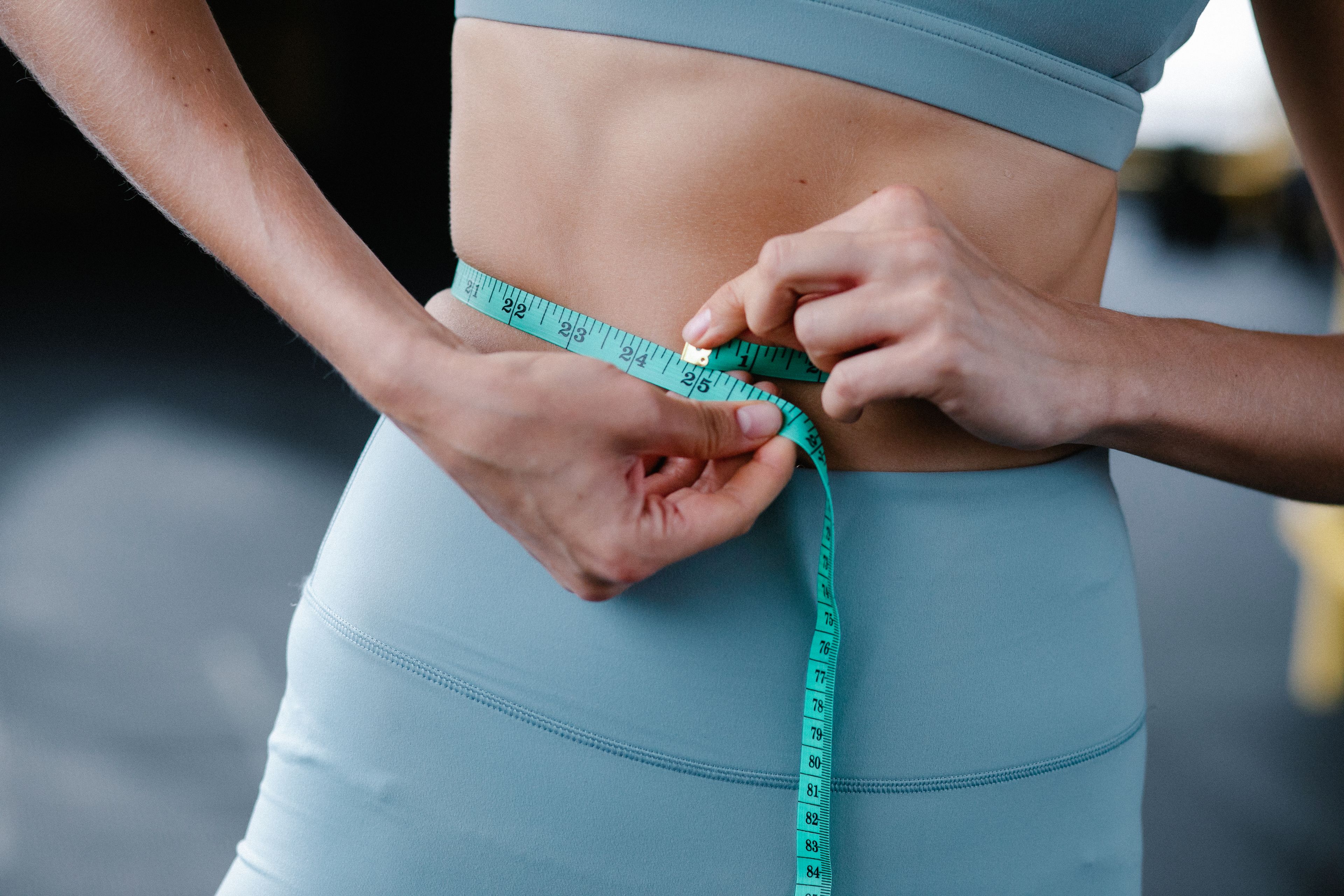
Enter your sex, age, height, weight, activity level, training experience and a body-fat estimate. The calculator gives you maintenance calories, a recomp range from maintenance to 250 kcal below, a protein target of 2.2 g per kg of bodyweight, and estimates of your lean and fat mass. In trained lifters, this approach added about 1 kg of lean mass in 10 weeks.
How do you use the body recomposition calculator?
Enter your details to get maintenance calories, a recomp range, a protein target, estimated lean and fat mass, and an outlook based on your experience and body fat.
- Add your sex, age, height, weight and activity level, then choose your training experience.
- Enter a rough body-fat estimate. It sets the lean and fat mass estimates and outlook, not your calorie target.
- Use the calorie range as a starting point and track changes beyond the scale. For all our calculators, see the tools page.
Maintenance is estimated with the Mifflin–St Jeor resting energy equation multiplied by an activity factor: 1.53, 1.76 or 2.25 (Mifflin et al., 1990; FAO/WHO/UNU, Human Energy Requirements, Chapter 5).
For example, a 30-year-old man who is 185 lb (84 kg), 5′10″ (178 cm), works at a desk and estimates 22% body fat has maintenance near 2,760 kcal. His recomp range is about 2,510–2,760 kcal, his protein target is about 185 g, and the estimate is 144 lb of lean mass and 41 lb of fat.
How many calories should you eat to recomp?
Eat between maintenance and about 250 kcal below it. In a 10-week trial, resistance-trained lifters gained about 1 kg of fat-free mass on either intake; the deficit group lost roughly twice as much fat (Vargas-Molina et al., 2026).
- In the trial, 30 lifters trained four days per week and ate 2.5 g of protein per kg daily.
- The maintenance group gained 0.97 kg of fat-free mass and lost 1.41 kg of fat.
- The 250-kcal-deficit group gained 1.04 kg of fat-free mass and lost 2.94 kg of fat.
If you have more fat to lose, start nearer the 250-kcal deficit. If you’re already lean, stay closer to maintenance. In the example above, that means roughly 2,510–2,760 kcal a day; the calculator gives a range, not a precise prescription.
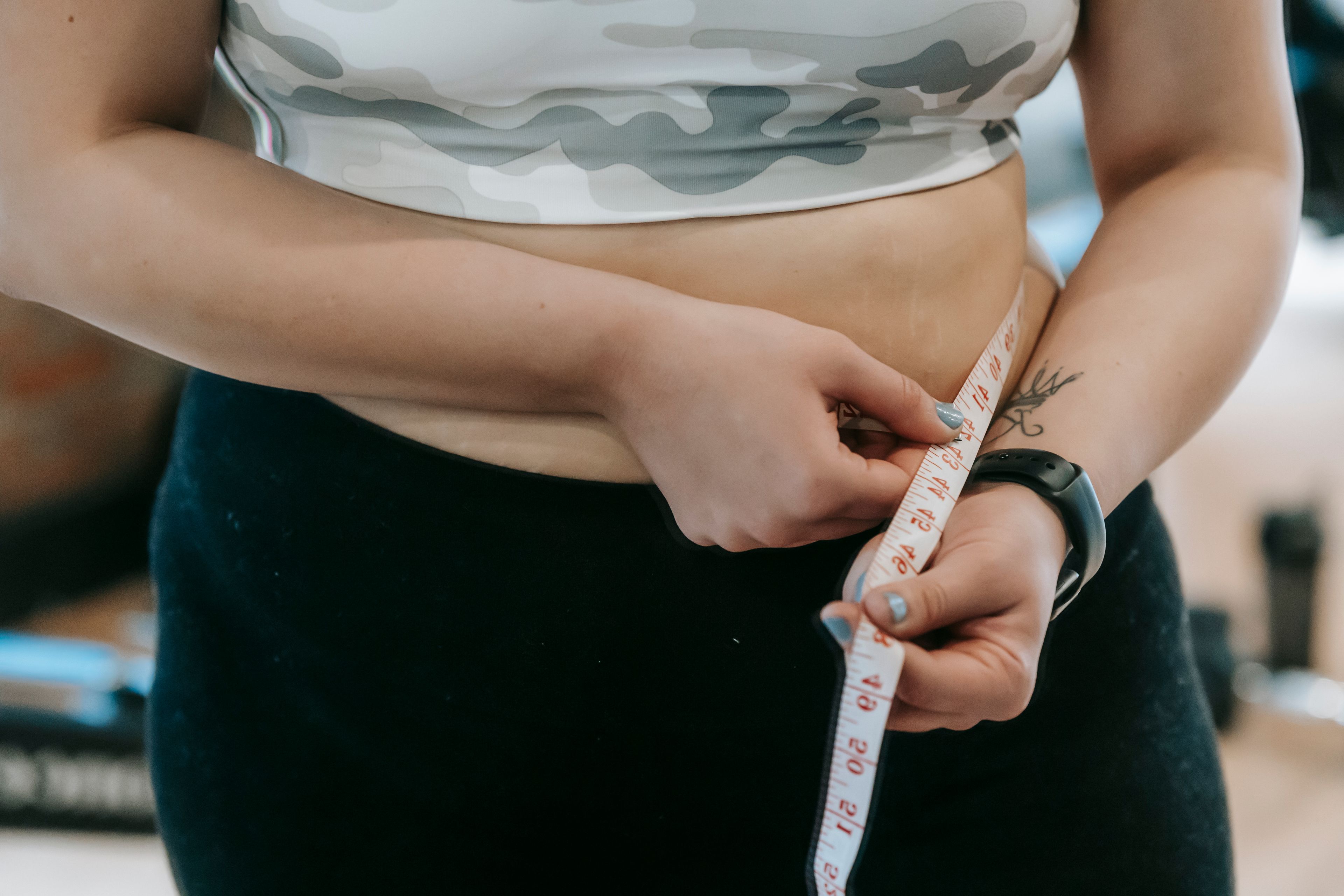
How much protein do you need to recomp?
Aim for 2.2 g per kg of bodyweight each day (about 1 g per lb), the high end of the evidence-backed 1.6–2.2 g/kg range. Since recomp happens at or below maintenance, adequate protein matters; the 2026 trial used 2.5 g/kg.
- Protein gains plateaued around 1.62 g/kg/day in a large review, though the confidence interval extended to 2.20; the authors suggested about 2.2 g/kg for maximizing gains (Morton et al., 2018).
- Spread your target across 3–5 meals. The example man’s range is about 134–185 g per day; use the protein intake calculator to set your target.
Who can recomp, and how fast does it work?
Beginners have the best odds, followed by people carrying more body fat; the fat doesn’t turn into muscle, you lose one while building the other. Trained, lean lifters can still recomp, but slowly. A review found substantial evidence of recomposition in resistance-trained people when progressive training is paired with sound nutrition (Barakat et al., 2020).
The outlook categories below are the calculator’s reading of the evidence, not study findings. The 23% and 35% cutoffs come from definitions of lean lifters used in protein research (Helms et al., 2014).
| Your profile | Calculator outlook | What the evidence says |
|---|---|---|
| Beginner, any body fat | Best odds | Reviews note recomposition has long been accepted in untrained and novice people. |
| Intermediate or advanced, above 23% body fat for men or 35% for women | Good odds | This is above the “lean lifter” range used in protein research, with more fat available to lose. |
| Intermediate or advanced, at or below 23% for men or 35% for women | Slow but possible | Trained lifters with about 1.5 years’ experience gained about 1 kg of fat-free mass in 10 weeks. |
Use 8–12 weeks as your first assessment window: that’s when the trial showed measurable change. The participants had about 1.5 years of training; if you’re more advanced and lean, expect less progress than they made. Read more about who can build muscle in a calorie deficit and newbie gains, and what comes after.
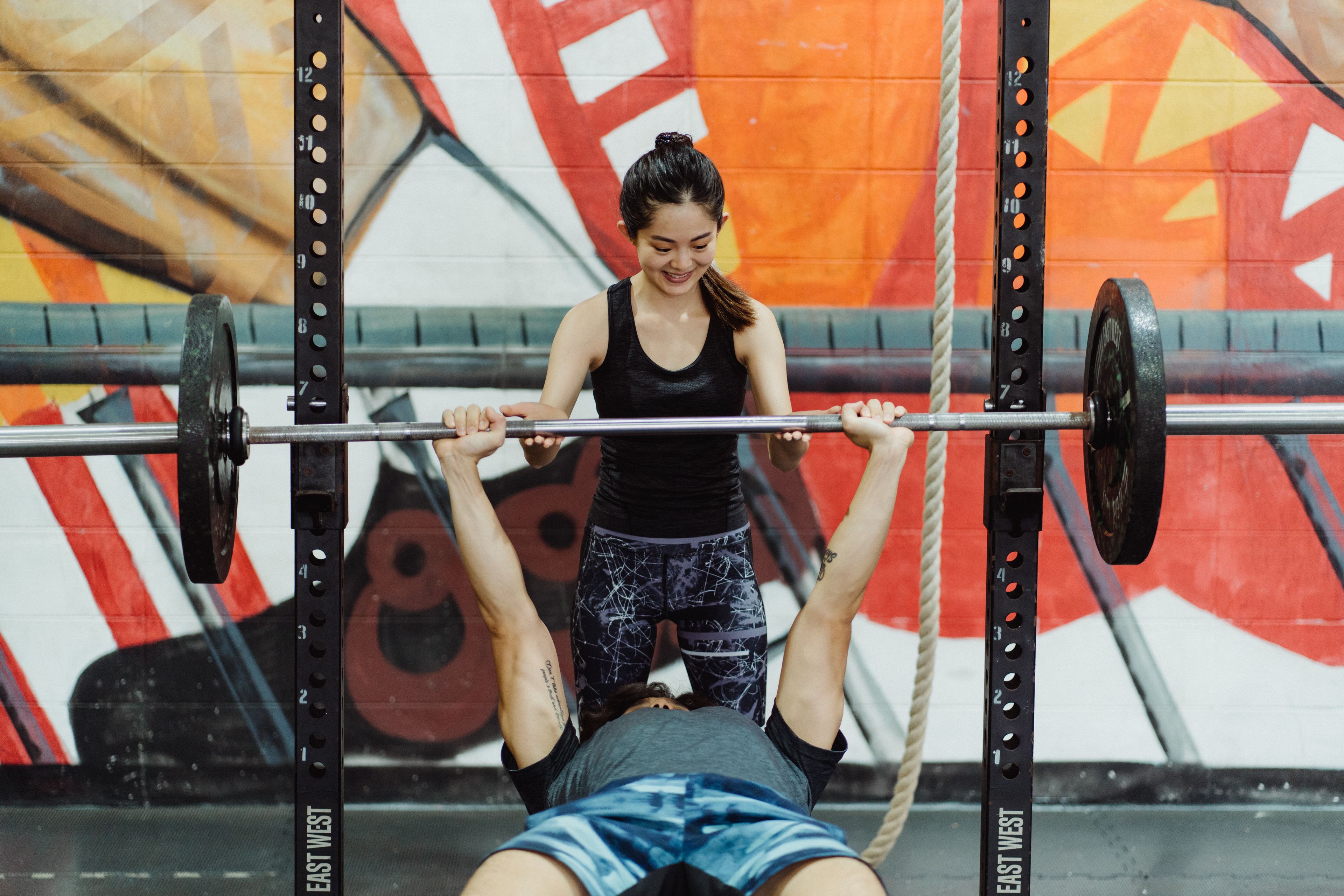
How do you know your recomp is working?
Don’t judge by the scale alone. Every two to four weeks, compare your waist, photos in the same light and main lifts; a shrinking waist and rising lifts at a steady weight are useful signs.
- Weigh yourself regularly and compare weekly averages.
- Every 2–4 weeks, record your waist and take photos under the same conditions.
- Track performance on your main lifts, including top sets.
- Treat body-fat scale readings cautiously: a 2026 review found average bioelectrical impedance bias from −3.5 to +4.4 percentage points against a lab reference, and individual readings were not equivalent (Oliver et al., 2026).
For another estimate to compare with your body-fat entry, try the lean body mass calculator.
What if your recomp stalls?
If your waist, lifts and photos haven’t changed after 8–12 weeks, choose a direction: run a proper cut or lean bulk, or identify what is getting in the way. Recomp is often an easier starting point for beginners; for experienced, lean lifters, it may no longer be the efficient choice.
- Check that your training has a progression rule and enough hard sets.
- Make sure your “deficit” isn’t actually maintenance.
- Include protein in your meals, and look at whether weekend eating offsets the week.
- Review sleep and other habits that may be undermining consistency.
If you’re unsure which factor to address first, find out what’s blocking your recomp. You can also read about how to fix skinny fat without bulking or cutting forever.
FAQ
How many calories do you need to eat for body recomposition?
Eat between maintenance and about 250 kcal below it. In a 10-week trial of trained lifters, both ends worked, while the deficit group lost more fat (Vargas-Molina et al., 2026). For a 30-year-old man who is 5′10″ and 185 lb (84 kg), with a desk job, that’s about 2,510–2,760 kcal a day and about 185 g of protein.
How long does body recomposition usually take?
Give it 8–12 weeks before judging. In a 10-week study, trained lifters gained about 1 kg (2 lb) of fat-free mass and lost 1.4–2.9 kg of fat (Vargas-Molina et al., 2026). Beginners and people with more body fat have better odds; lean, experienced lifters should expect slower change.
How can I measure my body recomposition?
Use a tape measure, photos and your lifts, not just the scale. A shrinking waist and rising strength at stable bodyweight are practical signs of progress. Body-fat scales can be too noisy for small changes: a 2026 review found average bias as high as 4.4 percentage points (Oliver et al., 2026).
Can experienced lifters recomp?
Yes, but slowly. A 2020 review found substantial evidence of recomposition in resistance-trained people, and a 10-week trial found lean mass gains in trained lifters eating at maintenance or a small deficit (Barakat et al., 2020; Vargas-Molina et al., 2026). If you’re lean and very experienced, a dedicated bulk or cut is often faster.
Written and maintained by LiftDecode. Training and nutrition education for healthy adults, not medical advice — if you have a health condition or an injury, talk to a professional who can examine you.