How to Lean Bulk Without Getting Fat (or Stalling)
How to lean bulk: eat 5–15% above maintenance, gain 0.25–0.5% of bodyweight a week, hit your protein, and adjust every few weeks. Worked example inside.
- Published
- Reading time
- 7 min
- By
- LiftDecode
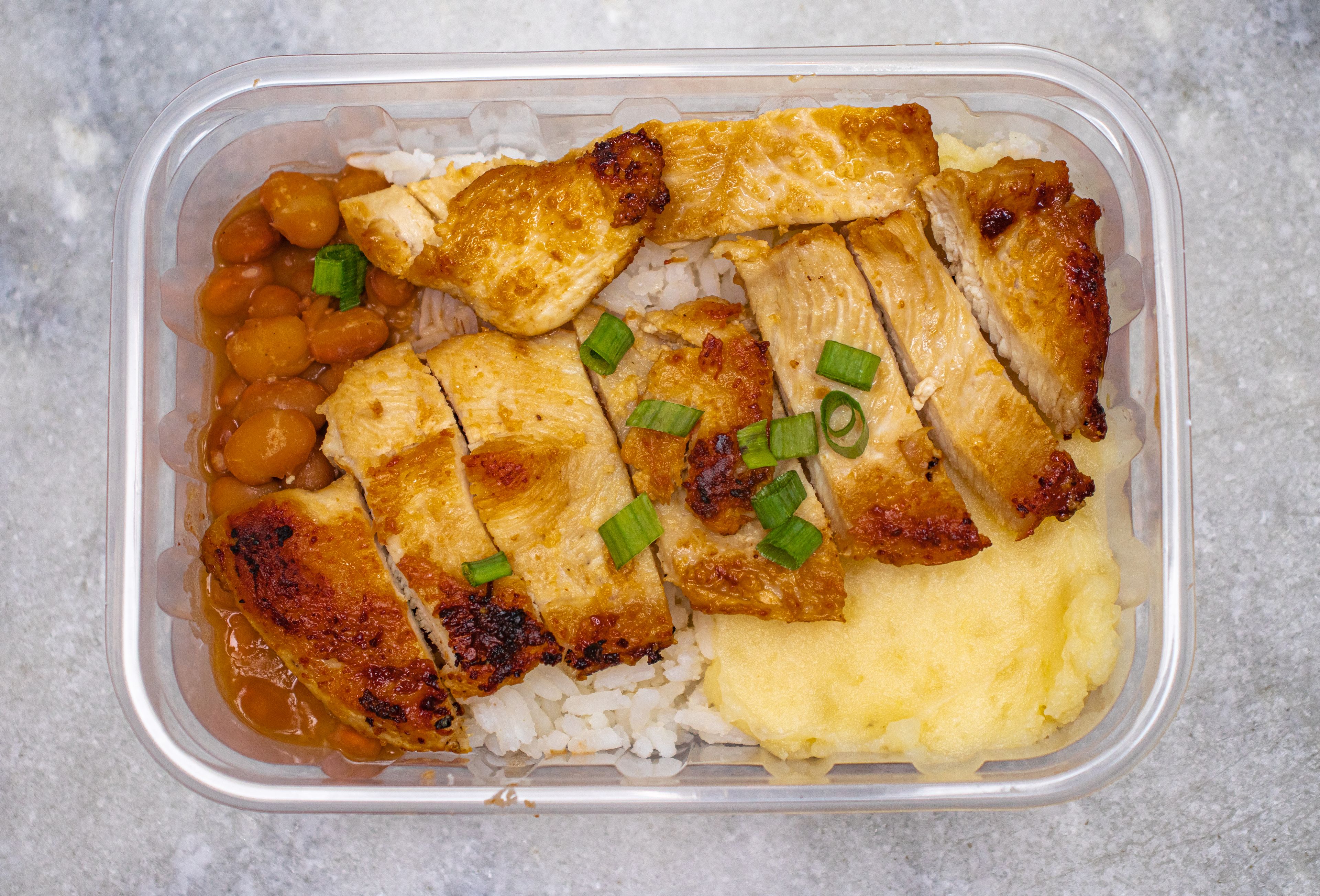
To lean bulk, eat 5–15% above maintenance, aim to gain 0.25–0.5% of your bodyweight per week, get 1.6–2.2 g of protein per kg (0.7–1 g per lb) daily, and progress your training. Weigh often, average the week, and adjust calories every two to four weeks. Those numbers are the core of any diet for muscle gain; the rest is consistency.
What is a lean bulk, and can you actually do one?
A lean bulk uses a small calorie surplus to gain muscle while limiting fat. It can work: in a small 2023 trial, 21 trained lifters were assigned to maintenance, a 5% surplus, or a 15% surplus for eight weeks; 17 completed the study. Muscle thickness did not differ between groups, while faster weight gain primarily increased fat. The 15% group may have had an edge in bench 1RM, but squat results did not differ (Helms et al., 2023). A dirty bulk is less controlled and can push weight gain faster than needed.
How big should your surplus be?
Start around 5–15% above maintenance, or roughly 200–300 kcal a day for many lifters. Maintenance is the intake at which your weight stays stable; a surplus means eating above that level. Calorie formulas offer a starting estimate, but your weight trend shows whether it works. The exact surplus needed to maximize muscle growth is unknown, so use your own trend rather than treating a formula as a target.
- A review suggests 10–20% above maintenance for novice and intermediate bodybuilders, with a more conservative surplus for advanced lifters, who gain muscle more slowly. Its suggested rate is 0.25–0.5% of bodyweight weekly for novice and intermediate lifters; even 2 kg a month may be too much for advanced lifters (Iraki et al., 2019).
- In a study of elite athletes summarized in the review, the higher-surplus group gained more fat (1.1 vs. 0.2 kg) with similar lean-mass gains. The review authors suggest 200–300 kcal may be more appropriate than 500.
- A 2023 trial found similar muscle growth with 5% and 15% surpluses, but more fat gain with the faster rate (Helms et al., 2023).
Our 5–15% starting range sits between the review’s recommendations for bodybuilders and the trial’s comparison of 5% and 15%. The number you start with matters less than whether your average rate of gain stays in range. For more on choosing your starting point, see how big a calorie surplus should be.
| Approach | Surplus | Typical weekly gain | What the evidence shows | Best for |
|---|---|---|---|---|
| Maintenance / recomp | 0% | ~0 | Groups didn’t differ significantly over 8 weeks, but more bodyweight gain predicted more muscle thickness (Helms 2023) | Beginners, higher body fat |
| Lean bulk (small surplus) | ~5–10% | ~0.25–0.5% bodyweight | Similar muscle, less fat than larger surplus (Helms 2023) | Most intermediates |
| Moderate bulk | ~10–20% | Upper end of 0.25–0.5% | Review range for novice/intermediate bodybuilders (Iraki 2019) | Lean novices gaining slowly |
| Large surplus / "dirty bulk" | 15%+ or 500+ kcal | Above 0.5% | Mainly extra fat; similar lean mass (Iraki 2019; Helms 2023) | Rarely justified |
Sources: Helms et al., 2023; Iraki et al., 2019. The “Best for” column is LiftDecode’s judgment.

How do you lean bulk, step by step?
Find maintenance from two weeks of stable weight, add about 10%, hit your protein target, and track weekly weight averages. Every two to four weeks, compare your trend with 0.25–0.5% of bodyweight per week and adjust. Daily readings fluctuate, so use averages.
- Log food and weigh daily for two weeks. If weight is flat, that intake is maintenance; a bulking calorie calculator can provide a starting estimate. Treat the estimate as a guess: energy needs formulas have not been validated in resistance-training populations.
- Add 5–15% above maintenance, roughly 200–300 kcal for many lifters.
- Eat 1.6–2.2 g protein/kg (0.7–1 g/lb) daily across 3–6 meals, aiming for 0.4–0.55 g/kg per meal. The ISSN says 1.4–2.0 g/kg/day is sufficient for most exercising people; the bodybuilding review recommends the higher range for its off-season context.
- Get 0.5–1.5 g fat/kg and at least 3–5 g carbs/kg daily; use carbohydrates for the rest of your calories.
- Weigh most mornings and use the weekly average. A single reading can reflect a daily fluctuation, not a meaningful change in your rate of gain.
- Every 2–4 weeks, add or subtract 100–200 kcal if gain is below 0.25% or above 0.5% weekly. For example, if your average gain stays under the lower end across the check-in, add a small amount and assess the next few weeks.
- Follow a written training progression rule. Extra food without progressive training can add weight without building muscle.
The bodybuilding review recommends daily weigh-ins averaged weekly and these macro ranges; the ISSN recommends 1.4–2.0 g protein/kg/day for most exercising people (Iraki et al., 2019; Jäger et al., 2017). Calorie formulas are estimates, so use your trend to find maintenance.
What does a lean bulk look like with real numbers?
A 170 lb (77 kg) lifter maintaining at 2,700 kcal could eat about 2,970 kcal, aim to gain 0.43–0.85 lb (0.19–0.39 kg) weekly, and get 123–170 g protein. The maintenance figure is illustrative; find yours from your weight trend. The calorie target is maintenance plus about 10%, and the weekly gain range comes from applying 0.25–0.5% to bodyweight.
- At 2,970 kcal, a sample split is 150 g protein, 80 g fat, and about 410 g carbs.
- If your four-week average rises 0.2 lb per week, add about 150 kcal.
- If it rises 1.2 lb per week, subtract about 150 kcal; that pace is above target and likely adds more fat.
What should you eat on a lean bulk?
Eat mostly your usual foods in slightly larger portions: protein at each meal, carbohydrates around training, enough fat, fruit, and vegetables. Keep the extra intake consistent, rather than treating the surplus as a reason to make every meal a large restaurant meal.
- Aim for 0.4–0.55 g protein/kg per meal; the protein intake calculator can help set a daily target.
- The review recommends at least 3–5 g carbs/kg daily to support training volume (Iraki et al., 2019).
- For 200–300 extra calories, add a carb portion to two meals or have a milk-and-oats snack.
- Three thousand calories is enough only if it exceeds your maintenance. The review cites off-season intakes around 42–48 kcal/kg (about 3,200–3,700 kcal for a 77 kg lifter), but your weight trend shows whether your intake works.
Why do lean bulks stall or turn into fat gain?
Lean bulks stall when weekends and guesswork erase the surplus; they drift toward fat gain when weight increases faster than 0.5% per week. If weight rises on target but lifts do not, review training or recovery before adding food.
- Two high-calorie weekend days can erase a modest weekday surplus. If you struggle to eat enough even on weekdays, see hardgainer: why skinny lifters struggle to gain.
- Recheck your average every two to four weeks, rather than waiting months to see whether your starting target worked.
- If your weight is on target but lifts and measurements do not move, food isn’t your bottleneck. Find out why the scale moves but your muscles don't with a quick diagnosis of training dose, progression, sleep, and recovery, ranked by what to fix first.
FAQ
Is 500 calories a lean bulk?
It is at the high end: for many lifters, 500 kcal is 15–20% above maintenance. A study in elite athletes summarized in the review found the larger surplus added mostly fat, and the authors suggest 200–300 kcal may be more appropriate (Iraki et al., 2019).
Is 3,000 calories a day enough to bulk?
Only if it exceeds your maintenance: a 170 lb lifter maintaining at 2,700 kcal would be in a surplus, while a bigger, more active lifter might lose weight. Find maintenance from two weeks of stable weight, then add 5–15%.
How fast should you gain weight on a lean bulk?
Novice and intermediate lifters can aim for 0.25–0.5% of bodyweight weekly; advanced lifters should gain more slowly. For someone at 170 lb, that is about 0.4–0.85 lb (0.2–0.4 kg); faster gain mainly adds fat (Iraki et al., 2019).
Can you actually lean bulk?
Yes: over eight weeks, trained lifters gained similar muscle with a 5% surplus as with a 15% surplus, while faster gain mainly added fat (Helms et al., 2023). The challenge is keeping intake consistent enough to sustain a real surplus.
Written and maintained by LiftDecode. Training and nutrition education for healthy adults, not medical advice — if you have a health condition or an injury, talk to a professional who can examine you.