RDL Form: How to Do Romanian Deadlifts Right
RDL form made simple: how a Romanian deadlift differs from a deadlift, the hinge step by step, how low to go, and the mistakes that stall hamstring growth.
- Published
- Reading time
- 7 min
- By
- LiftDecode
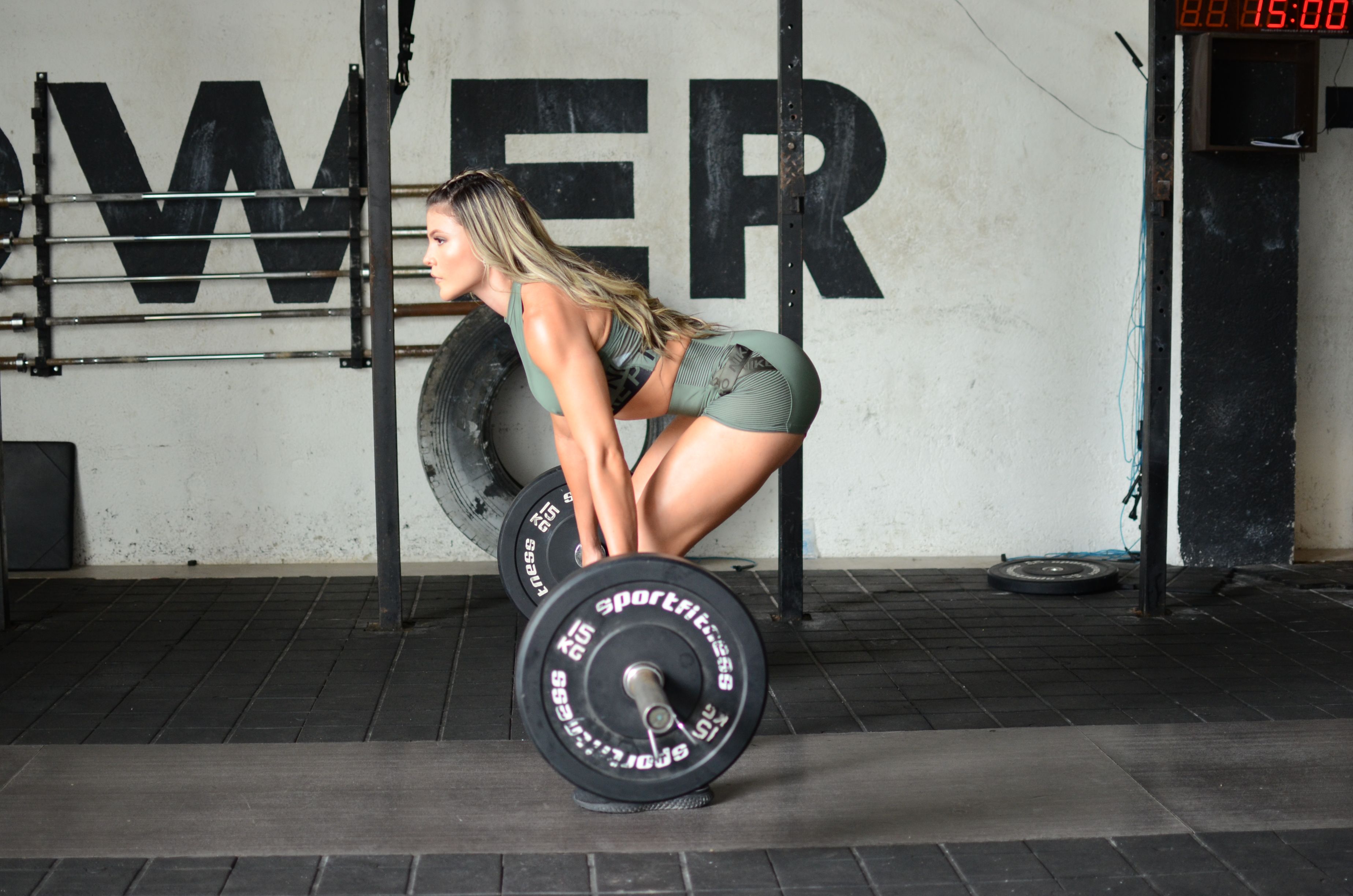
Good RDL form starts with a soft, fixed knee bend. Push your hips back as the bar slides down your thighs, stopping at a strong hamstring stretch—usually just below the knee to mid-shin. Keep your back flat and drive your hips forward to stand. The floor is a reference, not a depth target. See our exercise form guidance.
What is the difference between an RDL and a deadlift?
A conventional deadlift starts from the floor and lifts a heavy load using your legs and hips. An RDL starts standing and lowers the bar with a hip hinge and nearly fixed knees, training the hamstrings and glutes through a stretch.
| Romanian deadlift (RDL) | Conventional deadlift | Stiff-legged deadlift | |
|---|---|---|---|
| Starts from | Standing | Floor | Floor |
| Knees | Slight bend, fixed | Bend, then extend | Nearly straight |
| Depth | Hamstring stretch, knee to mid-shin | Floor each rep | Floor or mobility limit |
| Main target | Hamstrings, then glutes | Posterior chain and quads | Hamstrings and lower back |
| Typical use | Hypertrophy or accessory, 6–12 reps | Strength, low reps | Hamstring or back accessory |
The RDL uses a hip hinge and slight knee bend; the stiff-legged deadlift minimizes knee bend and demands more from the lower back (deadlift variations). For a floor-start pull, see our conventional deadlift form.
How do you set up for an RDL?
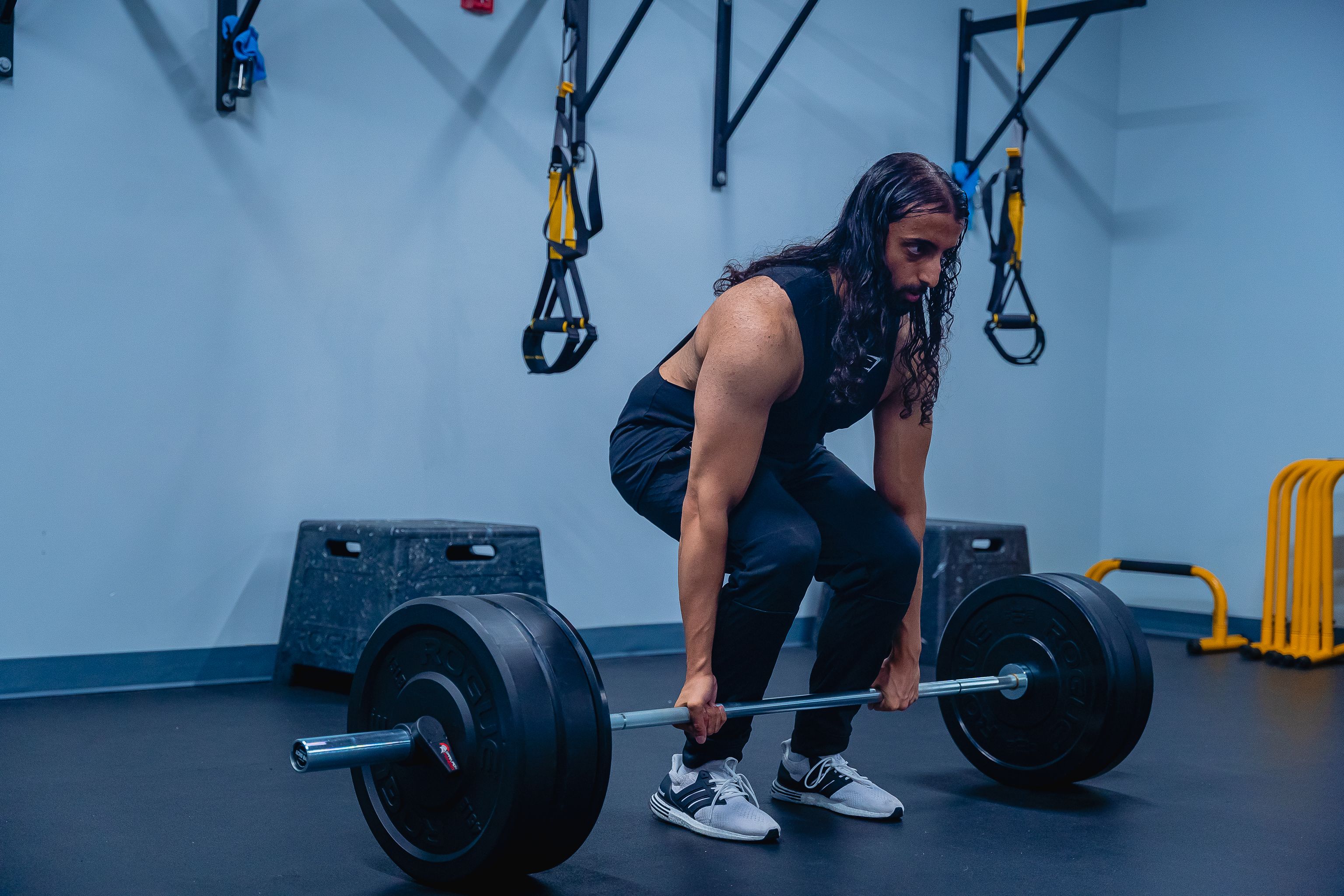
Set the bar at mid-thigh height in a rack. Stand hip-width apart with a slight knee bend you can hold, and tighten your lats to keep the bar close.
- Unrack the bar, or deadlift it up for the first rep.
- Point your toes forward or slightly out.
- Grip just outside your thighs; straps are fine.
- Keep your knees slightly unlocked at a fixed angle.
- Lift your chest, set your shoulders back and down, and brace your trunk.
How do you do an RDL, step by step?
Push your hips back as if closing a car door. Let the bar slide down your thighs; stop at a full hamstring stretch or when your back would round. Drive your hips forward to stand, keeping your shins nearly vertical.
- Brace and move your hips back instead of dropping your chest.
- Keep the bar on your thighs and your knee angle fixed.
- Lower over 2–3 seconds.
- Stop at your full stretch with a flat back, usually just below the knee to mid-shin.
- Pause briefly, then drive your hips forward and stand tall without leaning back.
Which RDL mistakes stop your hamstrings from growing?
Five faults undermine the RDL: bending your knees more as you lower, rounding to reach the floor, letting the bar drift away, bouncing, or loading so heavily that grip or back ends the set. Each shortens the hamstring stretch or shifts work elsewhere.
The knees keep bending (squatting the RDL).
Your hips drop and shins angle forward, bringing in the quads and slackening the hamstrings. Compare your knee angle at the top and bottom in a side-view video; keep it fixed and cue “hips back to the wall.”
Rounding the back to reach the floor.
Extra depth comes from your spine, not your hips, and may make your back the limiter. Stop when your hips stop moving back, even if the bar is above your knee.
The bar drifts away from your legs.
A gap between the bar and thighs increases the lever on your lower back. Keep the bar grazing your thighs, tighten your lats as if bending the bar toward you, and keep your weight around mid-foot to heels.
Rushing or bouncing the bottom.
A fast drop and rebound skip control at the stretched position. Count a 2–3 second descent and pause briefly before standing.
Going heavy enough that grip or back decide the set.
If grip or form gives out before your hamstrings work hard, reduce the load or use straps. In a 6-week trial, slow-eccentric RDLs with wrist straps increased biceps femoris fascicle length by about 9% and hamstring cross-sectional area by about 10% (Crawford et al., 2025). Stop 1–3 reps from failure.
What muscles does the RDL work?
The RDL mainly works the hamstrings, then the glutes. Your spinal erectors steady your back; your upper back and grip hold the bar. In 20 active participants, peak RDL force reached 1.6 times bodyweight in the biceps femoris long head and 1.9 times in the semimembranosus, versus about 1.0 times bodyweight in the biceps femoris long head during maximal sprinting (Breed et al., 2026). See mechanical tension, the main driver of muscle growth.
At 50% of predicted 1RM, a study of 12 men measured RDL activity at about 35% MVIC for biceps femoris, 31% for semitendinosus, 30% for glute max, 57% for longissimus, and 61% for multifidus (Dicus et al., 2023). A single-leg RDL also trains the glute medius and minimus as hip stabilizers. In a leg-curl study, seated curls grew the whole hamstrings 14.1% over 12 weeks, versus 9.3% with prone curls (Maeo et al., 2021).
Do RDLs grow your glutes?
Yes, but RDLs are a hamstring exercise first. Your glutes assist hip extension, and a loaded single-leg RDL produced glute max forces in the same top tier as loaded split squats and single-leg hip thrusts in 14 female footballers (Collings et al., 2023).
For more glute emphasis, try the single-leg version, allow a little more knee bend, and drive your hips through at the top. Keep a direct glute exercise in your plan, such as a split squat or hip thrust.
How should you program RDLs?
Do RDLs after your main lift for 2–4 sets of 6–12 reps, once or twice a week. Control the lowering, leave 1–3 good reps in reserve, and add reps before weight. Use straps if grip gives out first.
- When you complete the top of your rep range with clean form, add weight and build reps again.
- Count leg curls and other hamstring work toward your total; ACSM’s 2026 position stand recommends at least 10 weekly sets per muscle for hypertrophy and says failure is not necessary (ACSM, 2026).
- Hard effort matters across loads: hypertrophy was similar at loads of about 30% 1RM or higher (Schoenfeld et al., 2021).
Is your hamstring (or RDL) stall technique or something else?
It is technique if your depth comes from your back, your knees creep forward, or you feel the RDL mostly in your lower back. If form is clean but your hamstrings are not growing, check volume, effort, recovery, and calories.
Technique signs
- The bar moves away from your legs or your back rounds at the bottom.
- Your knees bend more as you descend, or you do not feel a stretch.
Programming and recovery signs
- Weekly hamstring volume is low, or RDLs are your only hamstring exercise.
- You stop sets far from failure, your bulk has stalled or you are in a deficit, or your sleep is poor.
If your legs have stalled beyond the RDL, compare the signs with how to get bigger legs.
If your RDL is clean and your hamstrings and glutes still are not changing, form may not be the bottleneck. Take the quick diagnosis to see whether weekly dose, effort, food, or recovery deserves your attention.
FAQ
How do I know if I'm doing RDLs correctly?
Film from the side: your knee angle should stay the same, the bar should stay on your thighs, and your hips should move back while your back stays flat. You should feel a strong hamstring stretch, not a burn in your lower back.
How low should you go on an RDL?
Go as low as your hips can travel back while your back stays flat, usually just below the knee to mid-shin. The floor is not the target; extra depth after your hips stop moving back comes from rounding your spine.
Should you lift heavy on RDLs?
Use a load that makes the last reps hard while your grip and lower back remain under control; sets of 6–12 with a slow lowering work well. The bilateral RDL already puts more force through the hamstrings than sprinting (Breed et al., 2026), so adding weight is not always the missing piece.
Do RDLs actually grow glutes?
They help, but they are a hamstring lift first. A loaded single-leg RDL produced glute max forces in the same top tier as split squats and single-leg hip thrusts (Collings et al., 2023); for bigger glutes, add a direct glute exercise.
Written and maintained by LiftDecode. Training and nutrition education for healthy adults, not medical advice — if you have a health condition or an injury, talk to a professional who can examine you.