Deadlift Form: 7 Mistakes That Stall Your Pull
Deadlift form, fixed: the setup, the pull step by step, and 7 mistakes that stall your deadlift, each with a video self-check and a cue that fixes it.
- Published
- Reading time
- 7 min
- By
- LiftDecode
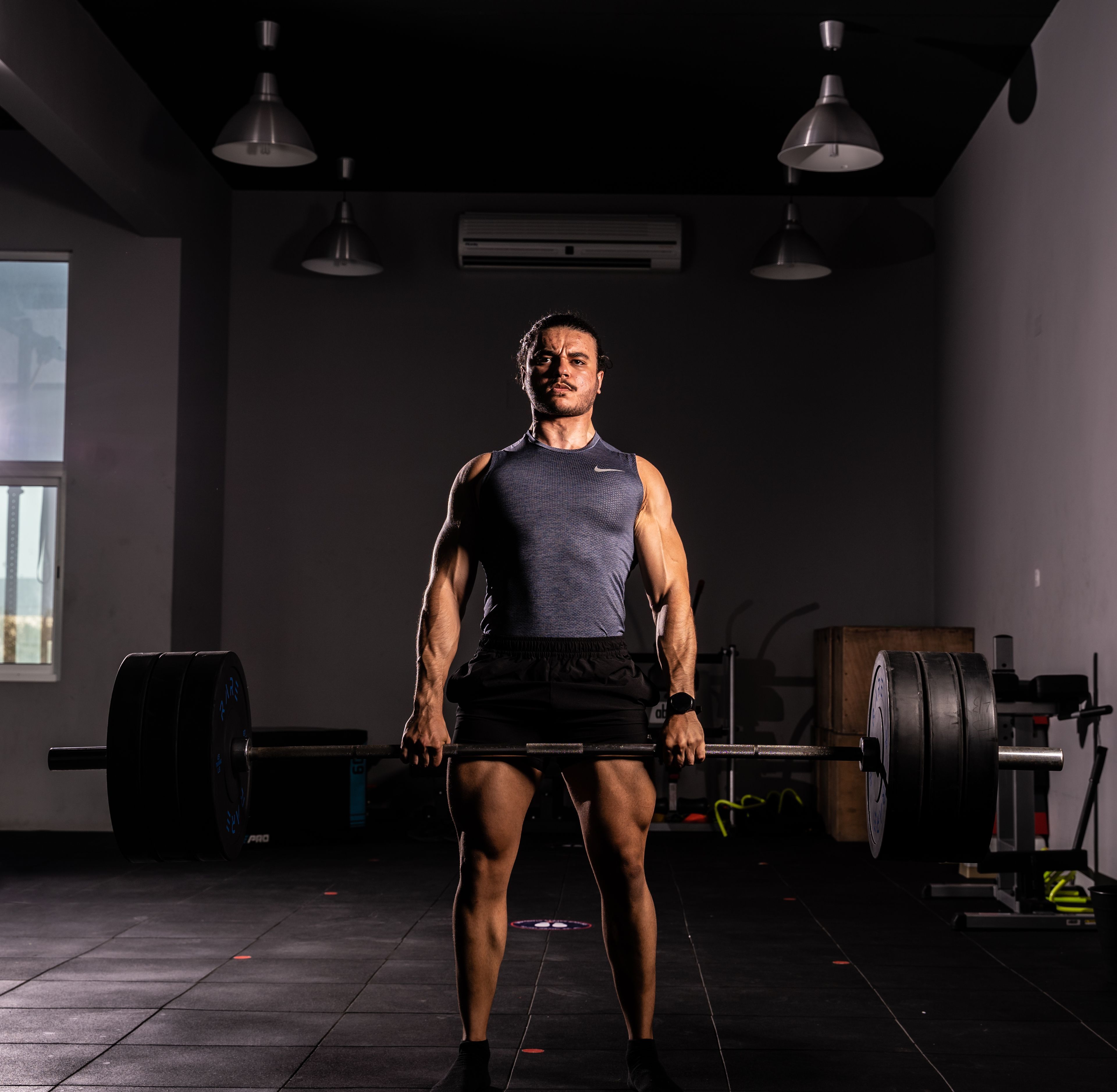
Good deadlift form starts with the bar over mid-foot, keeps it close to your legs, and raises your hips and shoulders together. Common stalls come from a drifting bar, jerking the slack, or losing back position under load.
What does good deadlift form look like?
Start with the bar over mid-foot, shoulders just ahead of it, and a braced, flat-ish back. Push the floor away, keep the bar close, and stand tall with hips and knees locked—without leaning back.
A deadlift lifts a bar from the floor to hip level and returns it; it is one of the three powerlifts (definition and history). In both, heavy reps should look like light ones.
Check side-view video: the bar stays close, hips and shoulders rise together, and you finish upright. See our exercise form guides for the big lifts.
How do you set up for a deadlift?
Repeat the same setup each rep:
- Set feet about hip-width apart, with the bar over mid-foot and 1–2 inches from your shins.
- Hinge down, grip just outside your legs, and keep your arms straight.
- Bend your knees until your shins touch the bar.
- Tighten your lats and pull until the plates click; don’t drop your hips into a squat.
- Breathe into your belly, brace, and push the floor away.
Hip height depends largely on limb proportions (Stronger by Science); long femurs and short arms often mean higher hips and more forward lean.
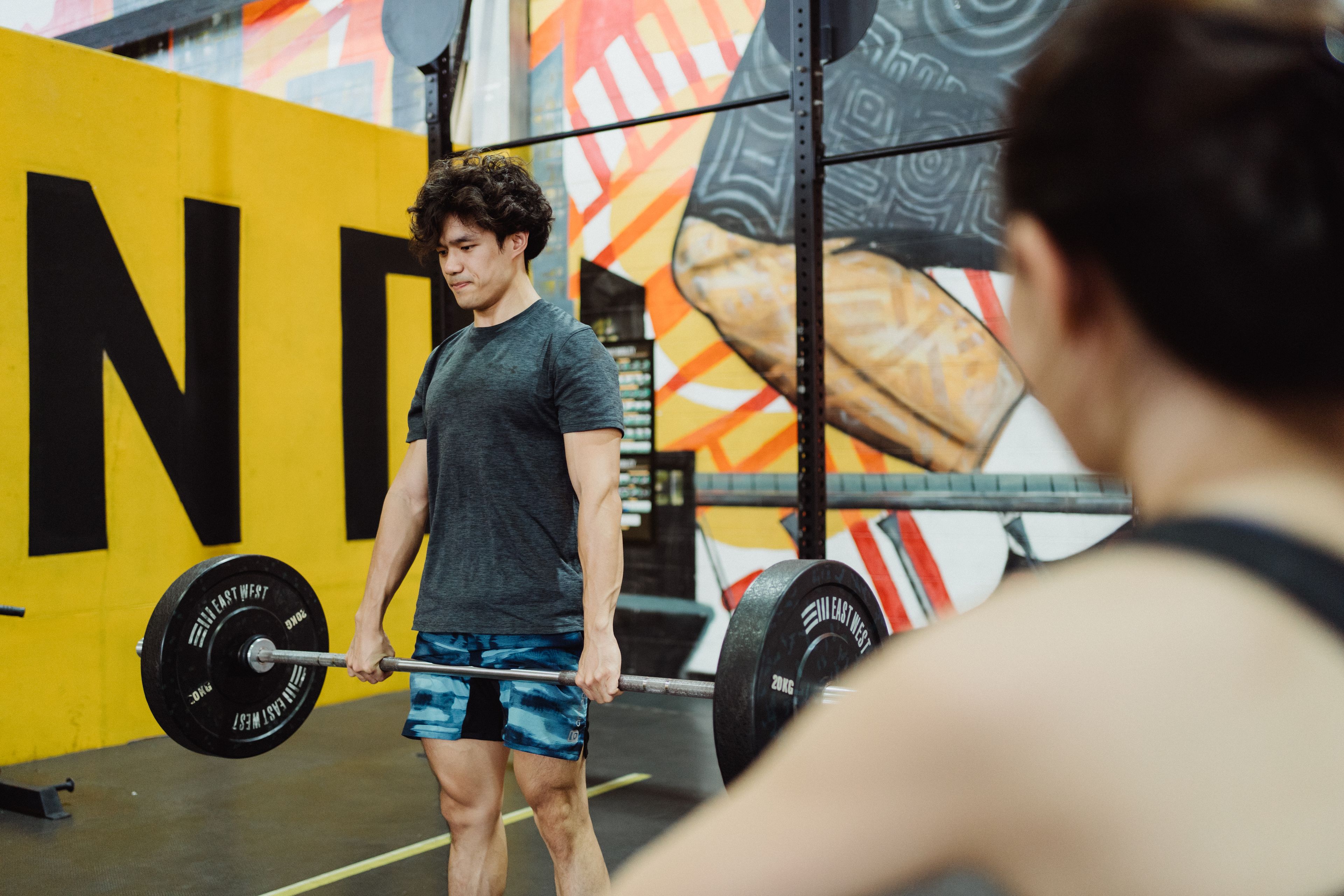
How do you perform the deadlift, step by step?
- Take the slack out until the bar is loaded but still.
- Push the floor away; don’t jerk the bar.
- Keep it against your legs as hips and shoulders rise together.
- Once it passes your knees, drive your hips forward.
- Lock out with hips and knees straight; don’t lean back.
- Hinge until the bar clears your knees, then bend them to lower.
- Reset your brace from a dead stop before the next rep.
Which deadlift mistakes stall your pull?
A bar too far forward, jerking the slack, hips shooting up, a changing back position and grip failure stall most pulls. Each lengthens the lever you fight or leaks tension.
Bar starts or drifts in front of mid-foot.
Looks like: A gap at your shins or the bar swings past your knees.
Why it stalls you: The longer distance between bar and joint makes that joint work harder.
Video check: From the side, the bar should track close to a line up from mid-foot.
Fix: Set it over your laces, tighten your lats, and drag it up your legs.
Jerking the bar off the floor.
Looks like: A click or bounce as your hips pop up.
Why it stalls you: You shift position and lose tension before the bar moves.
Video check: Did your hips or back move before the plates left the floor?
Fix: Squeeze until the plates click, then push the floor away.
Hips shoot up first.
Looks like: Your knees straighten while your chest stays down.
Why it stalls you: Your back and hamstrings take work your quads should share; hips may start too low, or quads may be weak off the floor.
Video check: Do hips and shoulders rise at the same angle through the first few inches?
Fix: Set hips where your shins meet the bar, push the floor, and consider paused deadlifts or front squats.
The back rounds more as the weight goes up.
Looks like: Warm-ups look flat, but your back rounds more on the top set.
Why it stalls you: Your heavy-rep position differs from what you practiced. A study of 13 trained men found more upper-lumbar flexion and earlier pelvic tilt at 90% than at 60% of max (Front Sports Act Living, 2025).
Video check: Compare warm-up and top-set side views as the bar leaves the floor.
Fix: Brace harder, use a belt if you already use one, and build volume at loads where you hold position.
Grip fails before the legs and back do.
Looks like: The bar rolls out of your fingers or you drop it.
Why it stalls you: Grip caps the load the rest of your body can train with.
Video check: Look for the bar sliding down your fingers.
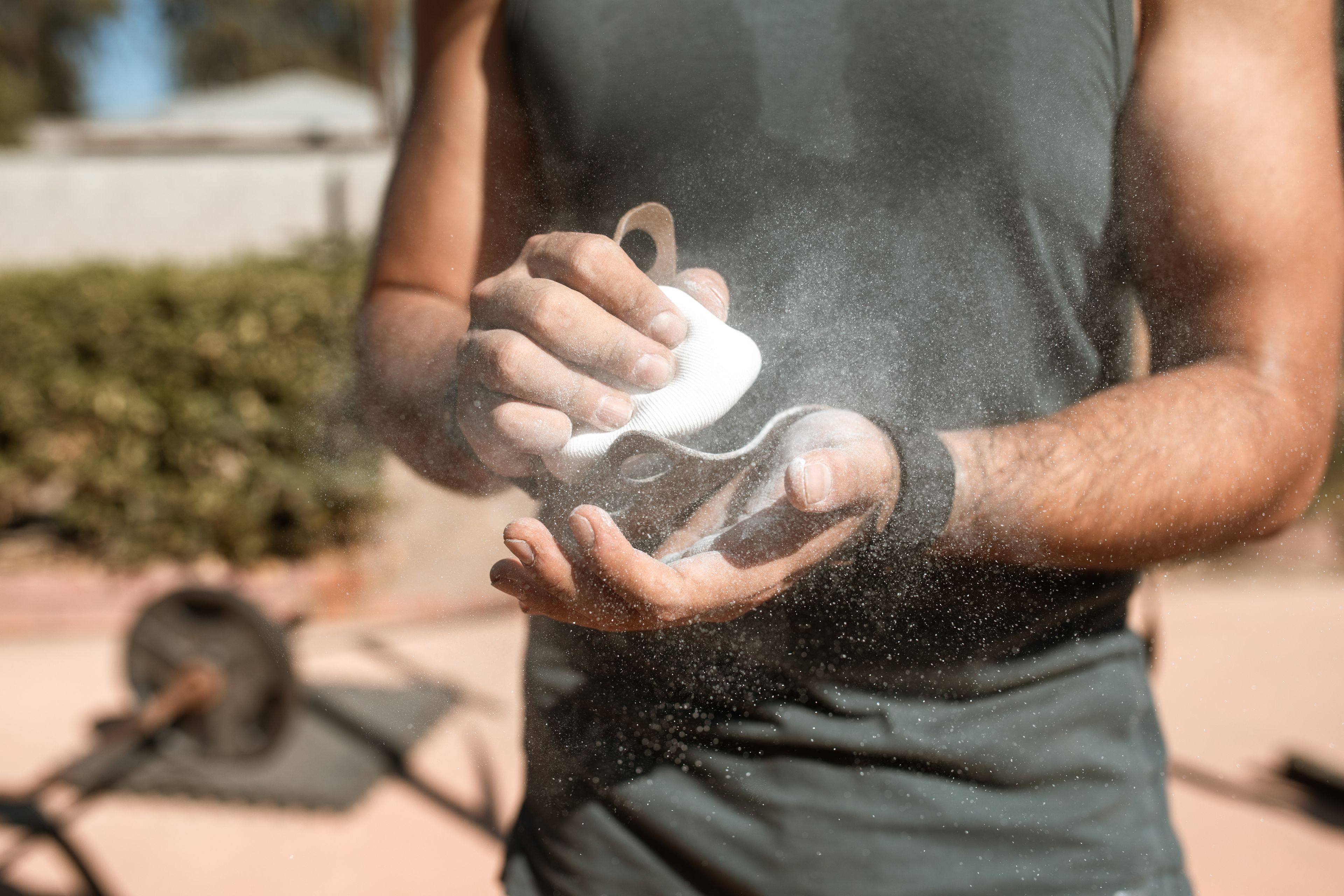
Fix: Use double-overhand for warm-ups, then hook grip, mixed grip, or straps for heavy back-off work. Chalk helps; keep your arms straight.
What muscles does the deadlift work?
The conventional deadlift trains the posterior chain: glutes, hamstrings, and spinal erectors extend the hips; quads break the bar from the floor; upper back, lats, and grip hold it in place. Sumo shifts more work to the quads.
In 30 experienced lifters at 85% of max, conventional pulls showed greater hip extension moments and more biceps femoris and thoracic erector activity; sumo showed more vastus lateralis activity early in the lift (Frontiers in Bioengineering and Biotechnology, 2025). One study found a trap bar had lower peak lumbar and hip moments, higher knee moments, and a heavier 1RM (Swinton et al., 2011).
| Style | Setup | Muscles emphasized | Best for |
|---|---|---|---|
| Conventional | Hip-width; hands outside knees | Hip extensors, hamstrings, back | Posterior-chain strength |
| Sumo | Wide stance; hands inside knees | More quads | A more upright pull |
| Trap (hex) bar | Stand inside; neutral grip | Lower lumbar and hip, higher knee moments | Learning or heavier loading |
For hamstring-focused work, see Romanian deadlift form.
How should you program the deadlift?
For strength, use heavy loads—roughly 80% of max and up—for low reps, put deadlifts first, and count variations toward at least two weekly sessions. Moderate reps can build muscle, though your back may tire before your hamstrings and glutes.
- Use sets of 1–5 for strength or 5–8 for muscle; growth is similar across loads around 30% of max and above (Schoenfeld et al., 2021).
- Try one heavy pull and one variation weekly, such as paused deadlifts, Romanian deadlifts, or trap-bar pulls.
- The 2026 ACSM position stand recommends at least 80% of max for strength, 2–3 sets per session, and at least two weekly sessions; failure isn’t necessary (ACSM Position Stand, 2026).
- Don’t test a max weekly. Use RPE, the 1–10 effort scale, or reps in reserve to stop before form changes.
- Count variations toward frequency, and consider CNS fatigue and whether heavy pulling really fries you.
Is your deadlift stalled by technique or by something else?
It’s technique if heavy reps differ from warm-ups or the bar always slows at the same point. If your top set looks like your warm-up but won’t budge, check programming, recovery, or food; more cues won’t fix it.
| Technique signs | Programming or recovery signs |
|---|---|
| Position changes only above about 85%. | Clean reps still grind. |
| Bar slows at the same spot, or grip fails. | All lifts stall together. |
| One lift stalls while others progress. | You test more than you train or lack a rule for adding weight. |
| Sleep, stress, or diet changed. |
A sticking point is where the bar slows most and failure usually happens. In the deadlift, it occurs around a thigh angle of 60 degrees to the floor (Kompf & Arandjelović, 2017). If video doesn’t explain the stall, how to increase your deadlift when the bar won't budge can help you check other factors.
Is deadlifting dangerous for your back?
Not unusually so. Powerlifting injury rates are similar to other non-contact strength sports and far below contact sports; a review found 1.0–4.4 injuries per 1,000 training hours, with spine, shoulder, and knee among common sites (Aasa et al., 2017). The practical risk is loading a position you haven’t practiced.
- Practice the positions you plan to load.
- If pain persists, get it assessed by a clinician.
If your form checks out and the bar still won’t move, take the quick diagnosis to rank volume, progression, recovery, and food and find which cause is actually first.
FAQ
Should my back be perfectly straight when I deadlift?
Aim for a braced, roughly neutral lower back that stays the same from first rep to last. Some upper-back rounding is common; one study found more rounding at 90% than 60% of max (Front Sports Act Living, 2025).
How much should a 200 lb man be able to deadlift?
Standards vary with bodyweight and experience, so one number can mislead. Compare with deadlift standards for men; if you’re below expectations after a year of steady training, check programming before changing form.
Is deadlift better than squats?
Neither is better; they train different things. Deadlifts load hip extensors and back harder, while squats load quads through a deeper knee bend, so most lifters benefit from both.
Should I do touch-and-go or dead-stop deadlifts?
For strength, use dead-stop reps because touch-and-go rebounds can bypass the floor start where many pulls stall. Touch-and-go can suit higher-rep muscle work if every rep keeps the same position.
Written and maintained by LiftDecode. Training and nutrition education for healthy adults, not medical advice — if you have a health condition or an injury, talk to a professional who can examine you.