RPE Meaning in Lifting: The 1–10 Effort Scale Explained
RPE meaning in lifting: a 1–10 score of how hard a set was, tied to reps left in the tank. Full RPE chart, what RPE 7, 8 and 9 feel like, and how to use it.
- Published
- Reading time
- 7 min
- By
- LiftDecode
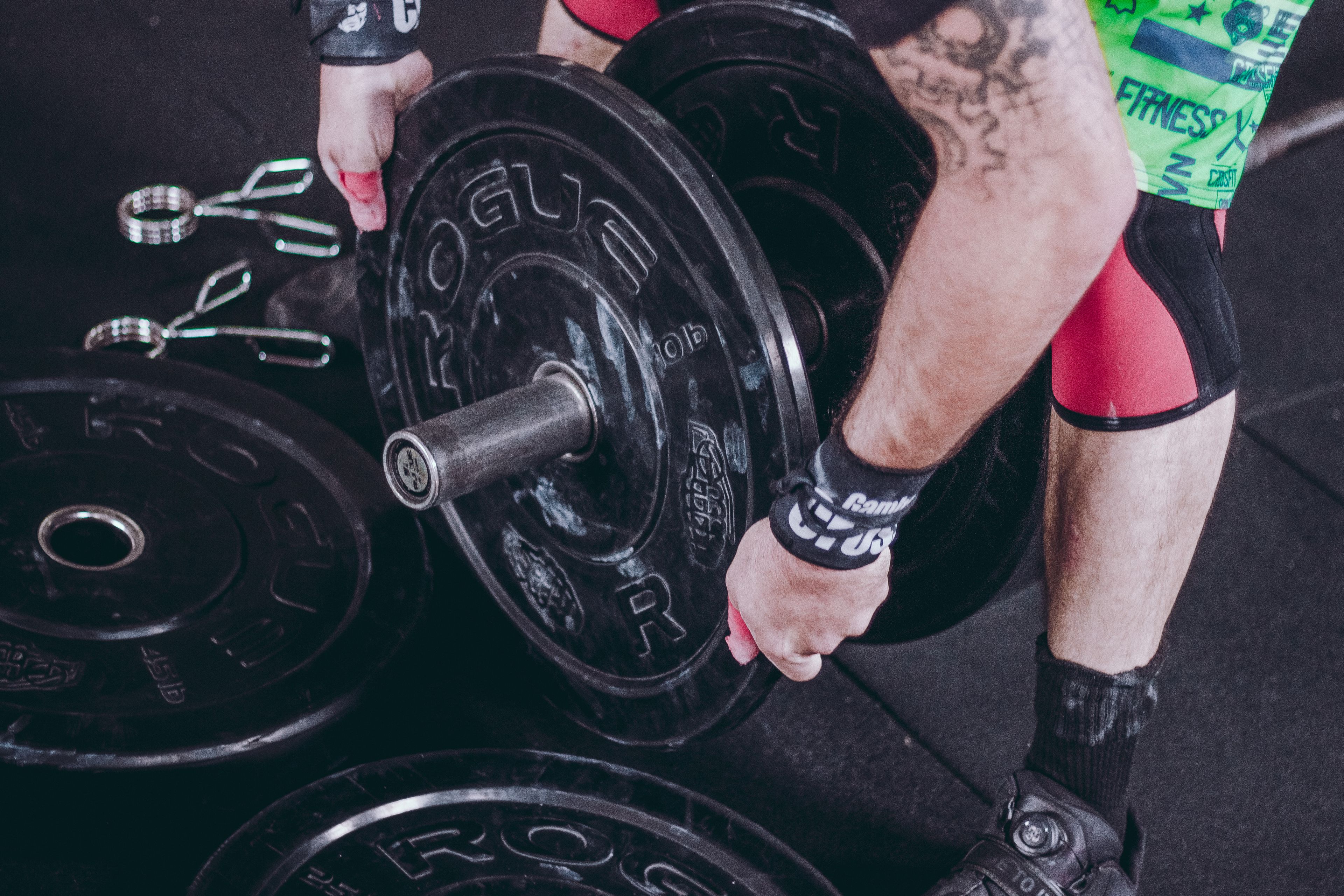
RPE stands for rating of perceived exertion. In lifting, it’s a 1–10 score for how hard a set felt, based on how many more reps you could have done: RPE 10 means none, 9 means one, 8 means two, and 7 means three. It lets a program prescribe effort instead of a fixed weight.
What does RPE mean in lifting?
In strength training, RPE rates how close a set came to failure. It describes effort, not the weight on the bar. An RPE 8 set means you could have done about two more clean reps.
At the top of the scale, RPE ≈ 10 − RIR. Reps in reserve (RIR) is the reps-left anchor. Half-points such as 9.5, 8.5, and 7.5 describe sets between whole numbers; below about RPE 5–6, the scale mostly means “light.” In 29 squatters, RPE rose as bar speed fell, with a stronger relationship in experienced than novice lifters (r = −0.88 vs. −0.77, Helms et al., 2016).
| RPE | Reps left (RIR) | What it feels like on the bar | Typical use |
|---|---|---|---|
| 10 | 0 | True limit; no more reps or weight | Max tests; safe isolation finisher |
| 9.5 | 0 | No more reps; a little more weight possible | Heavy singles, top sets |
| 9 | 1 | Last rep grinds; one more, maybe | Hard top sets; final hypertrophy sets |
| 8.5 | 1–2 | One more for sure, maybe two | Working sets |
| 8 | 2 | Last rep slower; two more would be a fight | Working sets |
| 7.5 | 2–3 | Two more for sure, maybe three | Volume work |
| 7 | 3 | Good speed; form unchanged | Volume, technique, early blocks |
| 5–6 | 4–6 | Comfortable, crisp reps | Warm-ups, recovery |
| 3–4 | — | Light effort | Warm-ups |
| 1–2 | — | Little to no effort | Mobility, empty bar |
Where did the RPE scale come from?
Lifting RPE grew out of cardio RPE. Swedish psychologist Gunnar Borg built the original 6–20 rating of perceived exertion scale for aerobic effort; lifting coaches adapted it to reps left, then researchers formalized the approach.
- Borg’s scale runs from 6 (no exertion) to 20 (maximal); multiplying by 10 roughly tracks heart rate (Wikipedia: Rating of perceived exertion).
- The reps-in-reserve version appeared in The Reactive Training Systems Manual in 2008 for powerlifting, then in research (Helms et al., 2016).
- “How many reps were left?” gives a five-rep squat a clearer anchor than “how hard did that feel?”
What is RPE 7 (and 8, and 9)?
In lifting, RPE 7 means about three good reps left; 8 means two; 9 means one. On a cardio 0–10 scale, a 7 means vigorous effort where you can only say a few words, according to the CDC. The scales answer different questions.
- Lifting RPE 7: Speed is solid and form unchanged.
- Lifting RPE 8: The last rep slows; two more would be a fight.
- Lifting RPE 9: The last rep grinds; one more might be possible.
- Lifting RPE 10: True limit. At 9.5, no more reps were possible, but a little more weight might have been (Gismondi et al., 2024).
How do you rate your RPE after a set?
As soon as you rack the bar, ask how many more reps you could have done with the same form, then subtract that number from 10. Judge the last rep’s speed and technique, not your breathing or the burn.
- Rate the set immediately.
- Count only clean reps with the same depth and bar path.
- Watch for a sharp slowdown, which often means one or two reps from failure.
- If unsure, assume more reps were left and choose the lower RPE.
- Every few weeks, safely take a final set to failure and compare it with your guess.
A meta-analysis of 12 studies with 414 participants found people underestimated reps left by 0.95 on average; estimates were more accurate near failure, in sets of 12 reps or fewer, and in later sets (Halperin et al., 2022). The RPE calculator and chart can estimate a max from a set at RPE 8.
How do programs use RPE?
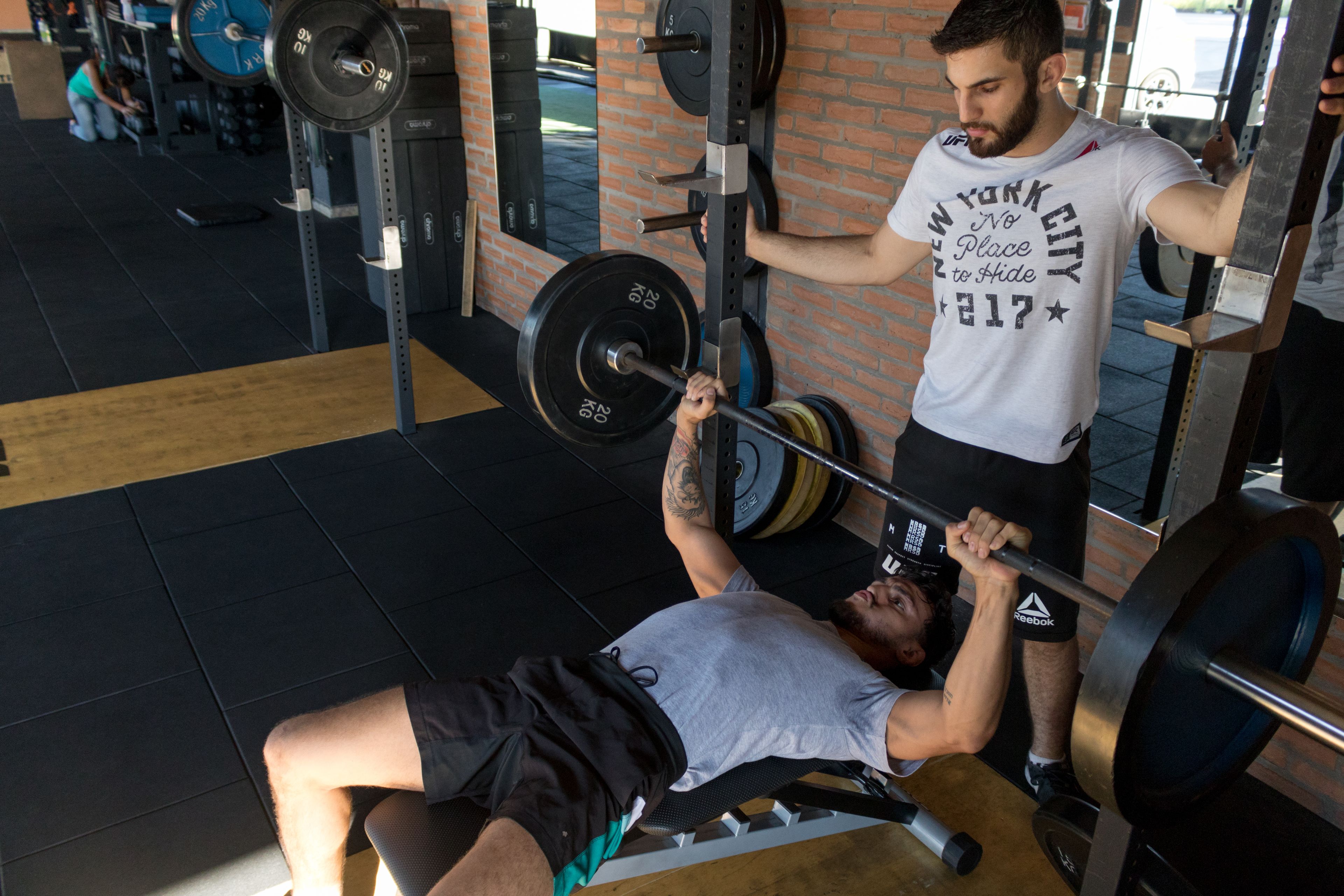
RPE lets the weight float with your day. Instead of “5 reps at 80%,” a program might prescribe “5 reps at RPE 8”: add weight on a good day or reduce it on a bad one while keeping effort on target.
- A percentage plus an RIR target: “90% for 1 rep, 1 RIR.”
- A pure RPE prescription: “3×10 @ RPE 8–9.”
- A target-RPE top set followed by lighter back-off sets.
For 3×5 @ RPE 8 on squat, if 275 lb (125 kg) feels like RPE 7, add 10 lb (5 kg). If 285 lb (130 kg) feels like RPE 8, hold there; if the third set also reaches RPE 8, you’re done. Hitting the same target with more weight next week is progress: progressive overload when you can’t add weight.
In an eight-week study of 21 trained men, RPE-based loading produced at least as much strength gain as percentage-based loading. Squat gains were 17.05 kg versus 13.91 kg, and bench gains 10.70 kg versus 9.64 kg; differences were not statistically significant (Helms et al., 2018).
What RPE should you train at?
Most productive work sits between RPE 7 and 9, or one to three reps left. Muscle growth tends to increase as sets end closer to failure, while strength gains are similar across a wider range of reps in reserve (Robinson et al., 2024).
- Hypertrophy: Most working sets at RPE 8–9; occasionally use RPE 10 on a safe final set, such as a machine or isolation exercise. See how many reps build muscle.
- Strength: Main lifts around RPE 7–9; save RPE 9.5–10 for tests.
- Warm-ups and technique: RPE 5–6. If new to RPE, practice rating sets before choosing loads with it (Helms et al., 2016).
How can RPE training stall your progress?
RPE can stall progress in two ways. Most often, “RPE 8” is really RPE 5 or 6, so sets end too early to force growth; less often, every set reaches RPE 10 and fatigue swallows the next session. Either can make a program seem ineffective.
In a study of 141 people using machine exercises, the least experienced lifters underestimated reps left by about four to five, while the most experienced underestimated by about one to two (Steele et al., 2017). An honest-feeling “two left” can still mean five left.
- You’re probably sandbagging if: Weight at a given RPE never rises, you’ve never reached real failure, or your “RPE 9” bar speed looks like your first rep.
- You’re probably overshooting if: Every top set grinds, the same weight’s RPE keeps rising, or performance drops across sessions.
Calibrate with safe near-failure sets, watch the last rep’s speed, and add load next time if you hit the target RPE with reps to spare. Browse more gym terms in the glossary if another training-sheet abbreviation is unclear.
Effort is one cause. If weights at RPE 8 haven’t moved in a month, find out what’s actually holding your lifts back: the quick one-tap diagnosis checks effort alongside dose, recovery, food, and sleep, then points to what to fix first.
FAQ
What does RPE mean in the gym?
RPE means rating of perceived exertion. In the gym, it’s a 1–10 score of how close a set was to failure: 10 means no reps left, 9 means one, 8 means two, and 7 means three.
Programs use RPE so the weight can vary with how you feel that day. Effort stays the same.
What is RPE 7?
In lifting, RPE 7 means you stopped with about three clean reps left, while the bar still moved well and your form hadn’t changed. On a cardio 0–10 scale, 7 means vigorous effort where you can only say a few words (CDC).
Check which scale your program uses. They measure different things.
How do I calculate my RPE?
You rate it rather than calculate it. Right after the set, ask how many more reps you could have done with the same form, then subtract from 10; two reps left is RPE 8.
Because most people underestimate what’s left, occasionally test yourself with a safe set to failure. Compare your estimate with the result.
What is a good RPE score?
For most working sets, RPE 7–9 means one to three reps left. Muscle growth tends to improve when sets end closer to failure, so hypertrophy work belongs around RPE 8–9.
Strength work can sit around RPE 7–9. Save RPE 10 for tests.
Written and maintained by LiftDecode. Training and nutrition education for healthy adults, not medical advice — if you have a health condition or an injury, talk to a professional who can examine you.