How to Increase Deadlift When the Bar Won't Budge
How to increase deadlift strength after a stall: find where the pull fails, practise heavy without grinding, fix grip and back position. 8-week plan inside.
- Published
- Reading time
- 7 min
- By
- LiftDecode
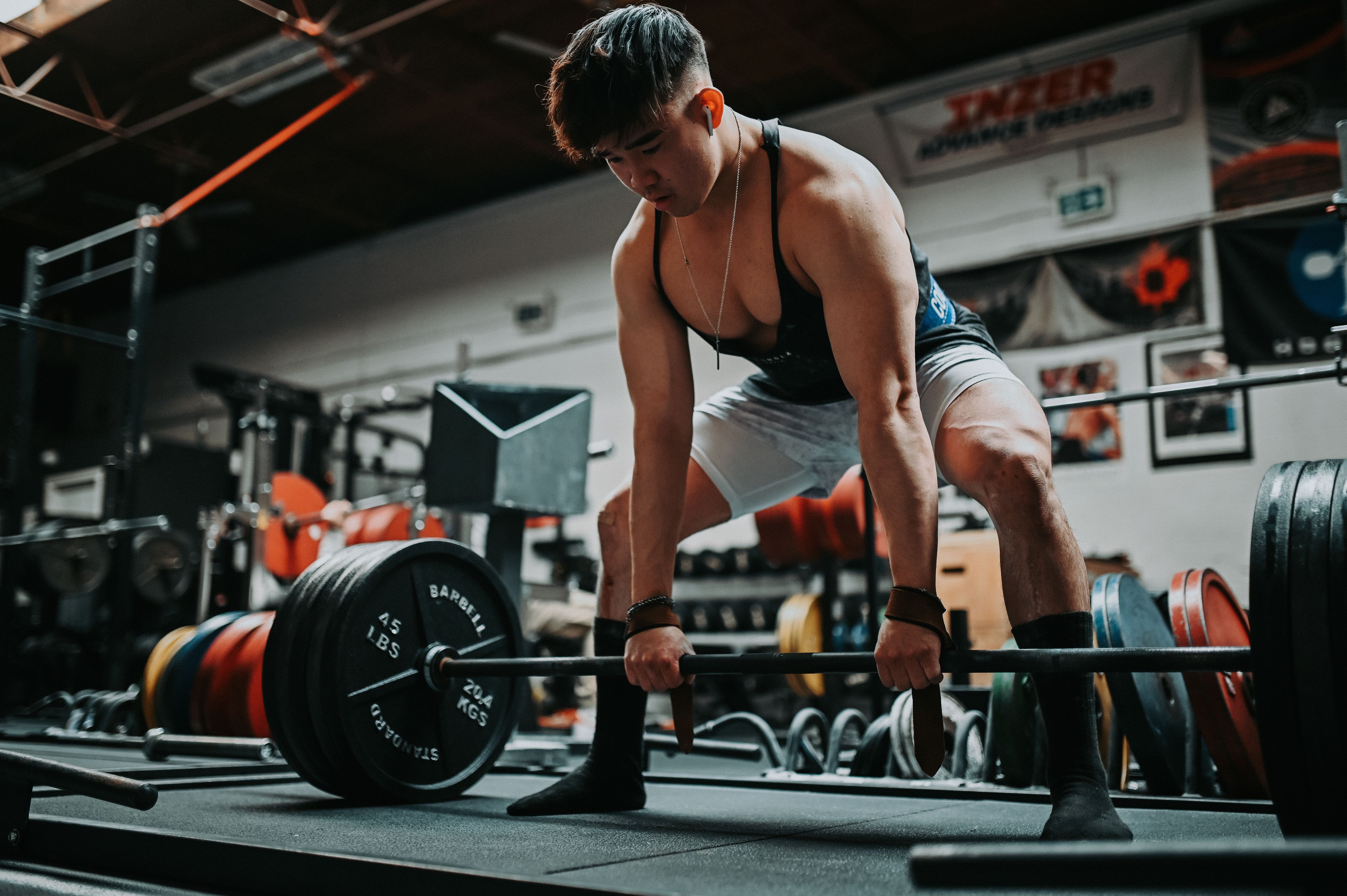
To increase your deadlift, stop testing it and start practicing it: pull twice a week, keep most sets at 2–5 reps where every rep looks the same, and train the exact point where the bar slows. Then remove grip as a limit and add 5 lb (2.5 kg) only when the last rep is as clean as the first.
Why does the deadlift stop going up?
Usually one of four things is happening: you grind maxes instead of practicing heavy, clean pulls; your position changes as the weight gets heavy; one part of the pull is weaker than the rest; or your grip fails first. Use the strength guides and standards as a reference, but diagnose your own pull before adding more work.
The deadlift starts from a dead stop and has no spotter to help with a missed rep. Repeated grinders can reinforce a pattern that changes under load. In strength-trained women, maximal deadlifts showed more lower-thoracic flexion and erector activity than submaximal pulls (Gundersen et al., 2025). A review also found slower bar speed and greater joint variability at higher loads, though it included only two deadlift studies (Bakhshinejad et al., 2025).
- You test heavy singles or ugly triples every week instead of practicing crisp reps.
- Your back or hips change position as the bar gets heavier.
- The bar slows at one repeatable point in the pull.
- Your hands open or the bar rolls before your back and legs are spent.
Where does your deadlift fail — and what fixes each spot?
Film a heavy set from the side and watch where the bar slows. Slow off the floor points to leg drive and start position; at the knee, to the bar drifting forward; at lockout, to the hips and upper back. Each spot has its own fix. For more on setup and position, see deadlift form mistakes that stall your pull.
A sticking point is a position in the lift where difficulty rises disproportionately (Kompf & Arandjelović, 2017). Check your video, identify that position, then match the exercise to it.
- Film from the side and note where the bar slows or your position changes.
- If your hips shoot up and the bar breaks slowly, work the floor.
- If the bar swings forward near the knee, work the bar path and upper back.
- If it stalls at mid-thigh, check whether the bar drifted forward earlier.
| Where the bar slows | What it usually means | Fix to add (1–2 of these) |
|---|---|---|
| Off the floor | Weak leg drive; hips rise first | Paused deadlift just off the floor; deficit deadlift; squats |
| At or just below the knee | Bar drifts forward; upper back rounds | Paused deadlift at the knee; Romanian deadlift; rows |
| Mid-thigh to lockout | Hips/glutes don't finish; bar was out of position earlier | Hip thrusts; RDLs; check bar path from the floor |
| Bar slips from hands | Grip is the limit | Hook or mixed grip on heavy sets; straps on back-offs; heavy holds |
| Position breaks only on top sets | Technique changes under load | Keep sets at 1–2 RIR; stop sets when a rep looks different |
How often and how heavy should you deadlift?
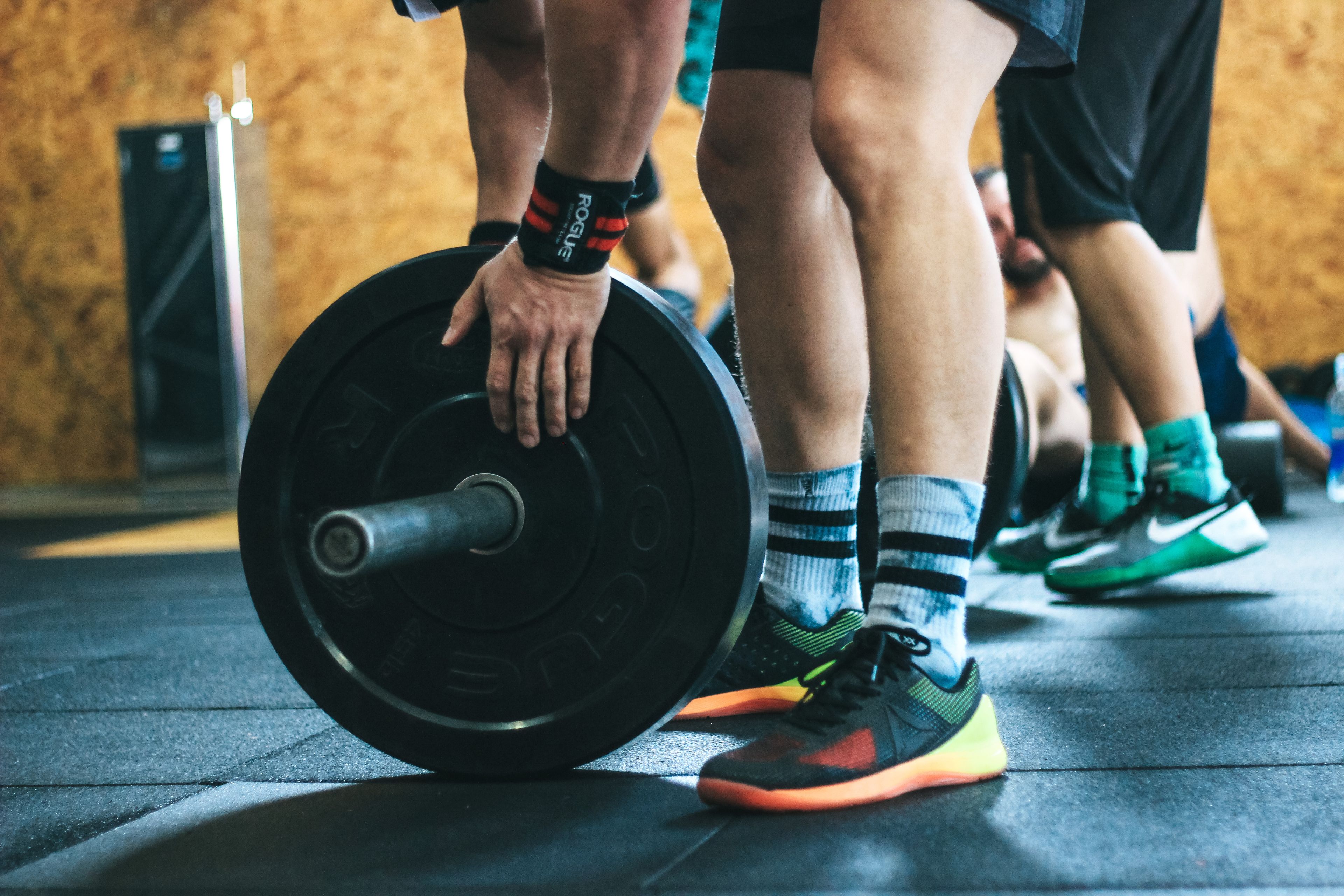
Twice a week suits most people: one heavier day of 2–5-rep sets you can pull identically, and one lighter or variation day. Strength tends to rise with weekly frequency and sets, with diminishing returns (Pelland et al., 2026); heavier loads favor 1RM gains (Schoenfeld et al., 2017).
The idea that deadlifts are so draining you can only do them once a week is overstated. In a study of 12 well-trained men, deadlift sessions did not cause more muscle damage or take longer to recover from than squat or bench sessions (Belcher et al., 2019).
- Stop a heavy set when the next rep would look different from the first.
- Aim to finish with 1–2 reps in reserve (RIR), meaning you could have done one or two more reps.
- Save true maxes for a test day every 8–12 weeks.
- Use heavy sets for practice, not proof.
Should you switch to sumo to deadlift more?
Sometimes. Sumo shortens the pull: at a national championship, conventional lifters moved the bar about 25–40% farther and did about 25–40% more work than sumo lifters (Escamilla et al., 2000). If your hips suit a wide stance, sumo may let you lift more; give it a full block before judging.
Sumo uses a wider stance and a more upright trunk, while conventional has longer bar travel. Another study found less bar displacement with sumo across loads from 30% to 100% of 1RM, but similar bar speed at 1RM (Kasovic et al., 2019). A stance switch won't fix a grip limit or a weak sticking point, so practice it for at least eight weeks before deciding.

How do you run an 8-week deadlift block? (worked example)
For a lifter who pulls 365 lb (166 kg) for three clean reps but keeps missing 405 lb (184 kg): use one heavy day, one paused-variation day, targeted accessories, and add 5 lb (2.5 kg) only when every rep looks the same. These example loads are starting points, not a promise of results.
- Day A, heavy: Work up to 1 set of 3 at 365 lb (166 kg), then 3×3 at 325 lb (147 kg). Stop a set if a rep changes.
- Day B, weak spot: Pause just below the knee for 3×3 at 275 lb (125 kg), or use 3×4 deficit deadlifts at 275 lb (125 kg) if you're slow off the floor.
- Accessories: Do RDLs, or learn how to do Romanian deadlifts, for 3×6–8 at 225 lb (102 kg); rows for 4×8–10; hip thrusts or back extensions for 3×10–12; and one heavy grip hold after Day A.
- Grip: Use a hook grip, with the thumb trapped under the fingers, or a mixed grip on top sets. Straps are fine for back-off sets and RDLs.
- Progression: When all Day A sets are clean, add 5 lb (2.5 kg) to next week's top set. If you grind or change position, repeat the weight.
- Week 8: Test a heavy single or 3-rep max, then use the 1RM calculator to set the next block's weights.
Seven clean weeks of 5 lb increases take the top triple from 365 lb to 400 lb (182 kg). Not every week will be clean; repeating a weight is part of the plan.
What if the deadlift still won't move?
If two months of clean heavy practice, weak-spot work, and a fixed grip haven't moved your pull, the limit may sit outside the deadlift: too little muscle, poor sleep, eating in a deficit, or other hard training using the recovery you need.
- Look at your sleep, food intake, and total hard training.
- If lower-back or hip pain shows up every heavy session, see a doctor or physio.
A stuck deadlift after a well-run block usually has a cause the deadlift can't fix on its own. LiftDecode's diagnosis of what's actually capping your pull looks at your training, food, sleep, and recovery to identify the bottleneck to address first.
FAQ
How often should you deadlift to increase your deadlift?
Twice a week suits most intermediates: one heavier day of 2–5-rep sets and one lighter or variation day. In well-trained men, deadlift sessions caused no more muscle damage or recovery time than squat or bench sessions (Belcher et al., 2019).
Should I max out my deadlift every week?
No. In strength-trained women, maximal deadlifts came with more upper-back rounding than submaximal pulls (Gundersen et al., 2025). Practice sets of 2–5 that you can pull identically, and test a max every 8–12 weeks.
Is sumo easier than conventional deadlift?
Sumo is a shorter pull: conventional lifters moved the bar about 25–40% farther and did 25–40% more work at a national championship (Escamilla et al., 2000). Whether it feels easier for you depends on your hips and build, so give it a full block.
Is a 315 lb deadlift impressive?
Three plates a side, or 315 lb (143 kg), is a milestone many lifters remember, but how it ranks depends on bodyweight, age, and sex. Own it for clean triples before chasing the next plate, and see the deadlift standards guide for numbers.
Written and maintained by LiftDecode. Training and nutrition education for healthy adults, not medical advice — if you have a health condition or an injury, talk to a professional who can examine you.