Bench Press Form: Setup and Mistakes That Cap Your Bench
Bench press form that holds up under heavy weight: the setup, grip and elbow position, the bar path, and 6 mistakes that cap your bench, with a fix for each.
- Published
- Reading time
- 7 min
- By
- LiftDecode

A tight upper back, planted feet and eyes under the bar set up a strong bench press. Grip about 1.5 times shoulder width, lower the bar to your lower chest with elbows slightly tucked, then press toward your shoulders. See more form guides for the big lifts.
What does good bench press form look like?
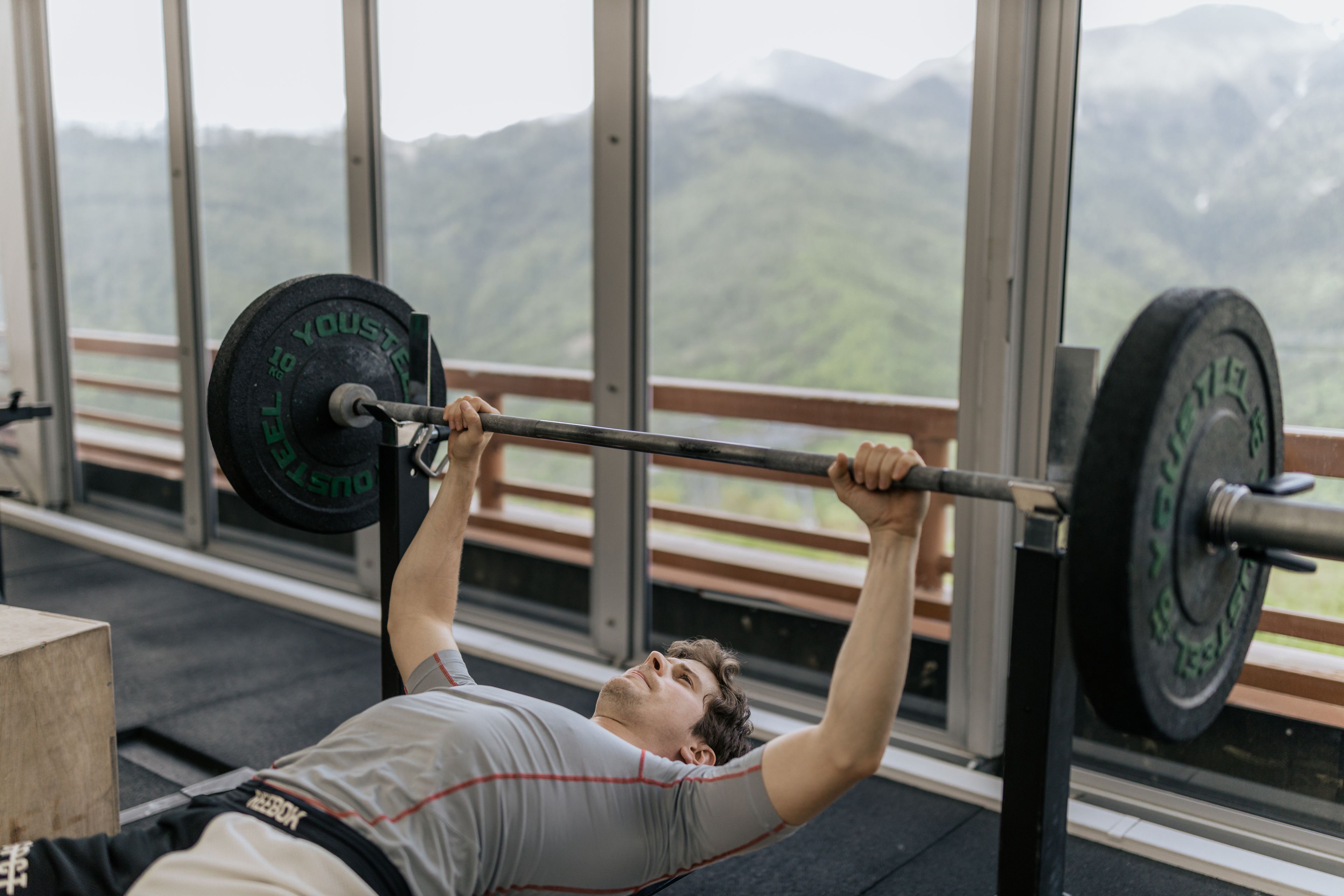
Keep your head, upper back, glutes and feet in contact with the bench or floor. Pin your shoulder blades back and down, touch the lower chest, then press up and slightly back. Make every rep look alike.
At 60% of one-rep max, the chest showed roughly 27% of a maximal contraction, front delts 26% and triceps 15% (Rodríguez-Ridao et al., 2020). In a side-view video, check that the bar touches the same spot, wrists stack over forearms and your butt stays down.
How do you set up for the bench press?
- Lie with your eyes under the bar and grip evenly, roughly 1.5 times shoulder width. Keep the bar low in your palm and wrists stacked.
- Squeeze your shoulder blades back and down, lift your chest and plant your feet. Keep your glutes on the bench.
- Unrack with straight arms, using a spotter or controlled pull-out, and pause with the bar over your shoulders.
In 14 trained men, medium and wide grips produced similar 1RMs; narrow grip was lower (Larsen et al., 2020). Modeling found wider grips increased shoulder-joint forces, while retracting the shoulder blades reduced reaction force and compression (Frontiers in Physiology, 2024).
How do you bench press, step by step?
- Breathe in and brace.
- Lower the bar under control to your lower chest or upper stomach, with forearms vertical and elbows roughly 45–70° from your torso.
- Touch without bouncing. Push your feet into the floor and press up and slightly back toward your shoulders.
- Lock out, breathe and repeat.
Keep your shoulder blades pinned and glutes down. Adjust your grip and touch point until your forearms stay vertical at the bottom.
Which bench press mistakes cap your bench?
Common faults include a loose upper back, moving butt or feet, bouncing the bar, poor elbow position, an extreme grip and a bar path that drifts toward your feet. Each can cost force just off the chest, where many benches fail.
Shoulders roll forward (loose upper back)
Shoulders that lift or a chest that caves cost you a stable base and add shoulder-joint load. Film from the side to check that your shoulder blades stay pinned; reset before unracking and build upper-back strength with rows or face pulls. Retraction reduced shoulder-joint forces in modeling (Frontiers in Physiology, 2024).
Butt lifts or feet slide
Moving hips or feet changes your leverage and makes reps inconsistent; lifting your butt is also a competition red light. Keep your glutes on the pad, set your feet slightly behind your knees and push the floor toward your head.
Bouncing the bar off the chest
A rebound uses the bounce through the hardest part instead of building control there. Check for a visible sink and rebound on video. Touch and pause briefly, or add paused reps; the sticking point is near the start, around 30% of bar height (Kompf & Arandjelović, 2017).
Elbows flared to 90° or jammed to the ribs
A T-shaped arm position or elbows ahead of the bar can leak force; a wide flare with a wide grip also loads the shoulder more. Check for vertical forearms at the bottom. Start near 45–70°, cue “bend the bar,” and allow a little flare as you press.
Grip too narrow or too wide
Hands near shoulder width or pinkies on the rings with flared elbows may cost leverage or increase shoulder loading. Narrow grip cost about 5 kg (11 lb) of 1RM versus medium; very wide grips raise shoulder-joint forces (Larsen et al., 2020; Frontiers in Physiology, 2024). Try roughly 1.4–1.7 times shoulder width and check that forearms are vertical at the touch.
The bar drifts toward your feet on heavy reps
Heavy reps may travel straight up or forward while warm-ups move back toward your shoulders. That makes the press longer and harder; heavier loads can increase horizontal movement toward the shoulders and lengthen the sticking region (Sports Medicine–Open, 2025). Compare side-view paths and cue “press back toward the rack.”
Should you arch when you bench?
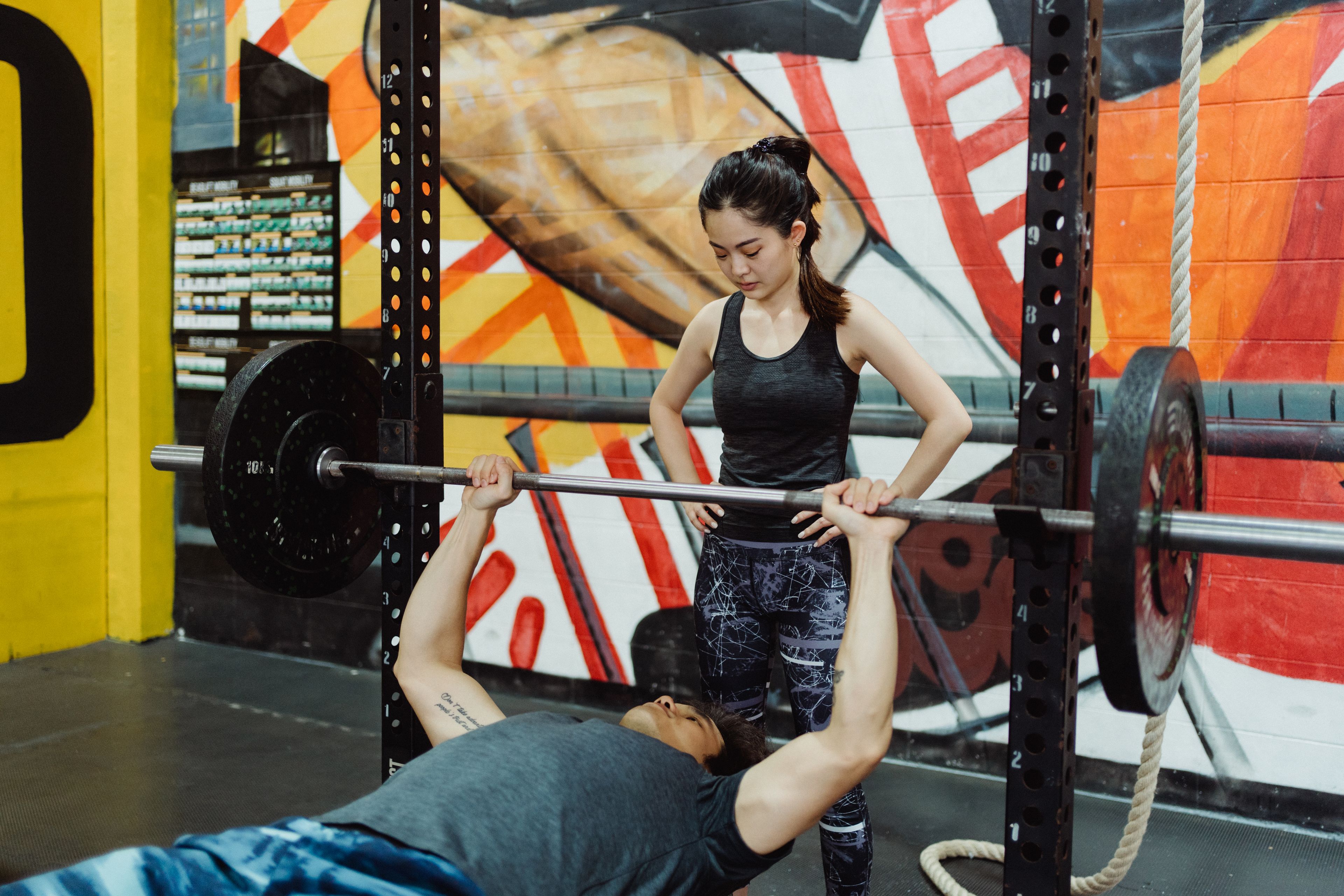
A moderate arch is legal and mainly helps by shortening bar travel. It helps on the platform, but it isn’t new strength.
Keep your glutes on the bench. For muscle building, a flatter position and fuller range are fine; chest activity was similar with arched and flat backs in highly trained athletes, while arched 1RMs were about 4 kg (9 lb) higher (J Strength Cond Res, 2024).
What muscles does the bench press work?
The flat bench works the chest, front delts and triceps. A closer grip adds triceps emphasis; an incline around 30° shifts emphasis toward the upper chest, while steeper inclines make front delts work more.
For chest growth, use a medium grip, controlled lowering and comfortable full range. Upper chest worked hardest at a 30° incline (see how to build the upper chest); above 45° shifted emphasis to front delts and reduced pec performance (Rodríguez-Ridao et al., 2020). Narrow grip also increased triceps activity versus wide grip (Muyor et al., 2023).
| Choice | What changes | Evidence |
|---|---|---|
| Grip width 1.7× / 1.4× / 1.0× shoulder width | 1RM 109.8 / 108.9 / 103.7 kg; narrow adds triceps emphasis | Larsen et al., 2020; Muyor et al., 2023 |
| Grip wider than about 1.5× | Higher shoulder-joint forces | Frontiers in Physiology, 2024 |
| Retracted shoulder blades | Lower reaction force and compression | Frontiers in Physiology, 2024 |
| Arched vs. flat back | About 4 kg higher 1RM, shorter travel, similar pec activity | J Strength Cond Res, 2024 |
| Incline 30° vs. flat | Highest upper-pec activation at 30°; above 45° shifts to front delts | Rodríguez-Ridao et al., 2020 |
How should you program the bench press?
Bench two or three times weekly: one heavier day and one or two volume days. Leave a rep or two in reserve on most sets, and use paused reps to train the bottom.
- Start with bench while fresh. A 2026 ACSM position stand recommends at least two weekly sessions, full range of motion and heavy work at 80% or more of your max (ACSM, 2026).
- Try 3–5 reps on the heavy day and 6–10 on volume days; build toward at least 10 weekly sets for muscle growth.
- Add paused bench, Spoto press or pin press while keeping full-range reps. In trained men, both partial and full-range training raised 1RM over four weeks, but only full-range work improved force around the chest (J Funct Morphol Kinesiol, 2026).
- Avoid weekly max tests. Use the bench press calculator and follow a 3-lever plan to increase your bench press.
Is your bench stalled by technique or by something else?
It’s technique if heavy reps differ from warm-ups: your butt lifts, shoulders roll, touch point moves or bar drifts toward your feet. If reps look consistent but you stall just off the chest, dose, progression or recovery may be the issue.
| Technique clues | Programming or recovery clues |
|---|---|
| Setup changes from set to set | Clean reps, no progress for six or more weeks |
| Misses start after the bar drifts | You bench only once a week |
| Paused reps work, but touch-and-go reps don’t, or vice versa | No progression rule, poor sleep, high stress or cutting calories |
If technique is the issue, film a top set and compare it with warm-ups. For plan or recovery clues, start with why your bench press stalled. If video shows consistent reps, take the quick diagnosis to rank dose, progression, recovery and food and find the cause that’s actually first.
FAQ
Should your elbows be tucked in the bench press?
Partly: tuck them around 45–70° at the bottom so your forearms stay vertical, then allow a little flare as you press. A 90° flare with a very wide grip adds shoulder load, while tucking to your ribs can push the bar toward your feet.
What not to do when bench pressing?
Don’t bounce the bar, lift your butt, roll your shoulders forward or change grip and touch point from set to set. These habits make reps less repeatable and limit strength building.
How much should a 170 lb man bench?
It depends on training experience, so compare your lift with bench press standards by bodyweight. If you’ve trained consistently for a year or more and sit well below those standards, review programming and recovery as well as form.
Is it bad to arch your back when benching?
No; a moderate arch is legal in powerlifting and mainly shortens bar travel. Arched 1RMs were about 4 kg (9 lb) higher in trained athletes, with similar chest activity (J Strength Cond Res, 2024); keep your glutes on the bench.
Written and maintained by LiftDecode. Training and nutrition education for healthy adults, not medical advice — if you have a health condition or an injury, talk to a professional who can examine you.