Bench Press Standards: How Much Should You Bench?
Bench press standards by bodyweight and age, what each level means, how long each takes to reach, and the right target for you if your bench has stalled.
- Published
- Reading time
- 7 min
- By
- LiftDecode
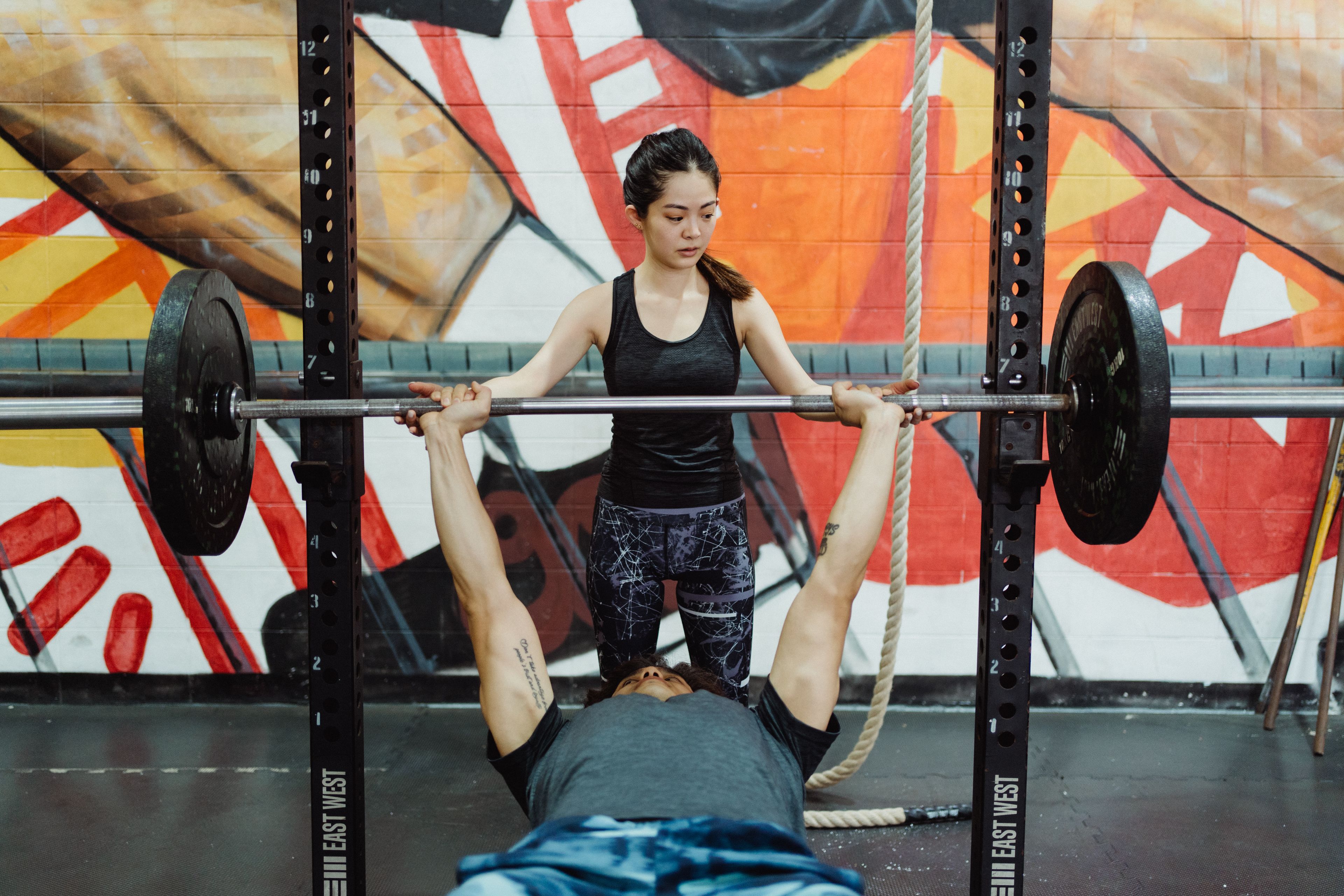
A good bench press depends on your bodyweight, age, and training time. For a 180-lb man, Strength Level’s standards put novice at 169 lb, intermediate at 220 lb, and advanced at 277 lb. Intermediate means stronger than half of Strength Level users and about two years of regular training. See the strength standards hub, or the average bench press for men by age and bodyweight for typical numbers.
What are the bench press standards for men?
Strength Level’s standards use millions of logged lifts and divide lifters into five levels by bodyweight. At 200 lb bodyweight, they range from beginner at 144 lb to elite at 367 lb (Strength Level).
| Bodyweight | Beginner | Novice | Intermediate | Advanced | Elite |
|---|---|---|---|---|---|
| 130 lb | 80 lb | 114 lb | 156 lb | 205 lb | 258 lb |
| 150 lb | 99 lb | 137 lb | 183 lb | 236 lb | 292 lb |
| 170 lb | 118 lb | 158 lb | 208 lb | 264 lb | 324 lb |
| 180 lb | 127 lb | 169 lb | 220 lb | 277 lb | 339 lb |
| 190 lb | 136 lb | 179 lb | 231 lb | 290 lb | 353 lb |
| 200 lb | 144 lb | 189 lb | 243 lb | 303 lb | 367 lb |
| 220 lb | 161 lb | 208 lb | 265 lb | 327 lb | 394 lb |
| 240 lb | 177 lb | 227 lb | 285 lb | 350 lb | 419 lb |
| 260 lb | 193 lb | 244 lb | 305 lb | 372 lb | 442 lb |
| 280 lb | 208 lb | 261 lb | 324 lb | 393 lb | 465 lb |
| 300 lb | 222 lb | 278 lb | 342 lb | 413 lb | 487 lb |
Logged users may be stronger than the general population, and many entries are estimated from rep sets rather than tested singles (Strength Level FAQ). A one-rep max (1RM) is the most weight you can lift once.
What do beginner, novice, intermediate, advanced and elite mean?
The levels compare you with Strength Level users and reflect typical training time (Strength Level).
| Level | Stronger than | Typical training behind it |
|---|---|---|
| Beginner | 5% of users | Correct technique; at least 1 month |
| Novice | 20% of users | Regular practice for at least 6 months |
| Intermediate | 50% of users | Regular practice for at least 2 years |
| Advanced | 80% of users | Progressed for over 5 years |
| Elite | 95% of users | Over 5 years; competitive |
These are dataset definitions, not promises about your progress. Percentiles describe app users, not all men.

How much should you be able to bench?
Find your bodyweight row, identify your current level, and aim for the next one. After six months of regular benching, you should be near novice; after two years, near intermediate. Being well behind is a useful signal.
- At 170 lb bodyweight, a 185-lb bench falls between novice (158 lb) and intermediate (208 lb); aim for 208 lb (Strength Level).
- At 220 lb bodyweight, a 225-lb bench after three years is below intermediate (265 lb), a reason to diagnose the bottleneck.
Estimate your max from a rep set with a 1RM calculator instead of testing constantly.
Are bodyweight ratios like "bench your bodyweight" good standards?
They’re a rough shortcut, not a fair standard. Relative strength falls as body mass rises, so a 1.5× bodyweight bench is harder for a 150-lb lifter than a 250-lb lifter. Compare ratios within your age group and bodyweight range.
A study of 101,898 drug-tested powerlifters found bodyweight multipliers decline nonlinearly across percentiles. The male 99th-percentile deadlift multiplier was 4.37 in the 59 kg class and 2.65 in the 120+ kg class (Montenegro et al., 2026). Strength Level’s intermediate bench figures show a similar pattern: 183 lb at 150 lb bodyweight is 1.22×, versus 295 lb at 250 lb.
| Cooper Institute percentile | Under 20 | 20–29 | 30–39 | 40–49 | 50–59 | 60+ |
|---|---|---|---|---|---|---|
| 95th (Superior) | 1.76 | 1.63 | 1.35 | 1.20 | 1.05 | 0.94 |
| 80th (Excellent) | 1.34 | 1.32 | 1.12 | 1.00 | 0.90 | 0.82 |
| 60th (Good) | 1.19 | 1.14 | 0.98 | 0.88 | 0.79 | 0.72 |
| 40th (Fair) | 1.06 | 0.99 | 0.88 | 0.80 | 0.71 | 0.66 |
| 20th (Poor) | 0.89 | 0.88 | 0.78 | 0.72 | 0.63 | 0.57 |
| 5th (Very poor) | 0.76 | 0.72 | 0.65 | 0.59 | 0.53 | 0.49 |
Cooper ratios came from clinic patients tested on variable-resistance machines, so they don’t directly match barbell numbers (Cooper norms via ACE; Ruiz et al., BMJ 2008). Among drug-tested male powerlifters aged 18–35, the 90th-percentile bench was 1.95× bodyweight (van den Hoek et al., 2024).
How do bench press standards change with age?
Strength Level’s intermediate bench stays at 212 lb from about ages 25 to 40, then falls: 188 lb at 50 (89% of peak) and 158 lb at 60 (75%). Adjust your target for age before deciding you’re behind (Strength Level).
Calculated from its age table, intermediate targets are about:
- Age 45: 95% of the 25–40 figure.
- Age 50: 89%.
- Age 55: 82%.
- Age 60: 75%.
- Age 65: 67%.
The exact share of 50-year-old men who can bench 225 lb (102 kg) is unmeasured. In Cooper norms, the 95th percentile for men 50–59 is 1.05× bodyweight, so 225 lb beats that mark for a 199-lb man, the average US male weight (Cooper norms via ACE; CDC FastStats). Among Strength Level users aged 50, 225 lb falls between intermediate (188 lb) and advanced (248 lb); 29.9% of US men aged 45–64 met muscle-strengthening guidelines in 2020 (CDC MMWR).
What are the bench press standards for women?
At 140 lb bodyweight, Strength Level lists women’s novice bench at 72 lb, intermediate at 108 lb, and advanced at 152 lb. The average woman who logs on the site benches 112 lb, about 53% of the men’s average (Strength Level).
| Bodyweight | Beginner | Novice | Intermediate | Advanced | Elite |
|---|---|---|---|---|---|
| 120 lb | 36 lb | 61 lb | 95 lb | 137 lb | 183 lb |
| 140 lb | 44 lb | 72 lb | 108 lb | 152 lb | 201 lb |
| 160 lb | 52 lb | 82 lb | 120 lb | 166 lb | 217 lb |
| 180 lb | 59 lb | 91 lb | 131 lb | 179 lb | 232 lb |
| 200 lb | 66 lb | 99 lb | 141 lb | 191 lb | 245 lb |
Studies found women gained relative upper-body strength at least as fast as men (Roberts et al., 2020). See the average bench press for women for typical numbers.
What if you're behind the standard for your training time?
Treat it as a clue, not a verdict. Progress slows as you get stronger: the strongest male powerlifters gained about half as much per day as the least strong group (Latella et al., 2020). Falling short of novice after a year or intermediate after several years may point to fixable causes:
- No rule guiding load or reps.
- Too little heavy practice; check whether you bench above 60% of your 1RM most weeks.
- Low bench frequency, or sets end too far from failure.
- An untrained sticking point or technique breakdown under heavy load; review bench press form fixes that cap your bench.
- Sleep, stress, cardio, or a calorie deficit interfering with recovery.
Heavy loads produce greater 1RM gains than light loads, according to a review of 21 studies (Schoenfeld et al., 2017). For a plan to increase your bench press, address an identifiable bottleneck. If the cause remains unclear, see which bottleneck is holding your bench back.
FAQ
How much should a 170 lb man bench press?
Strength Level puts a 170-lb man at novice for 158 lb, intermediate for 208 lb, and advanced for 264 lb (Strength Level). After six months of regular training, aim for about 158 lb; after two years, about 208 lb.
What percentage of 50 year old men can bench 225?
Nobody has measured it for all 50-year-olds. Cooper norms put the 95th percentile for men 50–59 at 1.05× bodyweight, while 225 lb falls between intermediate (188 lb) and advanced (248 lb) among Strength Level users aged 50 (Cooper norms via ACE; Strength Level).
Is it normal to only bench press 100 lbs?
In your first months, yes: 100 lb is Strength Level’s beginner mark for a 150-lb man. After six months of regular benching, the novice mark is 137 lb; still at 100 after a year suggests a limiting factor (Strength Level).
Is it true that only 1% of the world can bench 225?
There’s no survey or representative population data behind that claim. Bench 225 is common among young men who train and rare among older men; it is mid-pack for Cooper Clinic men in their 20s but beyond the 95th percentile in their 50s (Cooper norms via ACE). Full breakdown here.
Written and maintained by LiftDecode. Training and nutrition education for healthy adults, not medical advice — if you have a health condition or an injury, talk to a professional who can examine you.