Barbell Row Form: Stop Turning Rows Into Shrugs
Barbell row form that builds your back: torso angle, grip, where to pull, and the mistakes that turn bent-over rows into shrugs, with a video check and fix.
- Published
- Reading time
- 7 min
- By
- LiftDecode
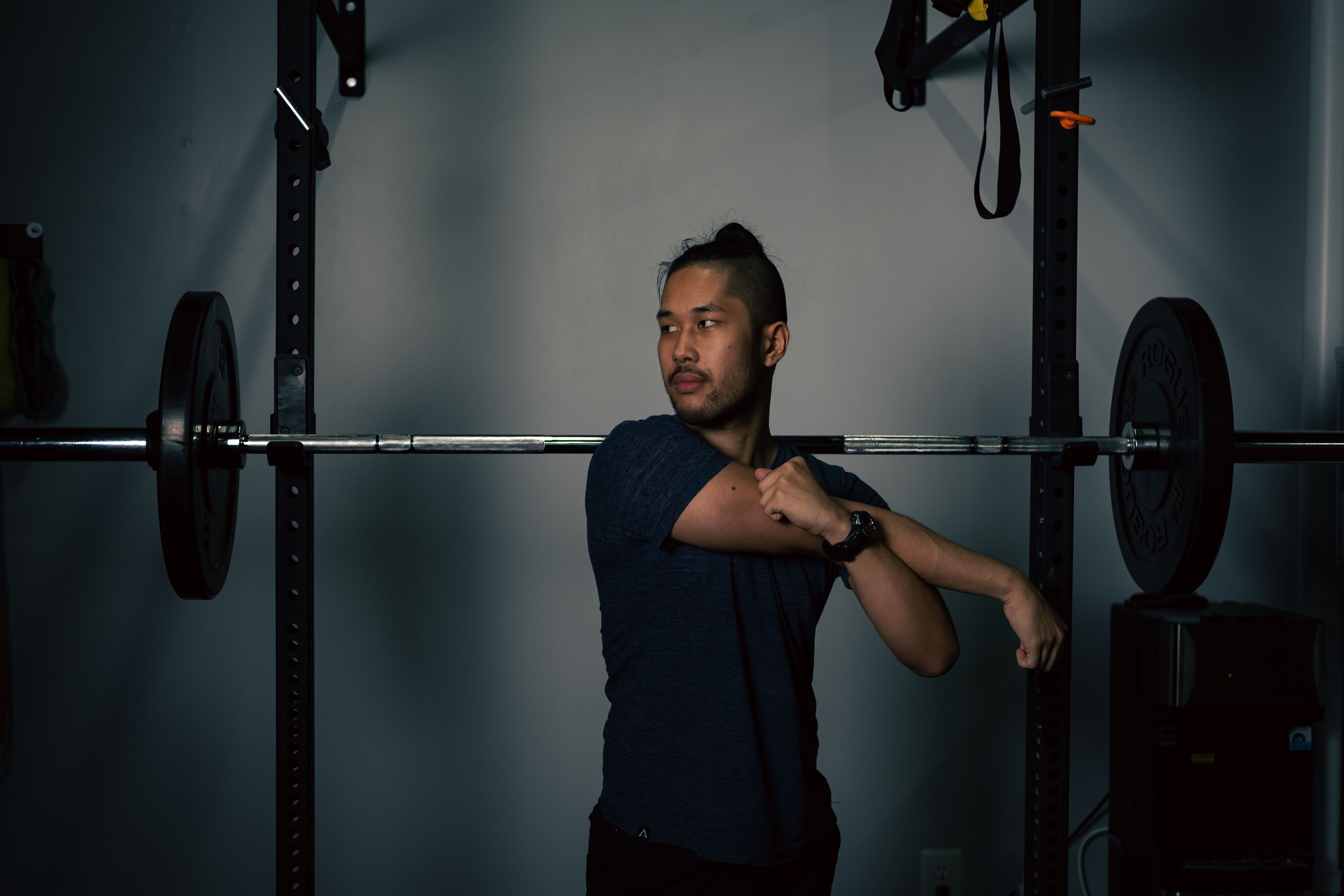
Good barbell row form means hinging until your torso is roughly 30–45° above parallel, holding that angle, and pulling the bar to your lower ribs by driving your elbows back. If your torso rises, hips swing, or shoulders shrug, the row has become a shrug. See all our form guides for the big lifts.
What does good barbell row form look like?
Keep a fixed hip hinge and flat back. Let the bar hang below your shoulders, then pull it to your lower chest or upper stomach by driving your elbows back. Keep your torso still and lower under control.
A more horizontal torso lengthens the pull; standing upright shortens it and shifts the movement toward a shrug. Pendlay rows start each rep from the floor with a parallel torso; Yates rows use an underhand grip and a more upright torso (bent-over row variations). The 30–45° range is a practical coaching target.
- Keep the same torso angle through every rep.
- Touch the bar to your lower ribs or upper stomach.
- Keep shoulders down as elbows travel back.
- Straighten your arms and lower under control.
How do you set up for a barbell row?
Stand with feet hip-width and the bar over mid-foot. Grip just outside your knees, deadlift the bar to standing, then hinge with soft knees until your back is flat and your torso reaches an angle you can hold. Brace for the set.
- Set the bar over mid-foot and feet hip-width apart.
- Grip just outside your knees, slightly wider than shoulder width.
- Hinge back with soft knees; flatten your back.
- Check your position with a mirror or phone; use deadlift form as a hinge reference.
- Let your arms straighten and shoulder blades stretch forward; brace and breathe.

How do you do a barbell row, step by step?
From the hinge, draw your shoulder blades back and drive your elbows toward your hips until the bar touches your lower ribs or upper stomach. Pause, then lower under control until your arms straighten and shoulder blades stretch forward. Keep your torso still.
- Drive elbows back toward your hips, about 30–60° from your torso.
- Touch the bar to your lower ribs or upper stomach; keep shoulders away from your ears.
- Lower for about two seconds until your arms are straight.
- Hold the hinge and brace; reset if your torso moves.
If you must change torso position to finish a rep, the weight is too heavy for a strict row.
Which barbell row mistakes turn rows into shrugs?
Five faults steal most rows: standing taller as the weight rises, heaving with the hips, shrugging, flaring elbows when you want lats, and cutting the range short. Each shifts work away from the back muscles you mean to train.
The torso creeps upright.
Looks like: Top sets approach vertical. Why it stalls your back: Standing taller shortens the pull and changes the exercise. Video check: Compare your torso angle on the first and last reps. Fix: Choose an angle and hold it; lower the weight or try Pendlay rows.
Heaving with the hips.
Looks like: Hips extend and torso rises to start each rep. Why it stalls your back: Momentum moves the bar while your back mainly catches it. Video check: See if you can pause the bar at the top for a second. Fix: Use strict paused reps; if you choose to cheat, save it for the last one or two reps.
Shrugging the bar up.
Looks like: Shoulders rise toward your ears, neck tightens, and bar stops high on your chest. Why it stalls your back: Upper traps take over from lats and mid-back. Video check: Watch the space between your ears and shoulders. Fix: Think, “shoulders down, elbows to your back pockets.”
Pulling to the chest with elbows flared (when you want lats).
Looks like: Elbows flare near 90° as the bar moves toward your upper chest. Why it stalls your back: Seated-row research found lower elbow angles favored lat activity, while wider angles increased upper and middle trap and rear-delt activity. A review reported greater lat activity with a wide bent-over-row grip; these are acute muscle activity findings, not training outcomes (2026 lat EMG review). Video check: Film from above or in front. Fix: Tuck elbows and pull toward your belly button for lats; use flared rows deliberately for upper back.
Cutting the range short.
Looks like: Bar stops inches from your body or arms never straighten. Why it stalls your back: You skip the pull and stretch. A prone barbell-row study found higher lat activity in the upper half than the lower half or full range; authors said overall effects of range changes were limited (Fischer et al., 2025). Video check: Confirm the bar touches your body and arms straighten at the bottom. Fix: Touch each rep, then lower all the way.

What muscles does the barbell row work?
The barbell row works the lats, mid and lower traps, rhomboids, and rear delts. Biceps and forearms help pull; the lower back and hamstrings hold the hinge, while the trunk braces.
Elbow path changes emphasis: tucked elbows and a pull toward the stomach suit the lats; flared elbows and a higher pull suit the upper back. The bent-over row produced large, symmetric back activation but the highest lumbar load among three tested rows; the inverted row had high lat and upper-back activation with the lowest spine load in that small comparison (Fenwick et al., 2009).
If your lower back limits the set, choose a chest-supported row, inverted row, or seated cable row. Supported options reduce hinge demand; see free weights vs. machines.
| Variation | Torso / start | What it changes |
|---|---|---|
| Bent-over (barbell) row | Hinged, bar hangs | Large, symmetric back activation; highest lower-back load |
| Pendlay row | Parallel torso, bar starts on floor | Locks torso angle; may limit bottom stretch |
| Yates row | Underhand grip, more upright | More biceps, shorter range; easier to overload |
| Chest-supported / seated cable row | Chest on pad or seated | Removes lower-back and momentum limits |
| Inverted row | Bodyweight, straight under bar | High lat/upper-back activation, lowest spine load |
How should you program barbell rows?
Row after your main lift for 3–4 sets of 6–12 reps, one to three times a week, counting them toward weekly back volume. Add reps before weight; increase load when every rep stays strict. If deadlifts tire your lower back, row chest-supported that day.
- Aim for at least 10 weekly sets per muscle for hypertrophy; training to failure isn’t necessary (ACSM Position Stand, 2026).
- Pair rows with a vertical pull such as lat pulldown form.
- Hard sets can build similar muscle across loads at or above roughly 30% of one-rep max (Schoenfeld et al., 2021).
Is your back stall a form problem or something else?
It’s likely a form problem if rows get more upright, swingy, or shruggy as weight rises, or you mainly feel them in your arms and lower back. If rows stay strict but your back isn’t growing, check weekly sets, effort, recovery, and food.
Check your technique if torso angle changes, hips kick the bar up, or shoulders rise. Film a side view, compare the first and last reps, then reduce weight until you hold position.
Check your programming and recovery if reps look consistent but progress has stalled. Count weekly back sets, make hard sets challenging, and consider whether recovery and food support training.
If rows are strict but your back still isn’t growing, form is cleared. The quick diagnosis checks weekly dose, effort, recovery, and food, then ranks what to fix first: take the quick diagnosis.
FAQ
Why don’t I feel my back when I do barbell rows?
Usually your arms and traps do most of the pulling because you stand too upright, shrug, or use momentum. Use a lighter weight, drive your elbows toward your hips, pause the bar against your body, and lower slowly to build control and your mind-muscle connection.
Why is the barbell row so hard?
You hold a loaded hip hinge while pulling, so your trunk and hamstrings work throughout the set. The bent-over row produced the largest lower-back load among three common rows tested (Fenwick et al., 2009); if your lower back gives out first, use a chest-supported row.
Do barbell rows build a big back?
They can when your back does the work: strict rows train the lats, traps, rhomboids, and rear delts through a long range. Pair them with a vertical pull and enough weekly sets; rows alone or rows done as shrugs are unlikely to build a complete back.
Is a 225 lb (102 kg) barbell row good?
It depends: a strict row with a fixed torso and bar touching your body differs from a heaved, half-upright row at the same weight. Judge strictness first and weight second, and track your own trend.
Written and maintained by LiftDecode. Training and nutrition education for healthy adults, not medical advice — if you have a health condition or an injury, talk to a professional who can examine you.