Free Weights vs Machines for Muscle and Strength
Free weights vs machines: a 13-study meta-analysis found equal muscle growth, but strength follows the tool you train with. Comparison table and how to combine.
- Published
- Reading time
- 7 min
- By
- LiftDecode
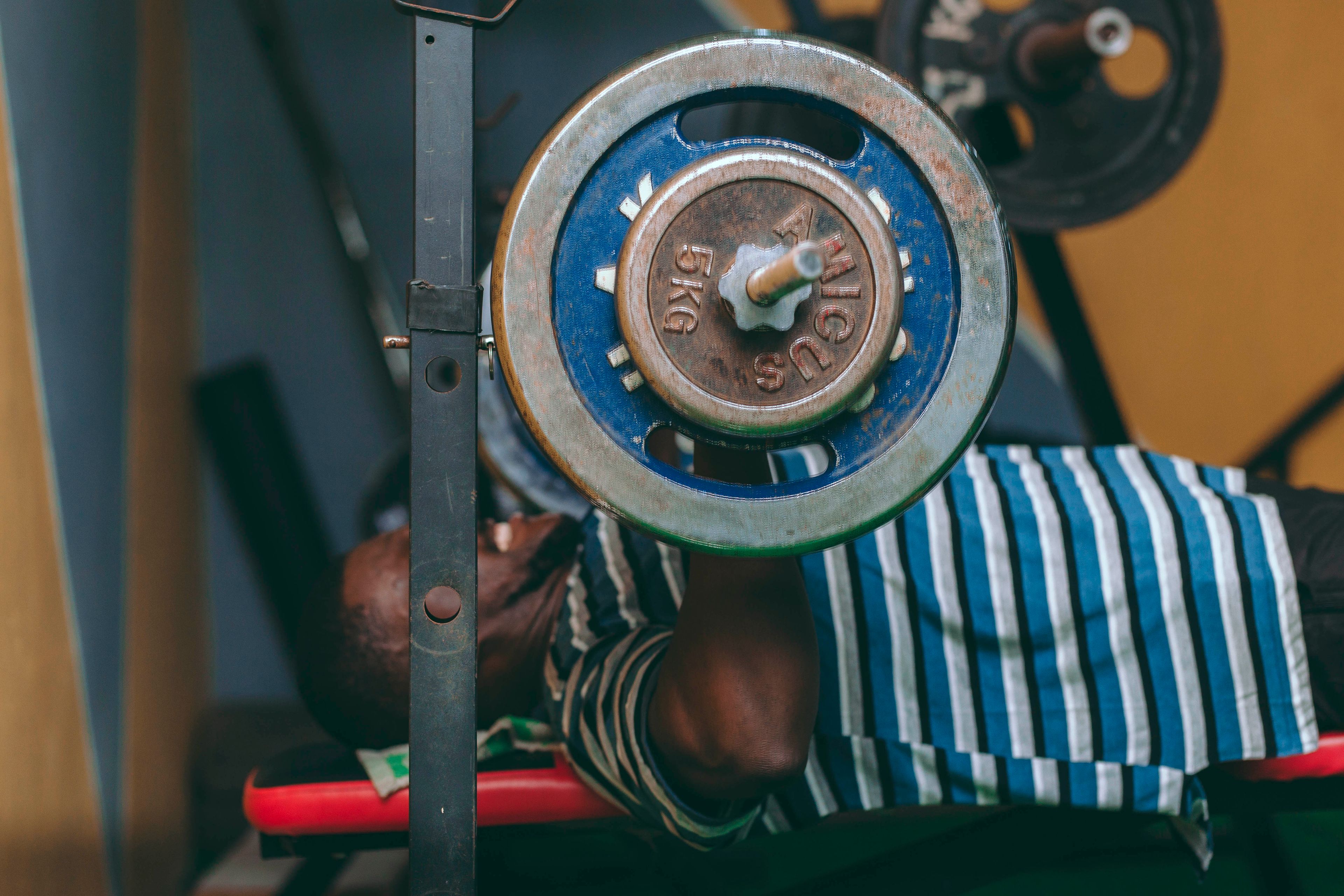
For building muscle, it’s a tie: a 2023 meta-analysis of 13 studies found no difference in muscle growth between free-weight and machine training. For strength, you get best at the equipment you train with, so if your goal is a bigger barbell squat, bench or deadlift, free weights should lead. Most lifters do best using both.
Are free weights better than machines?
Neither is better overall. They build muscle equally well, and each builds strength best on its own kind of test. The right choice depends on your goal: barbell strength favors free weights; muscle size is served equally by both, so pick what lets you train hard and progress.
Free weights include barbells, dumbbells and kettlebells, where you control the path. Machines guide the movement; cables sit in between, with a fixed resistance direction and a free path. You can learn how to program training for muscle and strength around either option.
| Factor | Free weights | Machines | Verdict |
|---|---|---|---|
| Muscle growth | Equal | Equal | Tie — no difference in the meta-analysis of 13 studies and 1,016 participants (Haugen et al., 2023); equal biceps and quadriceps thickness gains over 8 weeks (Schwanbeck et al., 2020) |
| Strength on free-weight lifts | Better | Good carryover, less specific | Free weights — SMD −0.210, p = 0.023 (Haugen et al., 2023) |
| Strength on machine tests | Good | Trend better | Machines, slightly — SMD 0.291, p = 0.064, not significant (Haugen et al., 2023) |
| Jump performance | Same | Same | Tie — no difference (Haugen et al., 2023) |
| Muscle activity in a single set | Higher in some muscles | Lower | Free weights — free-squat EMG averaged 43% higher than Smith squat; this did not translate into more growth in training studies (Schwanbeck et al., 2009) |
| Taking sets close to failure safely | May need a spotter or safeties | Easier | Machines (practical) |
| Learning curve | Steeper | Minimal | Machines (practical) |
| Emergency-room injury share, US 1990–2007 | 90.4% of injuries; mostly dropped weights | Remainder | Machines, but these are counts, not rates (Kerr et al., 2010) |
| Home or garage practicality | High | Lower | Free weights (practical) |
Do free weights or machines build more muscle?
Neither. In the 2023 meta-analysis, muscle growth was statistically the same with free-weight and machine training, and an 8-week trial of 46 young adults found equal increases in biceps and quadriceps thickness. Growth comes from hard, progressive sets, not the equipment.
The meta-analysis found no meaningful difference in hypertrophy across five studies (SMD −0.055; a standard way to compare results across studies, where around 0.2 is a small effect) (Haugen et al., 2023). In the trial, both groups gained muscle thickness over eight weeks (Schwanbeck et al., 2020). The muscle responds to tension and effort, so choose exercises that let you train close to failure and progress; mechanical tension is the main driver of growth.
Machines can make hard sets simpler to take close to failure without a spotter or technical breakdown. That practical advantage can help you push a target muscle consistently.
Which builds more strength: free weights or machines?
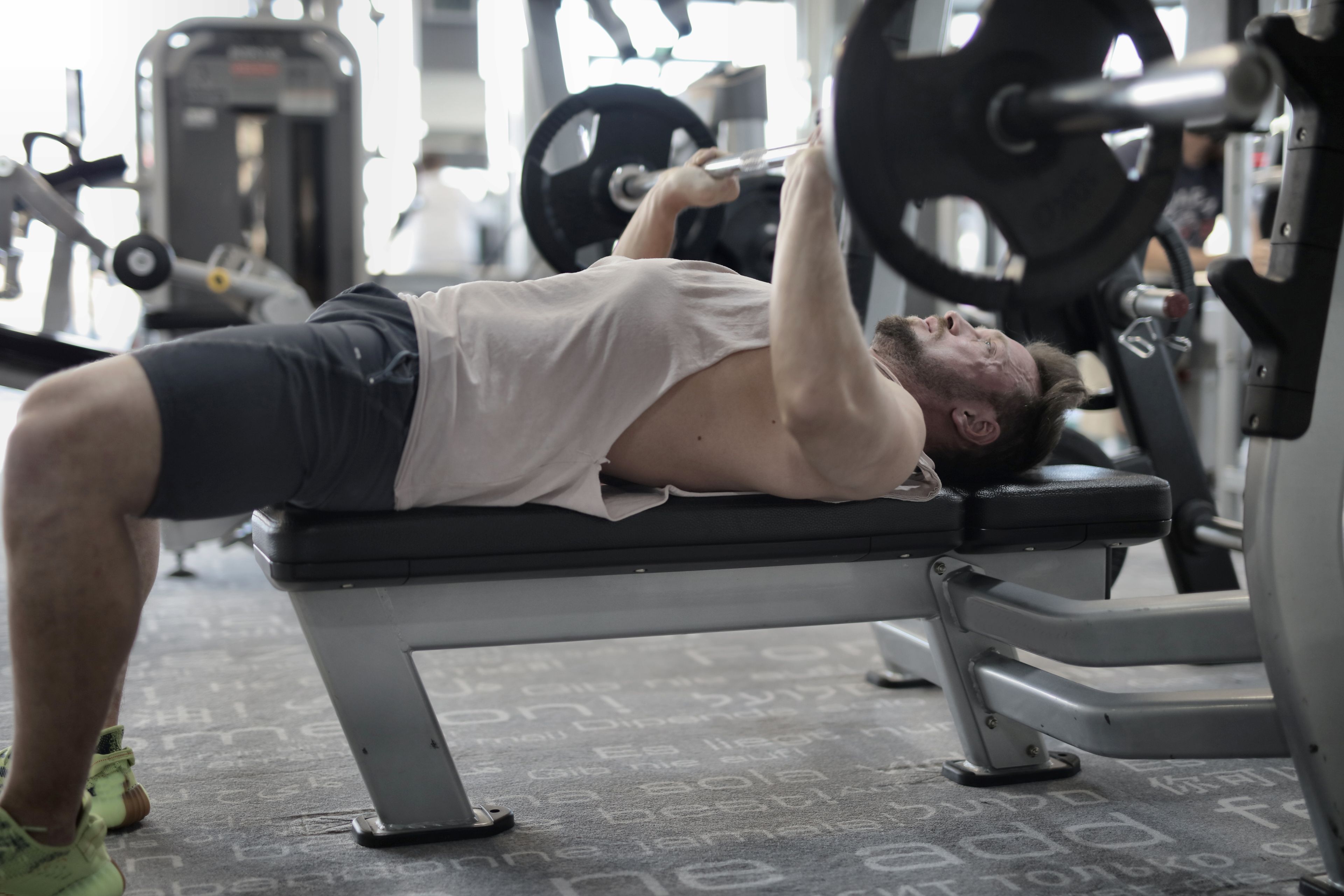
Whichever one you’re tested on. In the meta-analysis, free-weight training raised free-weight strength significantly more than machine training did, while machine training showed a non-significant trend toward bigger machine-test gains. Strength is partly a skill, so train the lift you want to be strong at.
The free-weight test result favored free-weight training (SMD −0.210, p = 0.023); the machine result trended toward machines (SMD 0.291, p = 0.064) (Haugen et al., 2023). Jump performance did not differ. In an eight-week trial, free-weight bench and squat strength rose 11–19% in both groups, with no group difference (Schwanbeck et al., 2020).
- Keep the lifts you want to improve in your program; use machines as accessories.
- For more guidance, see the strength rules that still work after year one.
Do free weights work more stabilizer muscles?
In the moment, sometimes. One small study found average muscle activity was 43% higher in a free-weight squat than a Smith machine squat at the same relative load. But more activity in a single set didn’t add up to more growth in longer training studies.
EMG measures electrical activity, not muscle growth. In a study of just six participants, activity was higher in the free squat for the gastrocnemius (34%), biceps femoris (26%) and vastus medialis (49%) (Schwanbeck et al., 2009). The result helps explain why free weights matter for balance, coordination and barbell carryover; for more on technique, see squat form mistakes that stall your squat.
Are machines safer than free weights?
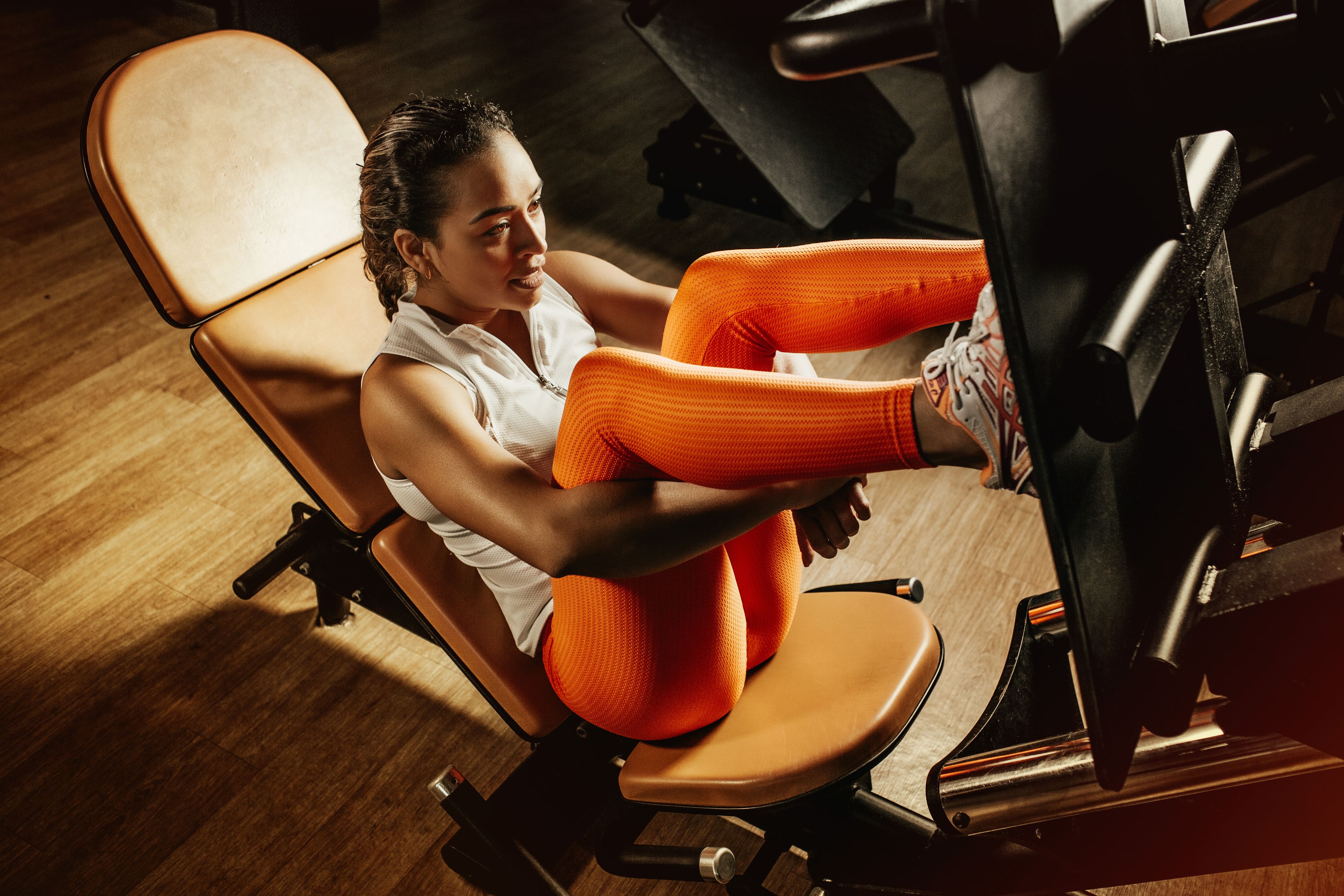
Probably, for the most common kind of accident. In US emergency-room data from 1990 to 2007, 90.4% of weight-training injuries involved free weights, and the most common cause was a weight dropping on the person. That reflects how people use free weights, not that they’re inherently dangerous.
The study estimated about 970,801 injuries nationally; 65.5% involved dropped weights, and fractures or dislocations made up 23.6% of free-weight injuries (Kerr et al., 2010). These are injury counts, not rates: the data don’t show how many people used each type of equipment and include home lifting.
- Use collars and safety arms or pins when lifting alone.
- Get a spotter for heavy bench sets.
- Use machines when you want to push a set close to failure without managing a bar path.
Can you build muscle on machines only — or free weights only?
Yes to both. The pooled studies found equal muscle growth, so a machine-only gym or a garage with a barbell and dumbbells can build a complete physique. What you can’t skip is enough hard sets per muscle and a plan to progress them.
- Machines-only works well for physique goals; if you later want barbell strength, practice the lifts before testing them.
- Free-weights-only works too, though hamstring curls, side delts and calves can be harder to load; cables or machines make those movements convenient.
Whichever setup you use, stick with exercises long enough to progress them. Constant exercise variety can stall progress.
How should you combine free weights and machines?
Build around your goal. Strength-focused lifters put their main barbell lifts first and use machines for extra volume on weak or lagging muscles. Physique-focused lifters can use either for main movements and lean on machines for sets taken close to failure.
- For strength, do one or two main free-weight lifts first in each session; use machines or cables for accessories.
- For physique, choose movements you can load progressively and feel in the target muscle.
- As a beginner, learn basic free-weight patterns without avoiding machines.
- Keep core exercises stable for a training block and progress them; see how many exercises per muscle group you need.
If your equipment isn't the problem, what is?
Usually effort, progression or recovery. Lifters who switch between machines and free weights looking for a breakthrough are often missing something simpler: sets that stop too early, no rule for adding weight or reps, or too little food and sleep.
- Are your working sets hard enough?
- Do you have a clear rule for adding reps or weight?
- Are you doing enough weekly work for each muscle?
- Are food and sleep supporting recovery?
Equipment rarely decides whether you grow. If you’ve been switching tools looking for a breakthrough, find out what’s actually holding your progress back; it can help you identify whether effort, progression, volume, food or sleep needs attention.
FAQ
Can you build muscle on machines only?
Yes. Pooled studies found no difference in muscle growth between machine and free-weight training (Haugen et al., 2023). Train close to failure, do enough weekly sets and keep adding weight or reps. If you later want a strong barbell lift, practice it before testing it.
Can you build muscle with only free weights?
Yes. Barbells and dumbbells can train every major muscle, and growth matched machine training in the research. Hamstrings, side delts and calves can be harder to load this way, so you may need more creative exercise choices.
What are the disadvantages of free weights?
They have a steeper learning curve, and some lifts call for a spotter or safety arms when you push close to failure. From 1990 to 2007, 90.4% of weight-training injuries treated in US emergency rooms involved free weights, most often dropped weights (Kerr et al., 2010). Those figures are counts, not rates.
Are free weights better than machines for strength?
For free-weight strength, yes. Free-weight training improved free-weight test results significantly more than machine training did in a 2023 meta-analysis (Haugen et al., 2023). If you want a bigger squat, bench or deadlift, those lifts need to be in your program.
Written and maintained by LiftDecode. Training and nutrition education for healthy adults, not medical advice — if you have a health condition or an injury, talk to a professional who can examine you.