Mind-Muscle Connection: Real, but Overrated? What Studies Show
The mind-muscle connection is focusing on the muscle you're training. It can add growth on light isolation work, but it hurts heavy lifts. When to use it.
- Published
- Reading time
- 6 min
- By
- LiftDecode
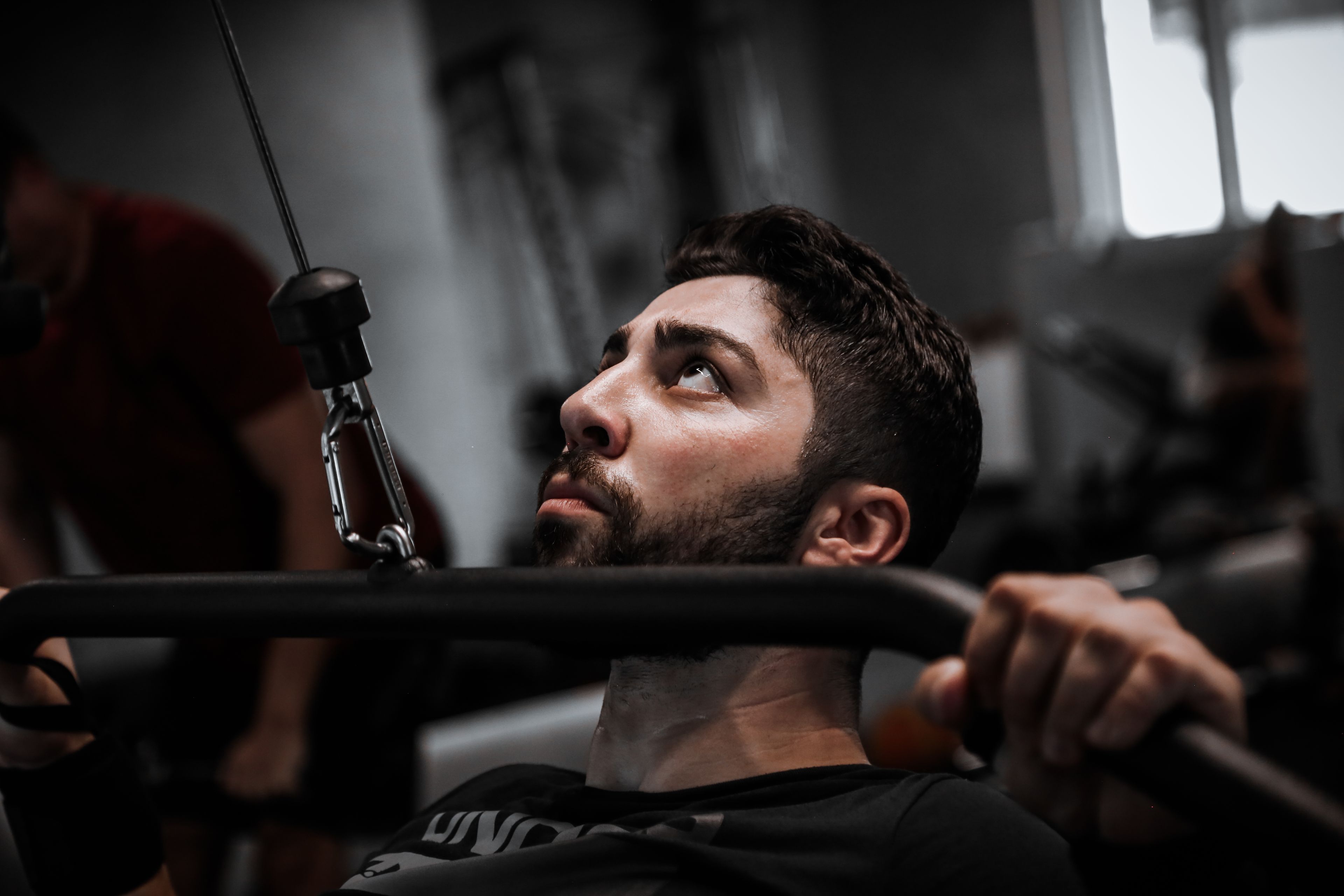
The mind-muscle connection means deliberately focusing on the muscle you're training—feeling it stretch and contract—instead of just moving the weight. It’s real: attention can raise a target muscle’s activity on lighter loads and add growth on isolation work. It stops helping on heavy sets, where focusing on the movement works better.
What is the mind-muscle connection?
It’s an internal focus of attention: thinking about the working muscle during each rep instead of the weight or the movement’s outcome. The opposite, an external focus, means attending to the effect of the movement, like driving the bar up or pushing the floor away.
Researchers use “internal focus” for attention on body parts and muscles, and “external focus” for attention on the movement’s effect (Chua et al. 2021). For a pulldown, an internal cue might be “feel your lats stretch, then squeeze them”; an external cue might be “drive the handle down to your chest.” Lifters use the first approach to try to get a stubborn muscle to do more of the work.
| Internal focus (mind-muscle connection) | External focus | |
|---|---|---|
| Attention on | The working muscle | The movement’s effect (bar, floor, handle) |
| Example cue | “Feel your chest stretch, then squeeze it” | “Push the bar away from you” |
| What evidence shows | More target-muscle activity at 20–60% 1RM, not at 80% (Calatayud et al. 2016); biceps +12.4% vs. +6.9% over eight weeks in untrained men (Schoenfeld et al. 2018) | Better performance and skill learning across 73 studies (Chua et al. 2021) |
| Best for | Isolation and machine work, light-to-moderate loads, lagging muscles | Heavy compound lifts, max-effort sets, learning technique |
Does the mind-muscle connection actually work?
Yes, within limits. Focusing on a muscle raised its activity during bench press at up to 60% of 1RM, but not at 80%. Over eight weeks, beginners who focused on the muscle grew their biceps nearly twice as much, though their quads grew no more.
The activity result: In a bench press study of 18 trained men, focusing on the pecs or triceps increased that muscle’s EMG activity at 20–60% of 1RM, but not at 80% (Calatayud et al. 2016). EMG measures muscle activity, not muscle growth. The test included loads at 20, 40, 50, 60, and 80% of 1RM, so the results point to a threshold somewhere between 60 and 80%, rather than a precise cutoff. At 50–60%, focusing on the triceps also raised pec activity, a reminder that the cue may affect more than one muscle.
The growth result: Over eight weeks, untrained men who used a muscle-focused cue saw elbow-flexor thickness rise 12.4%, compared with 6.9% for those focusing on the movement. Quad thickness changed similarly in both groups (Schoenfeld et al. 2018). The 30 participants trained three times a week, doing four sets of eight to 12 reps. That’s promising for arm isolation work, but it’s one long-term study in untrained men; it doesn’t show the same effect for advanced lifters or every muscle. Strength differences weren’t significant, and the quads showed no extra growth. For more on that result, see how to build bigger arms.
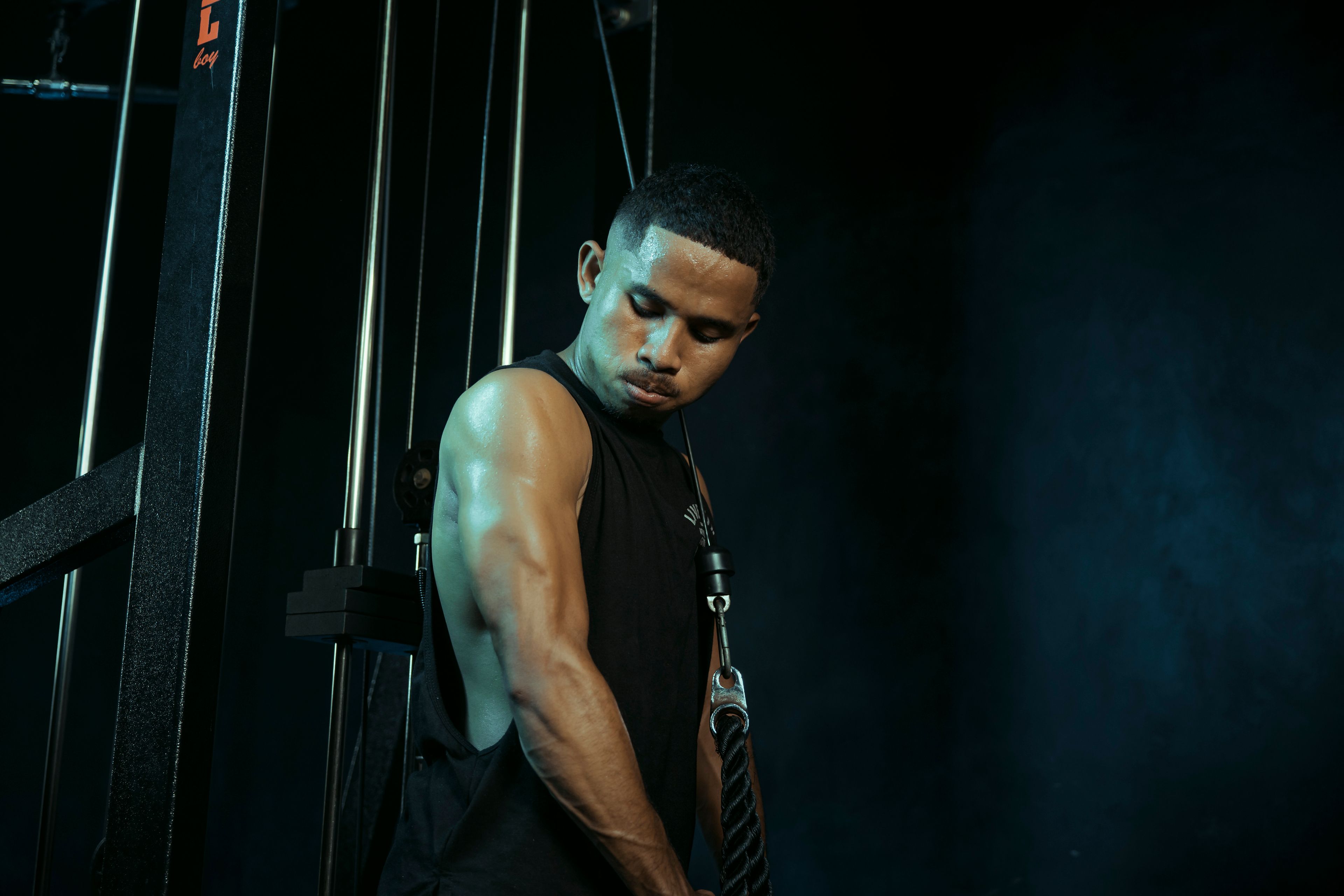
When should you use it, and when shouldn't you?
Use it on isolation and machine work with light-to-moderate loads, especially for a lagging muscle. Drop it on heavy compound lifts: across 73 studies, focusing on the movement produced better performance than focusing on a muscle (Chua et al. 2021).
Use it on…
- Curls, lateral raises, cable flys, leg extensions, and hip thrust lockouts for roughly 8–15 or more reps.
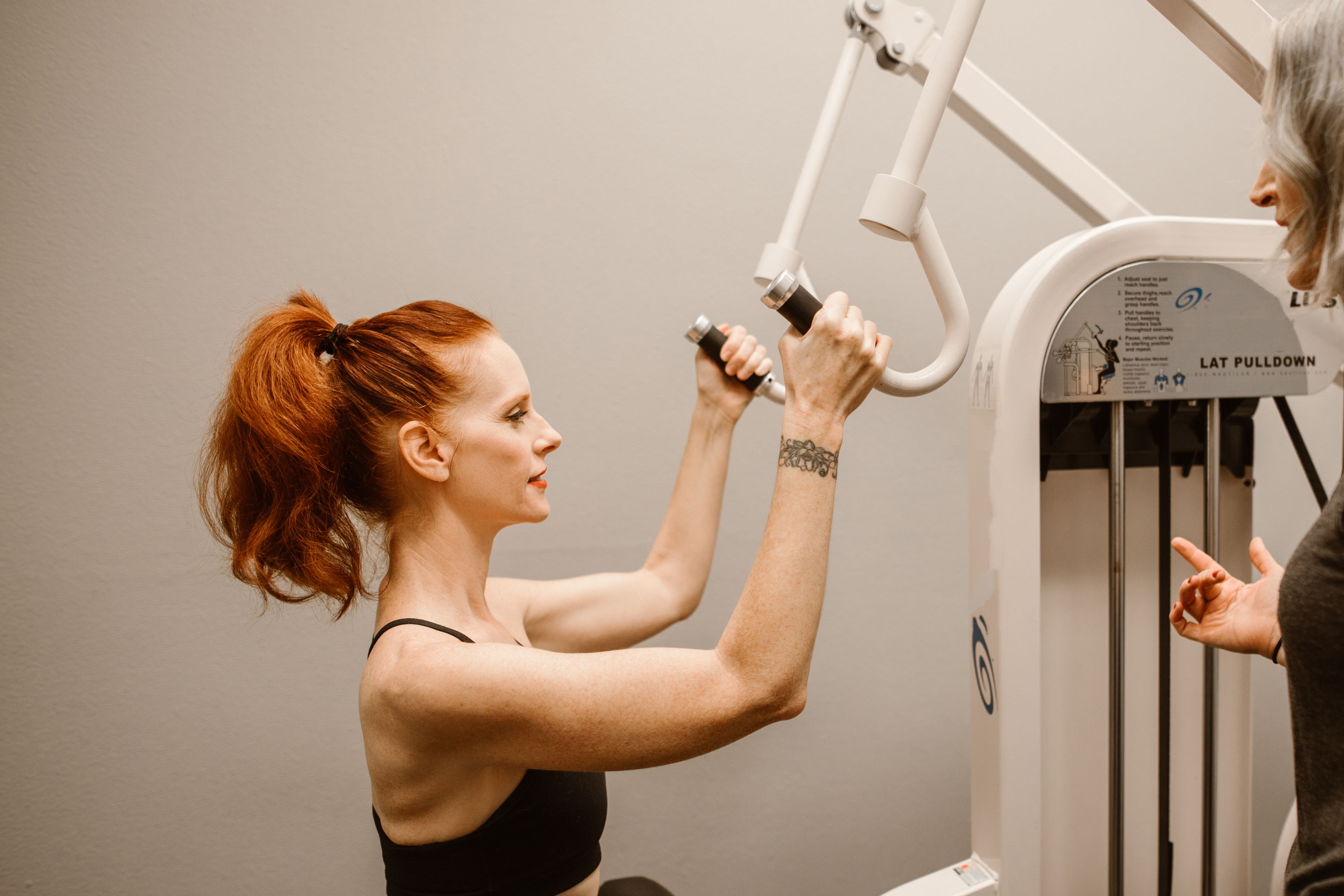
- Pulldowns when you’re trying to feel your lats; see lat pulldown form.
Skip it on…
- Heavy squats, deadlifts, bench presses, and presses near your max.
- Those lifts usually benefit more from cues like “spread the floor” or “push yourself away from the bar.”
In the meta-analysis, external focus improved performance, retention, and transfer, with effect sizes of 0.264, 0.583, and 0.584, respectively. A cue aimed farther from the body also worked better than one aimed nearby (Chua et al. 2021). The advantage wasn’t limited to a particular age, health status, or skill level. On heavy sets, attention can disrupt a practiced movement and is less likely to add useful muscle activity.
How do you build a mind-muscle connection?
Start lighter than usual, slow the lowering, and pause briefly where the muscle is fully shortened. Pick one cue about the muscle, not the weight. If you can’t feel it, change the exercise angle or range before adding load.
- Choose a weight you can control for 12–15 reps; focus added activity only on lighter loads, not near your max.
- Squeeze the target muscle for a second before your first rep; touch it between sets if that helps. This tactile cue can help direct your attention to the muscle.
- Lower the weight over about 2–3 seconds and pause for a second at peak contraction.
- Take the set close to failure; focus doesn’t replace effort.
The suggested tempo is practical guidance, not a proven requirement. A review found similar muscle growth across rep durations from 0.5 to 8 seconds (Schoenfeld, Ogborn & Krieger 2015). So there’s no need to force an unusually slow rep. The point is to control the movement long enough to keep attention on the target muscle. For setup ideas, see hip thrust form.
Is the mind-muscle connection overrated?
As a fix for stalled growth, yes. A muscle that won’t grow usually gets too few hard sets, isn’t progressing, or is always trained last when you’re tired. Better focus can add a little on top; it can’t replace the dose.
If you can’t feel your lats or chest, the load may be too heavy, the exercise may not suit you, or the sets may be too far from failure. Start by changing the basics:
- Move the lagging muscle to the start of your session.
- Add hard sets and progress the load or reps.
- Then use the mind-muscle connection on isolation work.
Muscle growth still requires mechanical tension: focus doesn’t create the work; effort does. If a muscle has stopped growing, find out why a muscle is lagging with a quick check of its hard sets, where it falls in your session, and whether food, sleep, or progression may be holding it back. Browse the lifting glossary for more training terms.
FAQ
Does the mind-muscle connection actually work?
Yes, on lighter work. Focusing on a muscle raised its activity at up to 60% of 1RM but not at 80%, and untrained men who focused on their biceps grew them 12.4% versus 6.9% in eight weeks (Schoenfeld et al. 2018).
How do you build a mind-muscle connection?
Use a lighter weight you can control for 12–15 reps, squeeze the muscle before the first rep, lower slowly, and pause briefly at the top. Choose one muscle-focused cue. If you still can’t feel it, change the exercise or angle before adding weight.
Should I use the mind-muscle connection on squats and deadlifts?
Generally, no. On heavy compound lifts, focusing on the movement’s effect—“push the floor away” or “drive the bar up”—produces better performance than focusing on a muscle, according to a meta-analysis of 73 studies. Save the internal focus for isolation and machine work.
Can the mind-muscle connection fix a lagging muscle?
Rarely on its own. Lagging muscles usually get too few hard sets, aren’t progressing, or are always trained last. Fix those first by moving the muscle earlier in the session and adding sets, then use focus on isolation work to squeeze a little more out.
Written and maintained by LiftDecode. Training and nutrition education for healthy adults, not medical advice — if you have a health condition or an injury, talk to a professional who can examine you.