How to Grow Forearms: Direct Work vs. Heavy Grip
How to grow forearms when deadlifts and rows haven't: why forearms lag, which muscles to target, and a two-day weekly plan with sets, reps and progression.
- Published
- Reading time
- 7 min
- By
- LiftDecode
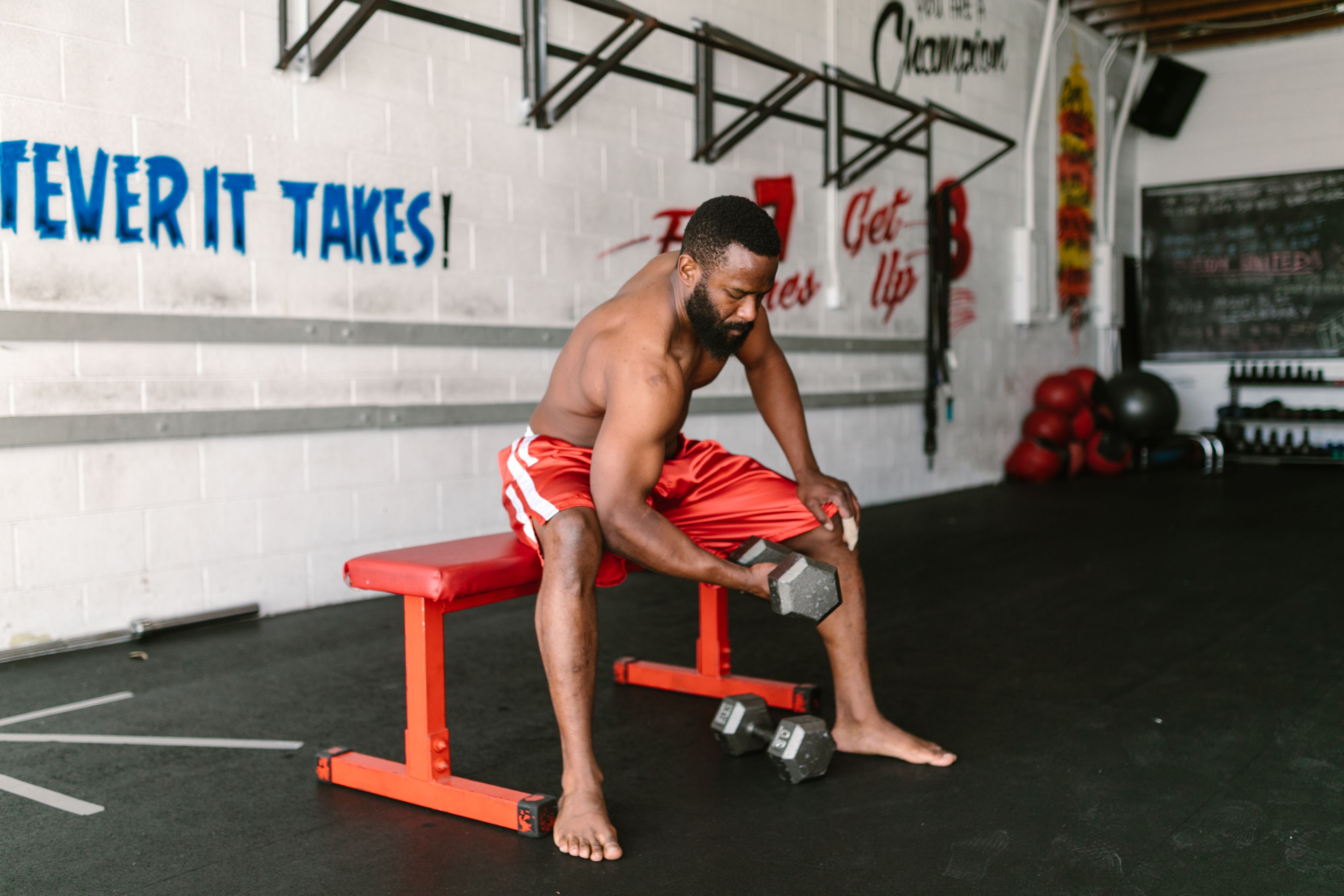
To grow forearms, train them directly: about 8 to 12 hard sets a week of wrist curls, reverse or hammer curls, and wrist extensions, through a full range, close to failure, with a plan to add reps and weight. Heavy deadlifts and rows build grip strength, but on their own they rarely build big forearms.
Why are my forearms not growing?
For most lifters, forearms lag because they never get a real training dose. They get squeezed during pulls and maybe a few rushed sets at the end of a session. Muscles grow from repeated hard sets over weeks, and forearms are no exception. Start by checking dose and exercise type; those are the mistakes most consistent lifters make.
- No direct work or only token burnout sets. Self-check: Count your direct forearm sets last week. Under six? Start here. More weekly sets were associated with about 0.37% more muscle growth across 15 studies (Schoenfeld, Ogborn & Krieger, 2017).
- Heavy grip is your only work. Self-check: Is holding the bar during deadlifts and rows all you do for forearms?
- Your range of motion is tiny. Self-check: Does the bar roll to your fingertips and back on every wrist-curl rep?
- Your sets are easy and never progress. Self-check: Has your wrist-curl weight or rep count increased in the last six weeks?
- Your whole body isn’t growing. Self-check: Compare your seven-day average weight with eight weeks ago. If it’s flat, read why you’re not gaining muscle anywhere.
- Your build is a factor. Muscle-belly and tendon lengths vary, but genetics are poorly studied and can’t be changed. Rule out the first five causes before settling on this one.
For more on rebuilding momentum, see how to gain muscle when it’s stopped coming easy.
Which forearm muscles actually add size?
Most forearm size sits on the palm side. In MRI measurements, the wrist and finger flexors had more than twice the volume of the wrist and finger extensors. The largest muscle crossing the wrist was a deep finger flexor, followed by another finger flexor; the brachioradialis, the elbow-bending muscle on the thumb side, was also substantial (Holzbaur et al., 2007).
The forearm compartments are the front, or palm-side flexors, and the back, or extensors. Wrist curls that let the bar roll toward your fingertips train the biggest group; reverse and hammer curls train the brachioradialis. Extensions matter less for size, but help balance your work.
| Muscle group | Share of upper-limb muscle volume | Train it with |
|---|---|---|
| Wrist and finger flexors (palm side), all muscles crossing the wrist | 11.0% | Wrist curls with a finger roll |
| — of which flexor digitorum profundus | 3.7% | Wrist curls with a finger roll, grip work |
| — of which flexor digitorum superficialis | 3.0% | Wrist curls with a finger roll, grip work |
| Wrist and finger extensors (back of forearm) | 5.0% | Wrist extensions, reverse curls |
| Brachioradialis (thumb side, elbow flexor) | 2.5% | Any curl; hammer and reverse curls reduce biceps help |
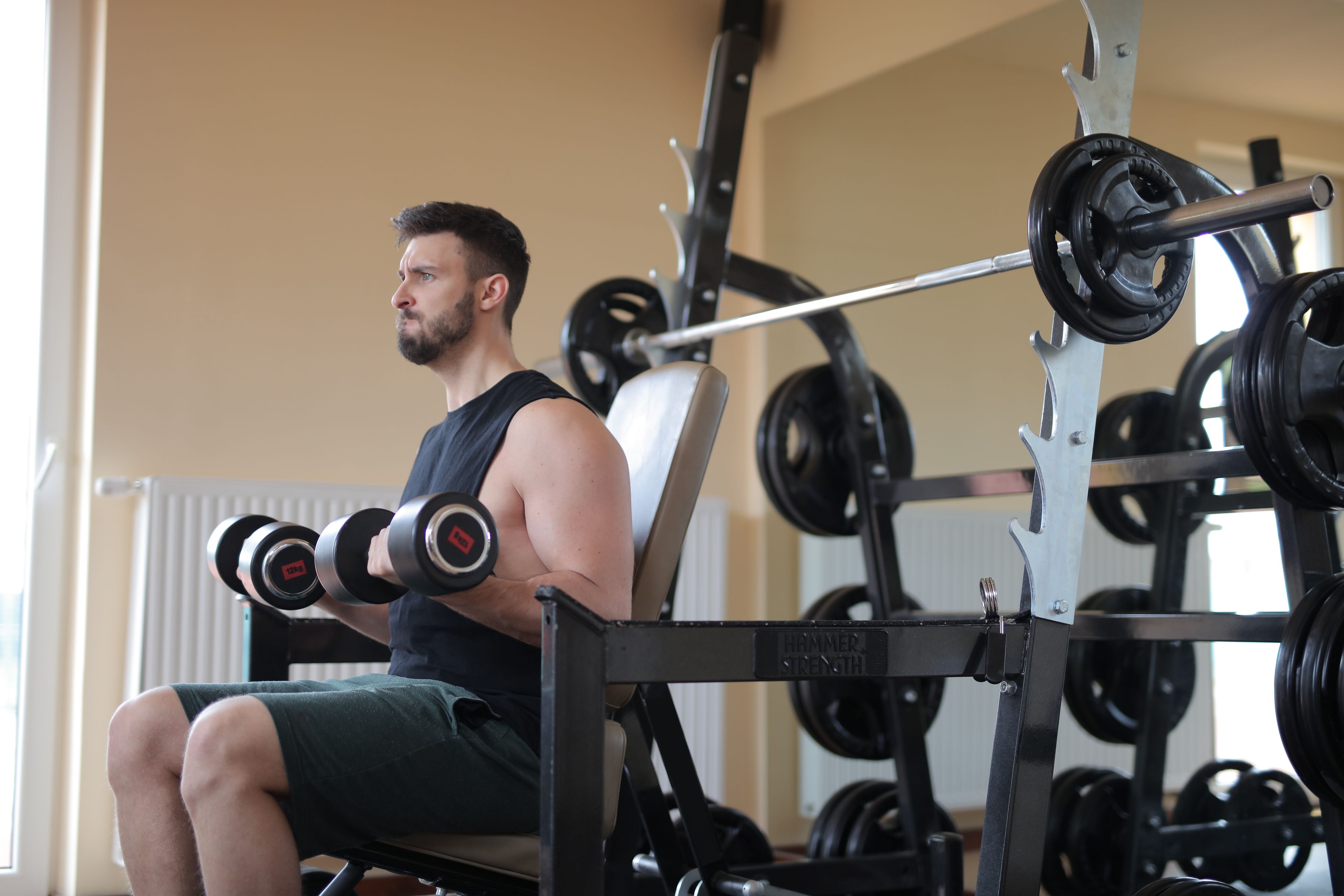
Are heavy deadlifts and rows enough to grow forearms?
Usually not. Holding a heavy bar is a static squeeze with your fingers closed, which trains grip strength well but loads the finger flexors in one position and at fairly short lengths. That short-length point is biomechanical reasoning; research on static training suggests muscles grow more when held at longer lengths, as in a full wrist curl.
Static, or isometric, training means producing force without changing the joint position. Grip work still belongs in your program for strength and carryover to pulls. Keep deadlifts and rows, then add direct, dynamic work for size. A review of 26 research outputs found greater weekly hypertrophy with isometric training at longer muscle lengths than shorter ones at equal volume (Oranchuk et al., 2019).
Do hammer curls or reverse curls build the brachioradialis best?
All curls train the brachioradialis, including regular palms-up curls. In a study of 10 competitive bodybuilders, its activity was slightly higher with palms-up curls than with neutral or palms-down grips, while biceps activity dropped with the latter grips (Coratella et al., 2023). EMG measures muscle activity, not growth, so use grip variation to choose useful exercises rather than crown a “best” curl.
- Keep your normal curls, and add a hammer or reverse curl for more work on the forearm-side elbow flexors.
- For more on the surrounding muscles and exercise choices, read how to build bigger arms.
How should you train forearms each week? (template)
Train forearms directly twice a week for roughly 10 hard sets in total, mostly in the 10–20 rep range, with each set ending about 1–2 reps short of failure. Add a rep each session until you reach the top of the range, then add the smallest available weight. This gives you a clear weekly set target.
Light and heavy loads can build similar size when sets reach failure; heavy loads favor 1-rep max strength (Schoenfeld et al., 2017). You don’t need heavy wrist curls that shorten your range or irritate your wrists. Sets closer to failure tend to produce more hypertrophy (Robinson et al., 2024).
- Day A: Seated dumbbell or barbell wrist curl, forearms supported on thighs or a bench, letting the bar roll to your fingertips before curling it back: 3 × 12–20. EZ-bar reverse curl: 3 × 10–15.
- Day B: Hammer curl: 3 × 8–12. Supported dumbbell wrist extension: 2 × 15–20. Optional farmer’s hold or dead hang: 2 × 30–45 seconds for grip strength.
If wrist curls hurt, reduce the load and range until they’re pain-free. Persistent wrist or elbow pain warrants a doctor or physiotherapist.
- Use double progression: add reps within the listed range.
- When every set reaches the top of its range, add 1–2.5 lb (0.5–1 kg).
- Restart at the bottom of the range and build reps again.
- Follow the plan for 8–12 weeks before judging; measure relaxed forearm circumference at the same spot monthly.
Be patient. In a six-week program that included reverse curls, 25 recreational climbers’ forearm circumference rose from 24.6 to 25.4 cm on the right and 24.6 to 25.1 cm on the left. The study had no control group and measured circumference, not muscle alone (GRIP-6 study).
What if your forearms still won’t grow?
If you’ve trained them with a real dose for two to three months and nothing has changed, the problem is rarely the forearms. More often your bodyweight isn’t rising, your main lifts aren’t progressing, or sleep and recovery are too limited for growth.
- Check whether you’re eating enough to move beyond maintenance and whether your bodyweight trend is rising.
- Make sure your training has a progression rule; revisit why you’re not gaining muscle anywhere if other muscles have stalled too.
A lagging body part can be a visible sign of a whole-body bottleneck. The LiftDecode diagnosis asks quick, one-tap questions about your training, eating, sleep, and recovery, then ranks what’s holding you back and which common suspects aren’t your problem. Run the diagnosis.
FAQ
Why are forearms hard to grow?
Mostly because they rarely get a real training dose. For many lifters, forearm “training” means holding the bar during pulls plus a few rushed sets when there’s time left. Give them 8–12 hard, full-range sets a week with a progression rule for two to three months before deciding they’re stubborn. Genetics are a later explanation, not the first.
How can I grow big forearms fast?
There’s no fast route; forearms grow on the same timeline as other muscles. Recreational climbers in a six-week program that included reverse curls added less than 1 cm of forearm circumference, though the study had no control group and measured circumference rather than muscle alone (GRIP-6 study). Train directly twice a week, work close to failure, and eat enough to gain weight slowly.
What causes skinny forearms?
Usually it’s a mix of little direct training, a lean body overall, and individual build, such as bone size and how far muscle bellies extend toward the wrist. Train the palm-side flexors hardest: they hold more than twice the muscle volume of the extensors (Holzbaur et al., 2007). Also check that your bodyweight is trending up.
How do you get “Popeye” forearms?
Build the brachioradialis near the elbow with hammer and reverse curls alongside your normal curls, and build the palm-side flexors with full-range wrist curls that let the bar roll to your fingertips. Train both twice a week, add reps and then weight, and give it months. Exaggerated cartoon forearms aren’t realistic for most people; noticeably thicker forearms are.
Written and maintained by LiftDecode. Training and nutrition education for healthy adults, not medical advice — if you have a health condition or an injury, talk to a professional who can examine you.