How to Get Stronger: 6 Rules That Still Work After Year One
How to get stronger once beginner gains fade: lift heavy twice a week, follow a progression rule, build muscle, stop testing, and recover. A weekly plan.
- Published
- Reading time
- 7 min
- By
- LiftDecode

To get stronger, lift heavy—around 80% of your max or more—on the exercises you want to improve, at least twice a week. Add weight or reps by a clear rule, build muscle, sleep at least seven hours, and eat enough protein. After your first year, consistency beats clever programming. Start with these strength standards and guides.
What actually makes you stronger — and why does it slow down?
Strength comes from muscle and skill: how much muscle you have and how well you use it in a lift. Beginners gain mostly skill; after year one, you need both. Slower progress is normal.
Strength is specific to the lift you practice. A review found heavier loads produced greater one-rep-max gains than lighter loads, even with similar muscle growth (Schoenfeld et al., 2017). Your one-rep max (1RM) is the heaviest weight you can lift once with good form. More muscle gives your skill a bigger engine: among 83 trained men, pec thickness tracked bench 1RM closely (Nigro et al., 2024).
As you get stronger, gains slow. Across 15 years of powerlifting data, the strongest men added to their total at about half the daily rate of the least strong (Latella et al., 2020). Slow means numbers still inch up; stalled means they’ve stayed flat for two or three months. If you’re past newbie gains, use the rules below to find what needs to change.
Rules 1–2: How heavy and how often should you lift?
Lift at least 80% of your max—roughly your eight-rep-max weight or heavier—on main lifts, first in the session, and train each lift at least twice weekly. The 2026 ACSM position stand says this is where strength gains are strongest.
It reviewed 137 systematic reviews and more than 30,000 participants, supporting loads of at least 80% of 1RM, two to three sets, full range of motion, and strength exercises early in the session (ACSM Position Stand, 2026; ACSM announcement).
- Keep main-lift work mostly in the two-to-six-rep range. The NSCA chart puts an eight-rep max at about 80% of 1RM, a five-rep max at 87%, and a three-rep max at 93% (NSCA Training Load Chart).
- In trained men, bench 1RM rose 6.5% with sets of 8–12 reps versus 2.0% with 25–35 reps over eight weeks (Schoenfeld et al., 2015).
- If you train a lift once weekly, add a practice day before piling on sets. Strength responds to frequency and volume, but returns diminish as volume climbs (Pelland et al., 2026).
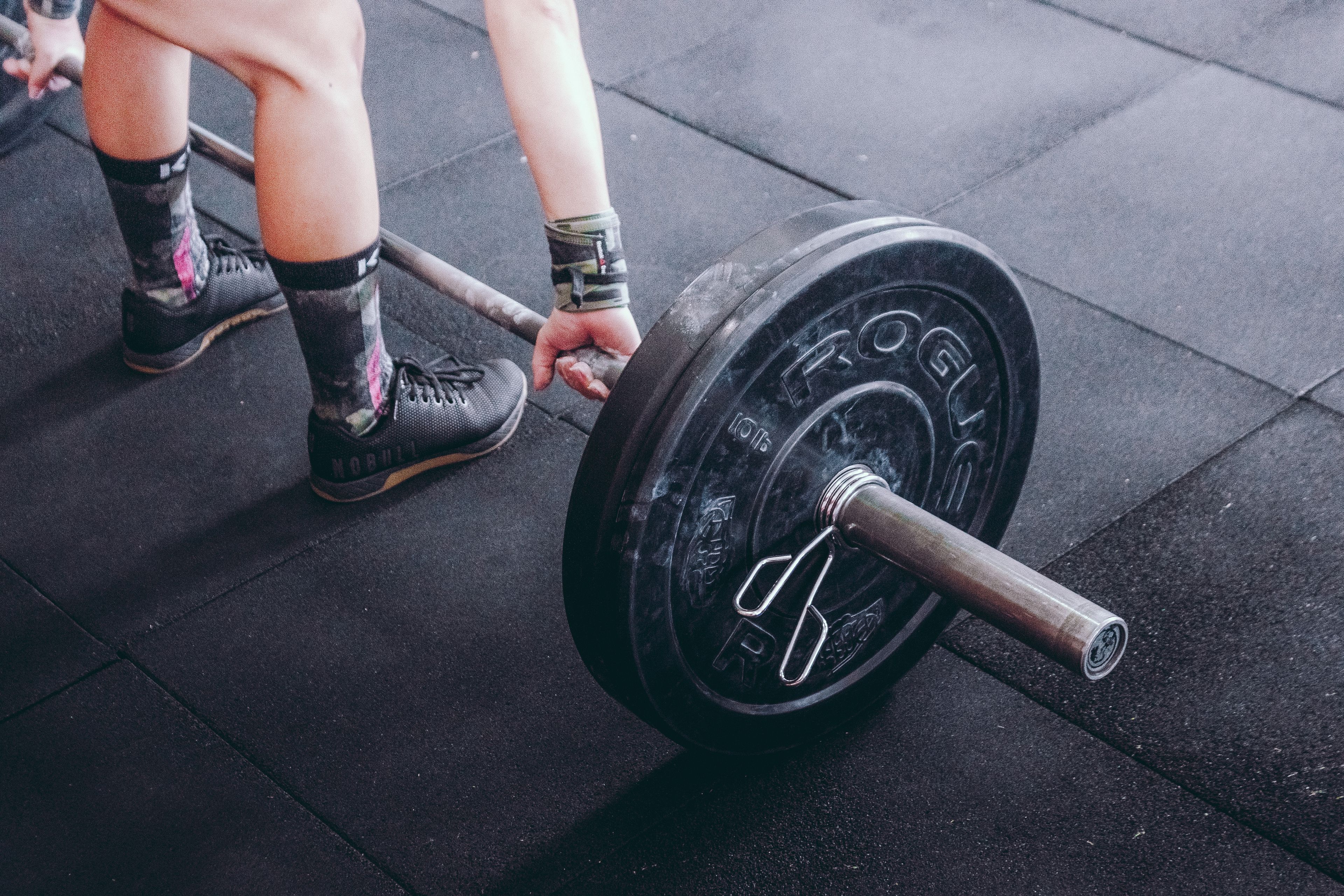
Rules 3–4: What progression rule should you follow — and should you train to failure?
Write down a rule such as “when every set is completed, add 5 lb next time,” and keep the plan for 8–12 weeks. Stop most sets one to three reps short of failure; test your max every couple of months.
- For main lifts, make 2.5–5 lb (1–2.5 kg) jumps. If you miss, repeat the weight; after two misses, reduce it about 10% and rebuild.
- For accessories, add reps within a range, then add weight at the top. If the weight stalls, see progressive overload when you can’t add weight.
- The 2026 ACSM review found failure training and periodization style did not consistently change outcomes (ACSM Position Stand, 2026). Estimate your max from a top set with a 1RM calculator instead of grinding maxes weekly.
Rule 5: Why do you need more muscle to keep getting stronger?
After year one, technique gains flatten, and more muscle is the main way to lift more. Add muscle-building work—moderate weights for 6–15 reps, close to failure—for the muscles driving your main lifts, and eat enough to grow.
Muscle growth can be similar with heavy and moderate loads, so accessories can be lighter while main lifts stay heavy (Schoenfeld et al., 2017). If your training is all triples, you may practice strength without adding much size.
Chronic dieting can leave you short on muscle-building work and food. If gaining muscle is the priority, follow a modest lean bulk.
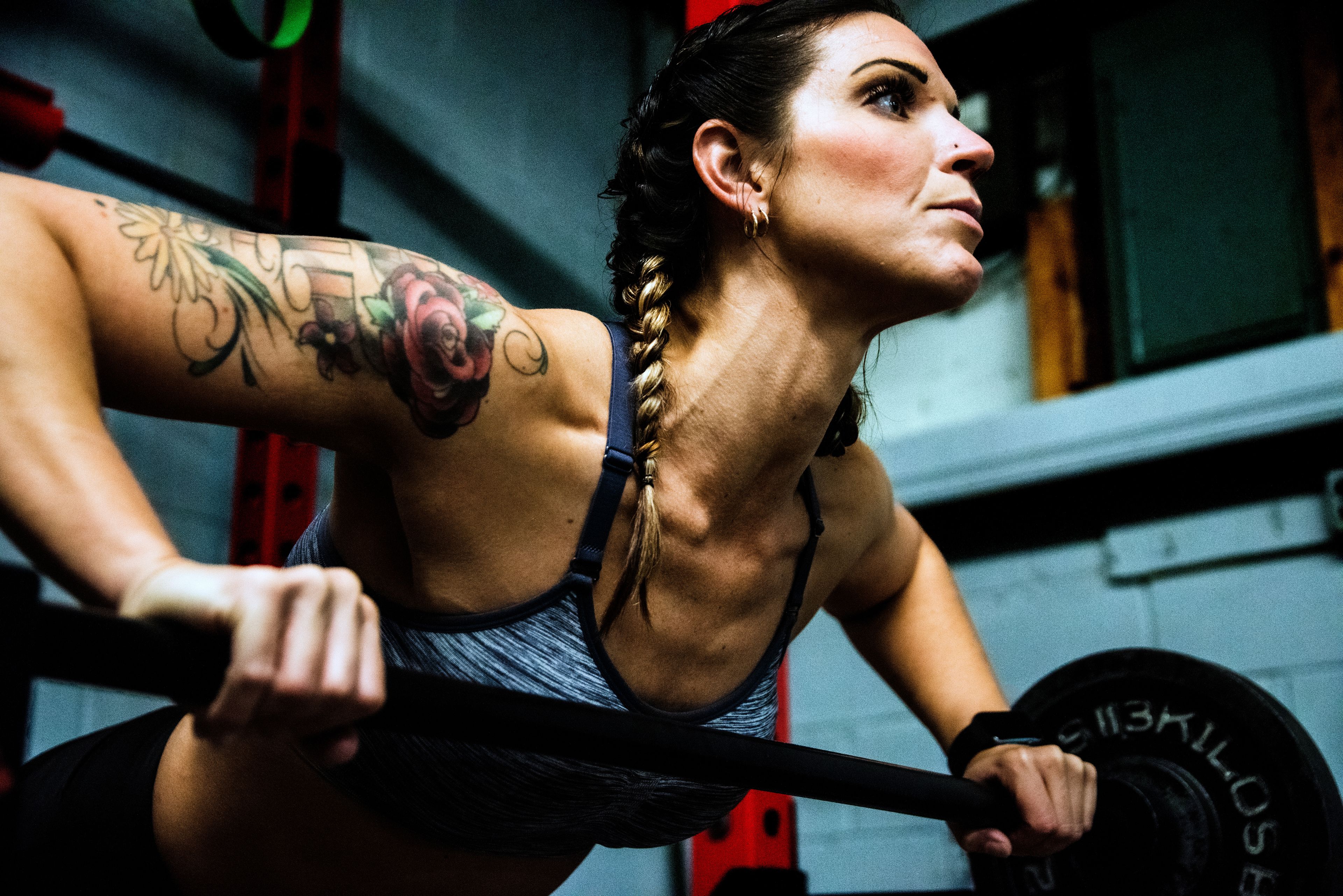
Rule 6: How much do sleep and protein matter for strength?
Recovery supports the muscle and force training builds. Several nights of short sleep can reduce force in big multi-joint lifts, and about 1.6 g of protein per kg of bodyweight (0.7 g per lb) daily supports muscle gain.
- Multi-joint movements use several joints and muscle groups, as in a squat or bench press. Consecutive nights of restricted sleep could reduce force, while one sleepless night had little effect in the reviewed evidence (Knowles et al., 2018). Adults ages 18–60 should get at least seven hours nightly (CDC, About Sleep).
- Across 49 randomized trials with 1,863 participants, protein supplementation added about 2.49 kg (5.5 lb) to 1RM gains; fat-free-mass gains leveled off around 1.62 g/kg (0.7 g/lb) daily (Morton et al., 2018). The benefit was modest. See how much protein you need to build muscle.
What does a strength week look like? (worked example)
For a lifter with a 225 lb (102 kg) squat, 175 lb (79 kg) bench and 275 lb (125 kg) deadlift for five reps: train each main lift twice weekly, do heavy sets first, then muscle work, and use one progression rule. Loads are illustrative; adjust them to your strength.
- Day 1: Squat 4×4 at 215 lb (98 kg); bench 4×6 at 155 lb (70 kg); rows 3×8–12; triceps 3×10–15.
- Day 2: Deadlift 3×3 at 265 lb (120 kg); overhead press 4×6; pull-ups 3×6–10; leg curls 3×10–15.
- Day 3: Bench 4×4 at 165 lb (75 kg); squat 3×6 at 195 lb (88 kg); dumbbell press 3×8–12; biceps 3×10–15.
- Progression rule: When every set is complete with one to two reps in reserve (RIR), add 5 lb (2.5 kg) to lower-body lifts and 2.5 lb (1 kg) to upper-body lifts next time. If you miss, repeat; after two misses, reduce weight by 10%.
- Every 8–12 weeks: Test a heavy triple or estimate your max, then reset starting weights.
If you’ve followed these rules for two or three months and nothing moves, one of them is being broken. An intermediate workout program can help if you want a full plan.
| Rule | What to do | Evidence |
|---|---|---|
| Lift heavy | Main lifts ≥80% 1RM (roughly ≤8-rep weights), first | ACSM 2026; Schoenfeld 2015/2017 |
| Practice often | Each main lift ≥2×/week | ACSM 2026; Pelland 2026 |
| Progress by rule | Record when to add weight or reps | ACSM 2026 |
| Don’t test weekly | Stop 1–3 reps short; test every 8–12 weeks | ACSM 2026 |
| Build muscle | 6–15-rep accessories near failure | Schoenfeld 2017 |
| Recover | 7+ hours sleep; ~1.6 g/kg protein daily | Knowles 2018; CDC; Morton 2018 |
You might be breaking more than one rule, and fixing the wrong one first wastes months. Find the one rule you’re breaking to identify your first bottleneck and get a plan. Keep the rules boring and give them time.
FAQ
How can I increase my strength fast?
Lift around 80% of your max or more on main lifts at least twice a week, add weight by a fixed rule, and sleep and eat enough. That matches the 2026 ACSM position stand (ACSM 2026); expect gains to slow after year one.
Why am I so weak even though I work out?
Usually, you rarely lift heavy, train each lift once a week or less, lack a progression rule, aren’t building muscle or eating enough, or don’t get enough sleep. Start with the first that applies before rewriting your plan.
Do you need to train to failure to get stronger?
No: the 2026 ACSM overview of 137 systematic reviews found training to momentary failure did not consistently change outcomes (ACSM 2026). Stop most strength sets one to three reps short to keep reps consistent, and save all-out efforts for occasional tests.
Is it normal for strength gains to slow down?
Yes: in 15 years of data on 1,897 powerlifters, the strongest men gained at about half the rate of the least strong (Latella et al., 2020). Slow progress is normal; being flat for two or three months usually means a training rule needs attention.
Written and maintained by LiftDecode. Training and nutrition education for healthy adults, not medical advice — if you have a health condition or an injury, talk to a professional who can examine you.