Average Bench Press for Women (Plus Squat and Deadlift)
The average bench press for women who log lifts is 112 lb; untrained young women averaged 73 lb. See bench, squat and deadlift standards by bodyweight.
- Published
- Reading time
- 7 min
- By
- LiftDecode
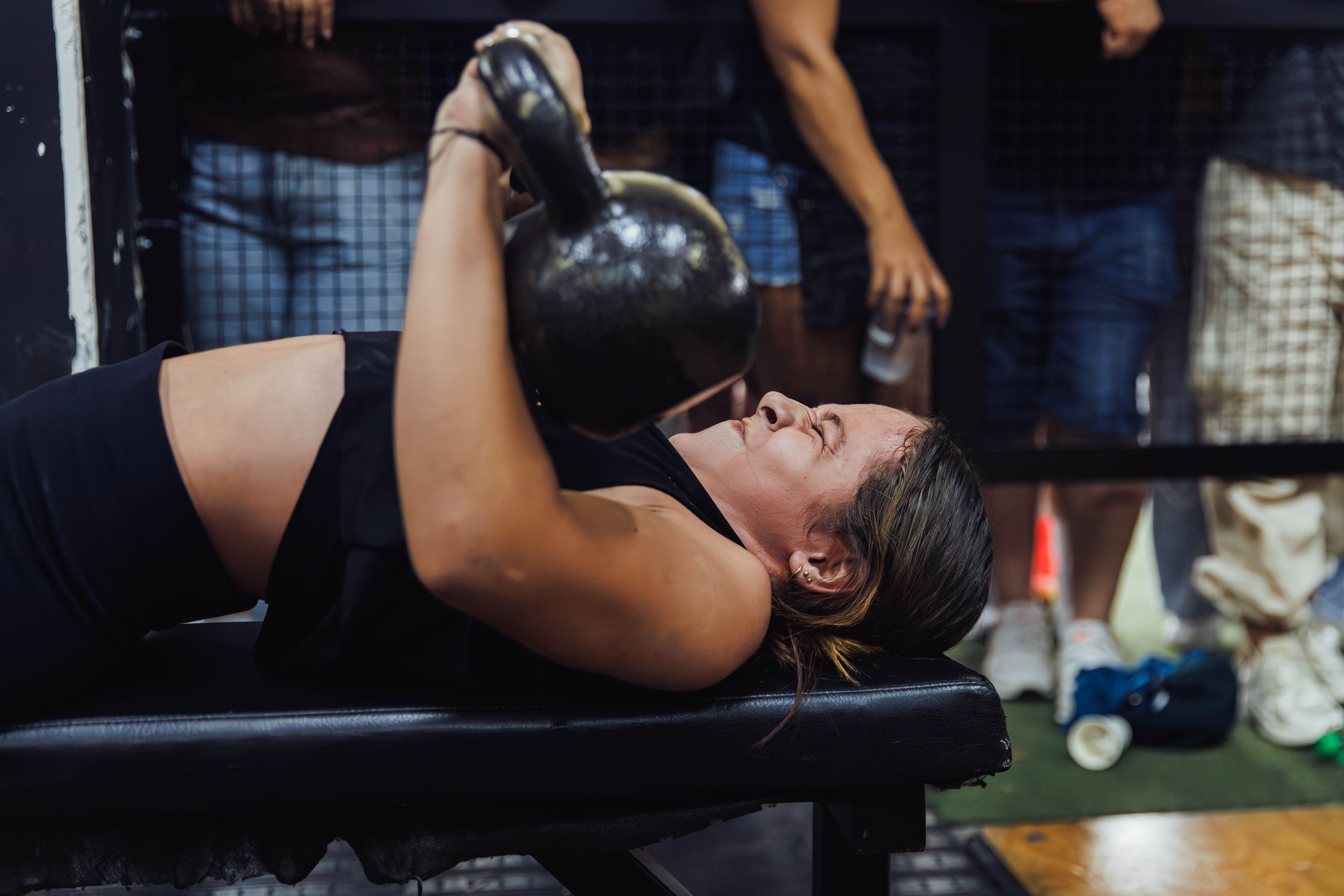
The average bench press for women who log lifts on Strength Level is 112 lb (51 kg); their average squat is 167 lb (76 kg) and deadlift is 200 lb (91 kg). That group skews toward dedicated lifters: physically active young women with no strength-training history benched 73 lb (33 kg) in a lab test. For a 140-lb woman, Strength Level puts intermediate at 108 lb.
What is the average bench press for women?
It depends on who’s measured: about 73 lb for untrained young women in a lab, 100–120 lb for Cooper Clinic women in their 20s at average U.S. weight, 112 lb for women who log lifts, and 143 lb for drug-tested female powerlifters at the median.
The untrained baseline comes from 96 physically active Colombian students, average age 20 and weight 61.6 kg, with no strength-training history. They benched 73 lb (33.1 kg) on a Smith machine and squatted 87 lb (39.4 kg) in a full squat test (Fernandez Ortega et al., 2022).
- Cooper Institute norms are from clinic machine tests. For women ages 20–29, the 40th and 60th percentiles were 0.59 and 0.70 times bodyweight; applying those ratios to the average U.S. woman’s 171.8 lb gives about 101–120 lb (Cooper Institute norms reprinted by ACE; CDC FastStats).
- Strength Level users average a 112-lb bench, 167-lb squat, and 200-lb deadlift (Strength Level bench, squat, and deadlift).
- In drug-tested, unequipped powerlifting, the median female bench rose from 50–55 kg to 65 kg (143 lb) between 2000 and 2024 (van den Hoek et al., JSCR).
- Only 26.9% of U.S. women met the muscle-strengthening guideline in 2020, so “average woman” mostly describes someone who does not train for strength (CDC MMWR). Use the strength standards hub to compare reference groups without treating them as interchangeable.
What are women's bench, squat and deadlift standards by bodyweight?
For a 140-lb woman, Strength Level lists novice at 72 lb bench, 114 lb squat, and 139 lb deadlift; intermediate is 108, 165, and 196 lb. Novice corresponds to about six months of regular training, intermediate to about two years.
| Bodyweight | Bench novice | Bench intermediate | Squat novice | Squat intermediate | Deadlift novice | Deadlift intermediate |
|---|---|---|---|---|---|---|
| 120 lb | 61 lb | 95 lb | 100 lb | 148 lb | 123 lb | 178 lb |
| 140 lb | 72 lb | 108 lb | 114 lb | 165 lb | 139 lb | 196 lb |
| 160 lb | 82 lb | 120 lb | 128 lb | 181 lb | 153 lb | 213 lb |
| 180 lb | 91 lb | 131 lb | 140 lb | 196 lb | 166 lb | 228 lb |
| 200 lb | 99 lb | 141 lb | 151 lb | 209 lb | 178 lb | 242 lb |
These are estimated one-rep maximum standards for women who log lifts on Strength Level, many of whom estimate their max from rep sets (bench, squat, deadlift). Find your bodyweight row, compare each lift with its standard, and use the next level as a direction rather than a deadline. See the bench press standards by level for full five-level tables.
What is the average squat and deadlift for women?
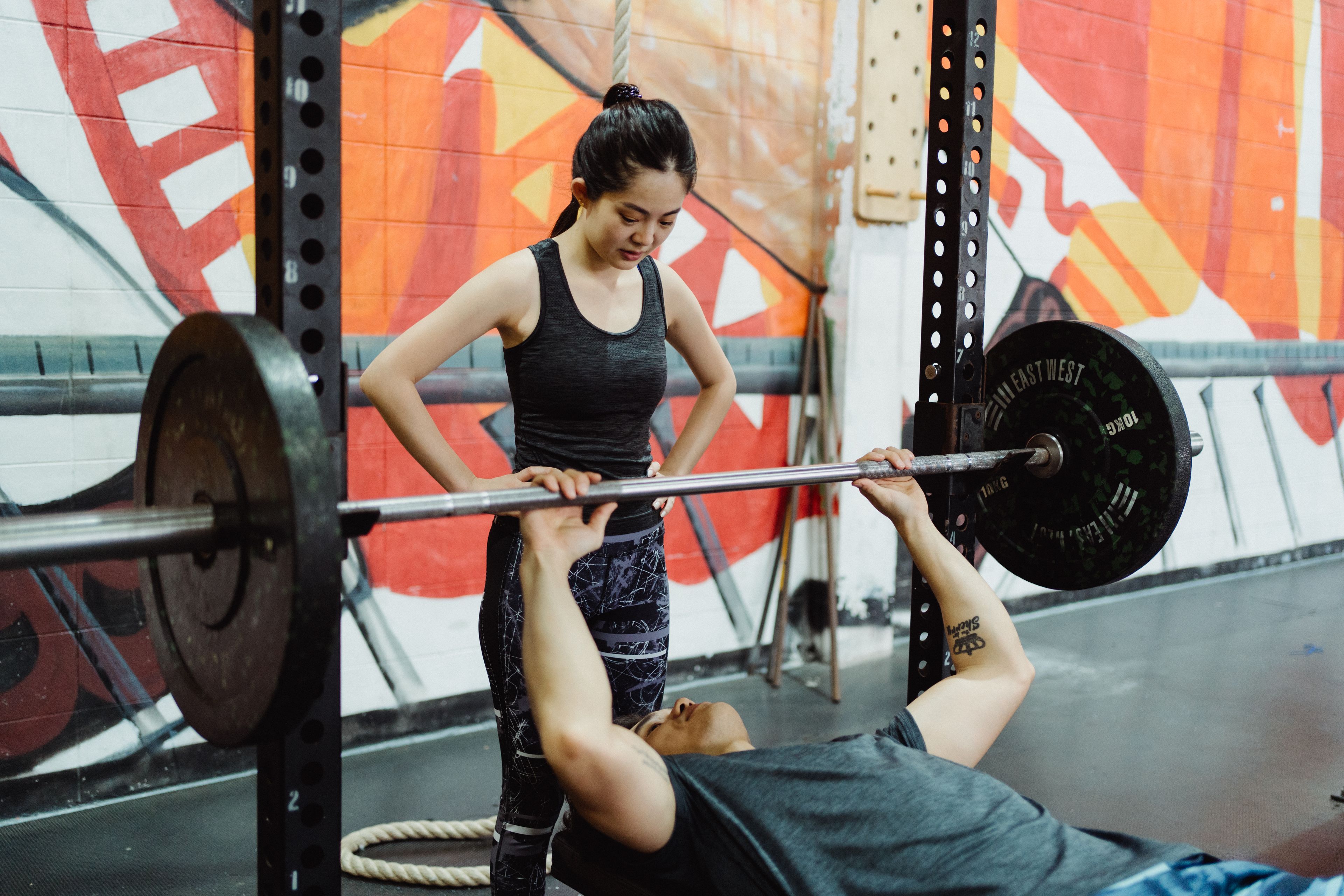
Women who log lifts on Strength Level average a 167-lb squat and a 200-lb deadlift. Untrained young women squatted 87 lb in a lab test, while the median female deadlift at drug-tested powerlifting meets reached 142.5 kg (314 lb) in 2024.
- Those app averages describe women who record their lifts, not a representative sample of all women. Competition results sit in a different population: the median female meet deadlift rose from 114 kg (251 lb) in 2000 to 142.5 kg (314 lb) in 2024 (van den Hoek et al., JSCR).
- Among drug-tested powerlifters ages 18–35, the female 90th-percentile squat was 2.26 times bodyweight and deadlift was 2.66 times bodyweight (van den Hoek et al., 2024). Those are competitive benchmarks, not expectations for a recreational lifter.
Why does the bench lag behind the squat and deadlift?
The strength gap between women and men is largest in the upper body. Among Strength Level users, women’s average bench is 53% of men’s, versus 58% for the squat and 59% for the deadlift; that ratio arithmetic is LiftDecode’s, based on the site’s averages. A bench that trails your lower-body lifts is normal.
- Drug-tested powerlifting data shows the same pattern at the 90th percentile: women’s bodyweight ratios were 1.35 for bench, 2.26 for squat, and 2.66 for deadlift; men’s were 1.95, 2.83, and 3.25, respectively (van den Hoek et al., 2024).
- A meta-analysis found women gained relative upper-body strength faster than men across 17 studies, with no significant sex difference in lower-body strength gains or muscle growth (Roberts, Nuckols & Krieger, 2020). Regular, specific bench practice can help close the gap; how to build muscle as a woman covers the broader training picture.
How long does it take, and how does age change it?
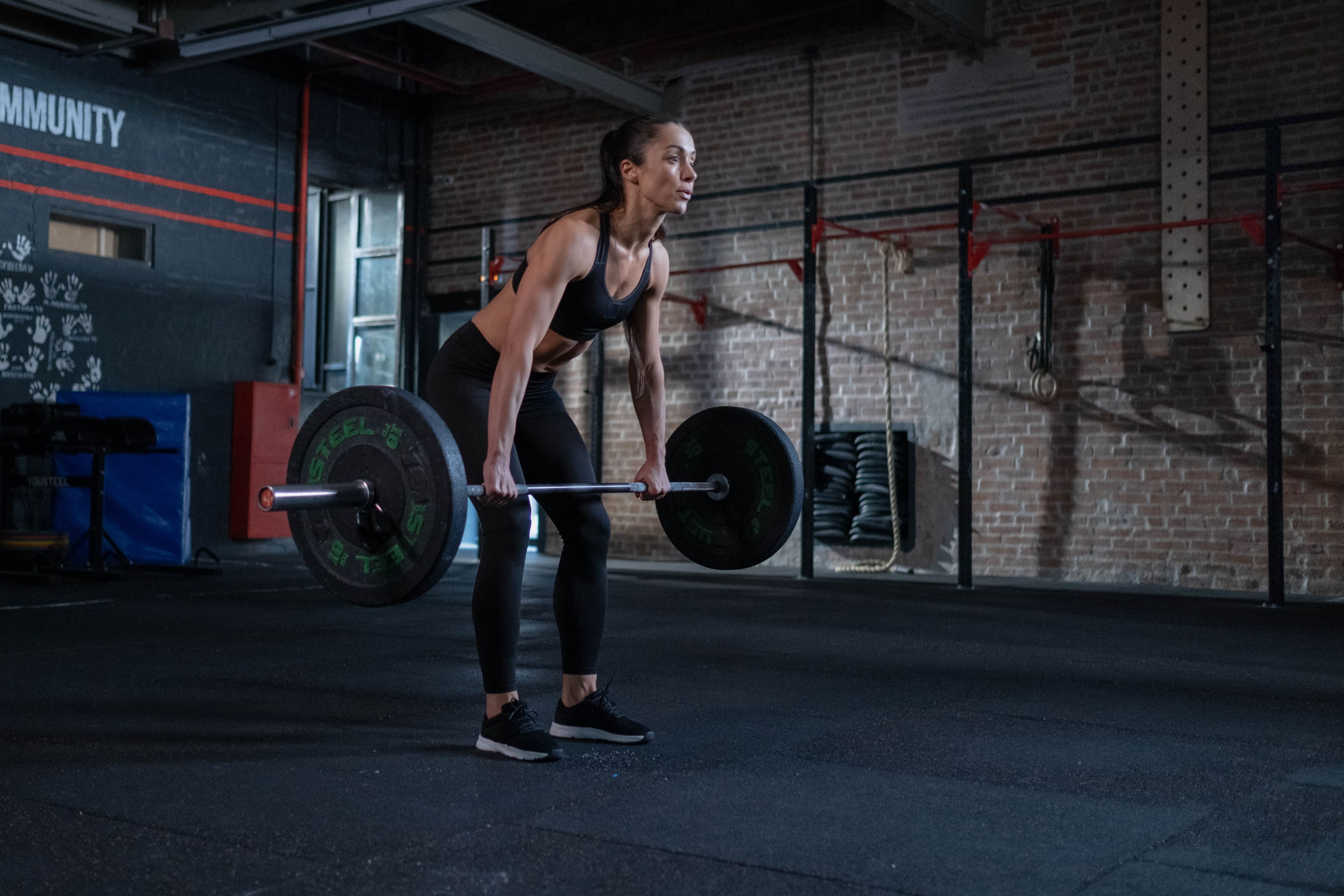
On Strength Level’s definitions, novice takes about six months of regular training and intermediate about two years. Women progress at a similar rate to men: in competitive powerlifters, total strength rose about 0.12 kg a day for women and 0.15 for men.
- In one study, the difference in daily strength gain between female and male powerlifters was not statistically significant; women’s first-meet total averaged 289.4 kg (638 lb) (Latella et al., 2020).
- Strength Level’s intermediate female bench standard is 112 lb from ages 25–40, 99 lb at age 50, and 83 lb at age 60 (Strength Level).
- Age does not erase strength: among drug-tested powerlifters over 80, the female 90th-percentile bench was 0.92 times bodyweight (van den Hoek et al., 2024). For more age-specific guidance, see strength training for women over 40.
What if your bench has stopped moving?
Check your jumps first: 5 lb is 5% of a 100-lb bench but 2.5% of a 200-lb bench, so fixed jumps can outpace a lighter bench sooner. Then check the usual causes: no progression rule, benching rarely or too lightly, sets far from failure, or under-recovery.
- Use smaller plate jumps, or add reps before adding weight. Treat that as a coaching principle: the load increase should fit the lift you have now.
- Review how often you bench, how hard your working sets are, and whether recovery supports the work. Heavy loads produce greater one-rep-max gains than light loads (Schoenfeld et al., 2017).
- Check your diet, too. Trying to build your bench while in a steep calorie deficit works against the goal.
- If your form is inconsistent, review bench press form and setup before changing the whole program.
You may have more than one cause, and the right fix depends on what is actually holding you back. Find out what's actually stalling your bench and use the result to choose your next training adjustment.
FAQ
Is benching 75 lb good for a woman?
It’s a solid early result. For a 140-lb woman, 75 lb is near Strength Level’s novice mark of 72 lb, a level associated with about six months of regular training. Untrained young women averaged 73 lb in a lab test; the intermediate target at 140 lb bodyweight is 108 lb.
Is a 135 bench good for a woman?
Yes, it’s strong. At 140–170 lb bodyweight, 135 lb falls between Strength Level’s intermediate and advanced marks. In Cooper Institute norms for women in their 20s, 135 lb at the average U.S. woman’s weight is 0.79 times bodyweight, near the 80th percentile.
Is 225 a good bench for a woman?
It’s exceptional. For a 170-lb woman, 225 lb matches Strength Level’s elite mark of 224 lb, stronger than 95% of its female users. It is also close to the 90th-percentile bench for drug-tested female powerlifters ages 18–35, at 1.35 times bodyweight.
Can a woman bench 200 lbs?
Yes, though it takes years of dedicated training. On Strength Level’s standards, 200 lb is elite for a 140-lb woman and between advanced and elite at 200 lb bodyweight. The median drug-tested female powerlifter benched 65 kg (143 lb) in 2024.
Written and maintained by LiftDecode. Training and nutrition education for healthy adults, not medical advice — if you have a health condition or an injury, talk to a professional who can examine you.