How Long Does It Take to Build Muscle? Realistic Timelines
How long does it take to build muscle? Growth shows on scans in 3–4 weeks, in the mirror after roughly 2–3 months. The week-by-week timeline and when to worry.
- Published
- Reading time
- 6 min
- By
- LiftDecode

Muscle starts growing in the first 3–4 weeks of consistent lifting; lab scans pick it up that early. Seeing it in the mirror usually takes around 8–12 weeks, and changes other people notice take several months. If you’ve trained hard and consistently for 12 weeks and nothing has changed, something in the plan needs fixing.
How quickly does muscle actually start to grow?
Faster than most people think. In untrained men scanned every week, thigh muscle grew significantly by about weeks 3–4, and another study measured a 3.5% increase in quadriceps size after just 20 days. Growth starts early; it’s just too small to see yet.
That measured change is called hypertrophy. Cross-sectional area (CSA) is the size of a muscle’s slice on a scan. In one study, thigh CSA was 9.60% higher by week 8 (DeFreitas et al., 2011); another found a 3.5% quadriceps increase after 20 days (Seynnes et al., 2007).
Don’t mistake early swelling for muscle. DeFreitas’s participants showed a 3.46% increase after only two sessions, likely from edema, or fluid-related swelling. Most “size” changes in the first week or two are fluid.
Why do you get stronger before you look bigger?
Early strength gains come mostly from your nervous system learning the movement: better coordination and more muscle fibers recruited. Muscle growth becomes the main driver after roughly the first 3–5 weeks, so rising numbers in month one are real progress even if the mirror hasn’t caught up (Moritani & deVries, 1979).
If your lifts climb week to week as a beginner, you’re on track. If strength isn’t climbing in the first 8 weeks, the training stimulus may be too small.

When will you see muscle growth in the mirror?
For most beginners, a practical estimate is around 8–12 weeks. By then, a well-trained muscle may be roughly 10% bigger in cross-section; DeFreitas’s study measured a 9.60% thigh CSA increase by week 8 (DeFreitas et al., 2011). That’s when tape measurements and side-by-side photos may start to show a difference.
You see yourself every day, so you’re often the last to notice. Compare photos four weeks apart, taken in the same light and pose, instead of judging day to day.
The mirror can mislead you because of:
- A temporary pump after training
- Daily changes in swelling, water, and food
- Different lighting or poses
Other people typically notice after several months. Clothes fitting differently around your shoulders, arms, or thighs may be the first clue.
| When | What’s happening | What you’ll notice |
|---|---|---|
| Weeks 1–2 | Your nervous system learns the lifts; early “size” is mostly swelling | Lifts jump quickly; muscles may look fuller from fluid |
| Weeks 3–5 | Real growth becomes measurable on scans | Strength still climbing; nothing obvious in the mirror |
| Weeks 8–12 | Around 10% more cross-sectional area in trained muscles | Tape and monthly photos start to show it |
| Week 12 | Individual differences are huge | Some people have changed a lot, others barely |
| 6–12 months | Growth continues but slows | Other people start noticing |
| After a 3-week break | Little is lost and it returns quickly | A short dip, not a reset |
Based on DeFreitas et al., 2011, Seynnes et al., 2007, Moritani & deVries, 1979, Hubal et al., 2005 and Ogasawara et al., 2013; the right-hand column is LiftDecode’s practical reading of those studies.
Why do some people build muscle faster than others?
Genetics and starting point make a huge difference. In a 585-person study, 12 weeks of the same arm training changed biceps size from −2% to +59%, and strength from 0% to +250% (Hubal et al., 2005). Your timeline may look very different from a friend’s on the same plan.
You can control the basics that shape your response:
- Do enough hard sets each week.
- Put real effort into each set.
- Eat enough and get adequate protein.
- Sleep consistently.
Beginners often respond quickly, while progress slows with experience; for the long game, see how to gain muscle when it’s stopped coming easy. For the rate of muscle gain, see how much muscle you can realistically gain per month and per year. You can also read about newbie gains and when they fade.
Does taking a break reset your progress?
No. Short breaks cost less than many lifters fear. In a 24-week study, men who trained for six weeks, took three weeks off, and repeated that pattern ended with similar muscle growth and strength to men who trained continuously (Ogasawara et al., 2013).
Count your hard training weeks, not calendar months. Returning lifters often regain faster than first-timers. Long stretches of half-effort sessions and frequent program changes are more likely to stall progress than a short break.
How do you tell if you're actually gaining muscle?
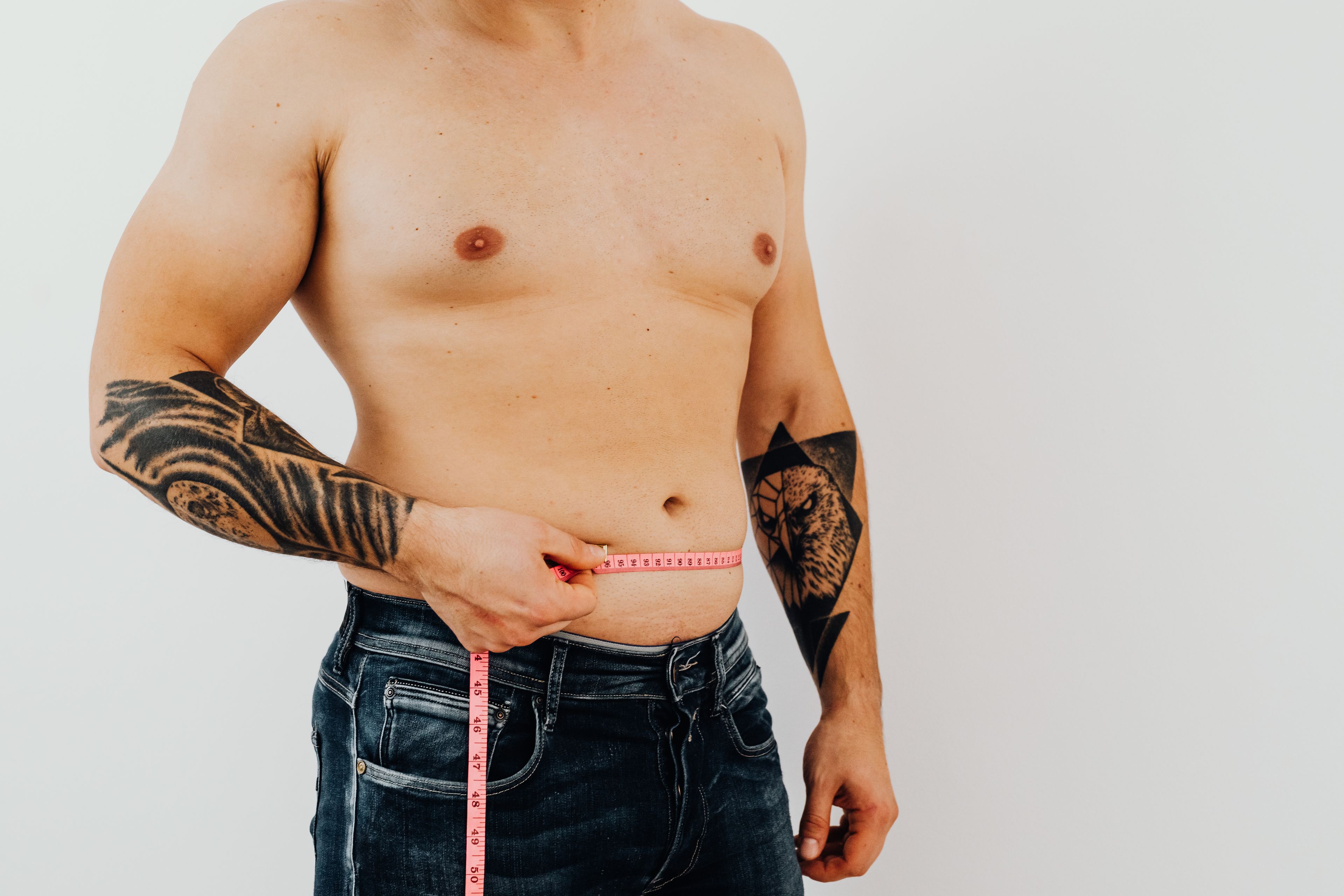
Track three things monthly: your lifts for the same reps, tape measurements at the same spot and time, and photos in the same light. Rising lifts alongside larger arm and thigh measurements, while your waist stays roughly steady, are useful signs.
- Log main lifts; aim to add reps or load over weeks in a 6–15 rep range (Iversen et al., 2021).
- Measure arms, chest, thighs, and waist every four weeks, in the morning before eating.
- Take photos every four weeks with the same light, pose, and timing.
- Weigh yourself several mornings a week and follow the trend. If your waist climbs faster than your arms or thighs, you’re mostly gaining fat.
- Ignore daily pump and soreness; soreness does not mean growth.
When is slow progress a sign something is wrong?
If you’ve trained consistently for 12 weeks and your lifts, measurements, and photos are all flat, it’s not a patience problem. A true beginner should see strength climb within the first month and size changes within about three. If all three measures are flat, review your training, food, and recovery.
Check whether you’re doing too few weekly sets per muscle, stopping sets far from failure, training without a progression rule, eating at maintenance, sleeping poorly, or missing sessions. A practical review recommends at least four weekly sets per muscle group using a 6–15 rep range (Iversen et al., 2021); see how many sets per muscle group per week.
Twelve flat weeks usually mean more than one thing is off. The LiftDecode diagnosis asks quick, one-tap questions about how you train, eat, and recover, then ranks what is actually limiting you. See which of these is holding you back first.
FAQ
Is working out 30 minutes a day enough to build muscle?
Yes, if the sets are hard. A 2021 review recommends at least four weekly sets per muscle group in a 6–15 rep range (Iversen et al., 2021). Thirty focused minutes can cover several muscles; what matters more is each muscle’s hard sets across the week.
How do I tell if I'm gaining muscle?
Look for three signals together over four to eight weeks: more weight or reps on the same lifts, larger arm and thigh measurements, and photos that differ in the same light. If your weight rises but your waist grows faster than your limbs, most of the gain is fat.
What kills muscle gains the most?
Usually it’s a basic issue: too few hard sets per muscle, stopping sets well short of failure, eating at maintenance, or poor sleep. Which one is holding you back depends on how you train and live, so check your habits before changing everything.
Which muscle grows the fastest?
No muscle reliably grows fastest for everyone. Individual response varies enormously, with biceps size changes ranging from −2% to +59% in one 12-week study (Hubal et al., 2005). Muscles you train consistently with enough hard sets tend to grow best; arms and shoulders may simply be easier to notice.
Written and maintained by LiftDecode. Training and nutrition education for healthy adults, not medical advice — if you have a health condition or an injury, talk to a professional who can examine you.