How Strong Am I? Strength Test for Your Big Lifts
How strong am I? Enter your bodyweight and your bench, squat, deadlift and pull-ups to see your level on each lift and overall against lifters your size.
One lift a level behind the rest? Find out why it lags.
Fill in any lifts you do; skip the rest.
Enter your bodyweight and at least one lift to see where you stand.
- Published
- Reading time
- 3 min
- By
- LiftDecode

How strong are you? This strength test answers it the only fair way: lift by lift, against lifters of your sex and bodyweight. Enter your best bench, squat and deadlift (or one hard set of each) and, if you do them, your strict pull-ups. You get a level for each lift, an overall level and your weakest link. Strong is relative; this tells you relative to whom.
How do you use the strength test?
Enter your sex and bodyweight, then any lifts you train. For each lift type the weight and the clean reps of your hardest recent set; one rep means a tested max. Skip lifts you do not do; the overall level uses the ones you enter.
How is your strength level calculated?
Each lift is compared with Strength Level's bodyweight tables, built from millions of logged lifts: 10.9 million qualifying bench press results alone through March 2026 (Strength Level). The five levels mean stronger than 5%, 20%, 50%, 80% and 95% of the people who log that lift: beginner, novice, intermediate, advanced and elite. Your overall level averages your position across lifts.
These lifters track their training, so they are stronger than the general population. Intermediate here is a genuinely good, trained level, usually about two years of regular lifting.
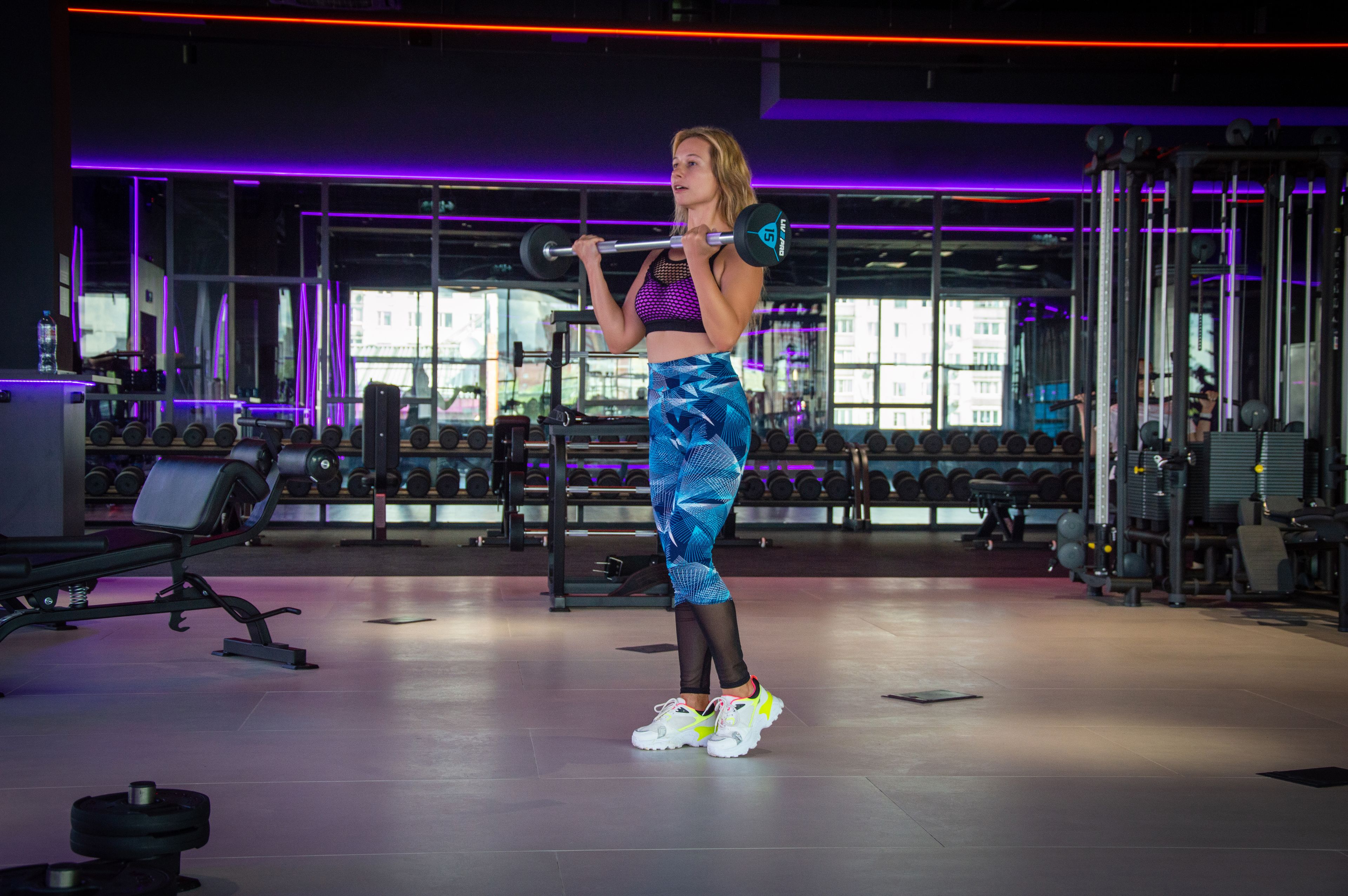
How strong is strong for your bodyweight?
For a 180 lb man, intermediate is about a 220 lb bench, a 300 lb squat and a 350 lb deadlift. Advanced is about 275, 375 and 440.
| Level | Man, 180 lb: bench / squat / deadlift | Woman, 150 lb: bench / squat / deadlift |
|---|---|---|
| Novice | 169 / 228 / 268 lb | 77 / 121 / 146 lb |
| Intermediate | 220 / 298 / 348 lb | 114 / 174 / 205 lb |
| Advanced | 277 / 377 / 438 lb | 159 / 235 / 274 lb |
As multiples of bodyweight, an intermediate man benches about 1.2 times, squats 1.65 times and deadlifts 1.95 times his weight (bench, squat and deadlift standards). Pull-ups: about 13 strict reps is intermediate for a 180 lb man and 6 for a 150 lb woman.
What if one lift lags behind the others?
A lift a full level behind your others is almost never a talent problem. It is usually trained less often, with less volume or without a progression rule. Volume alone matters: each extra weekly set adds about 0.37% to muscle growth on average (Schoenfeld et al., 2017). If your lagging lift is already trained hard and still stuck, find out what is holding it back.
FAQ
Am I strong for my size?
If two or more of your lifts reach intermediate for your bodyweight, yes: you are stronger than half of people who track these lifts, and far stronger than most people who do not train.
What is a strong bench for a 180 lb man?
About 220 lb is intermediate and 275 lb advanced. Benching bodyweight (180 lb) is novice-plus.
How strong is the average man?
Much weaker than these tables, which describe people who train. See how much the average man can lift for untrained and clinic-tested data.
Written and maintained by LiftDecode. Training and nutrition education for healthy adults, not medical advice — if you have a health condition or an injury, talk to a professional who can examine you.