Max Squat Calculator (and Deadlift Max Calculator)
Max squat calculator and deadlift max calculator: estimate your one-rep max from one hard set, see six formulas side by side and your level at your bodyweight.
Squat or deadlift stuck for weeks? Find what is holding it.
Bar included.
Clean reps, to depth or lockout.
Adds your strength level.
Enter the weight and reps of one hard squat set to see your estimated max.
- Published
- Reading time
- 3 min
- By
- LiftDecode
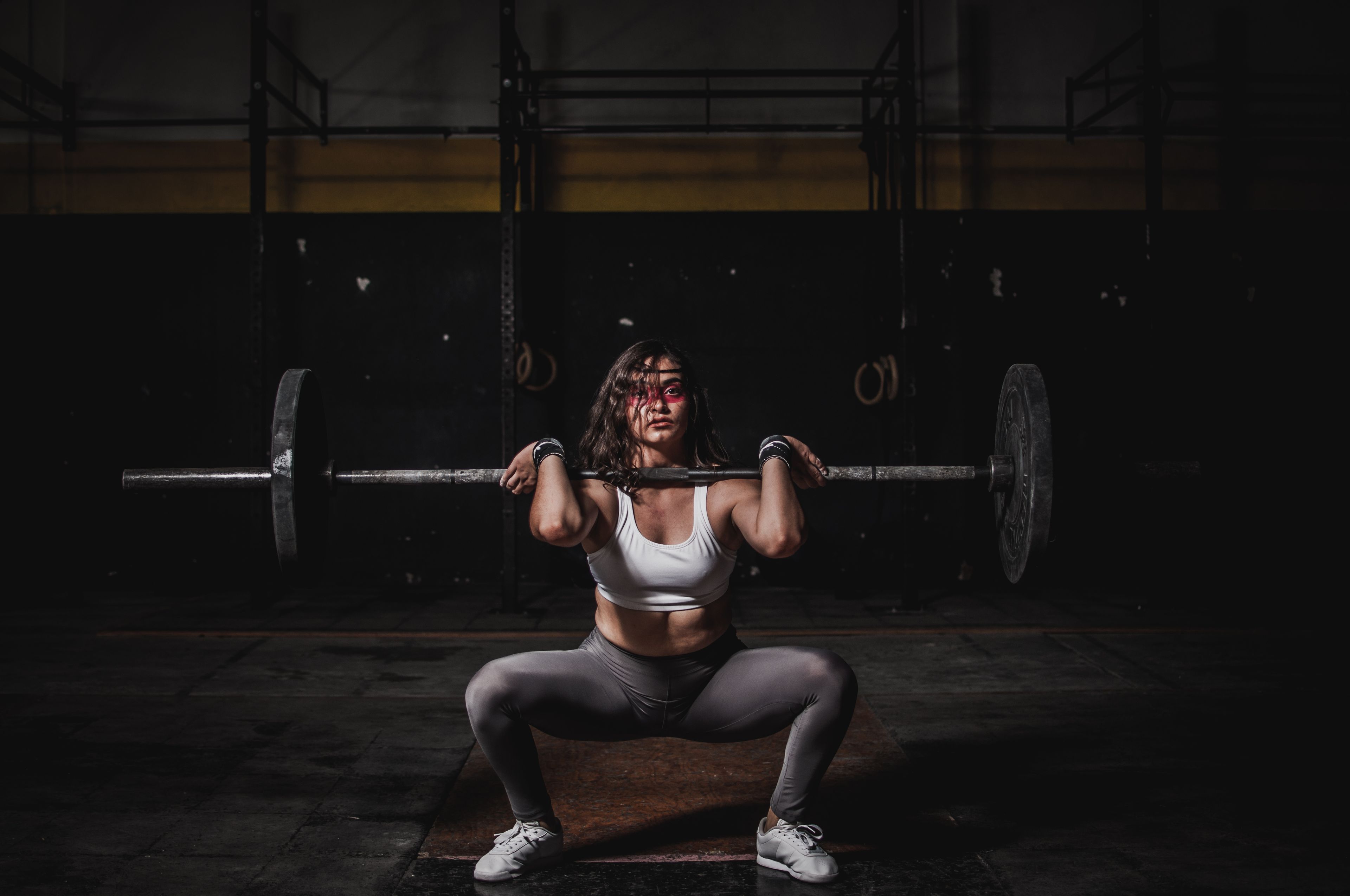
This max squat calculator estimates your squat or deadlift one-rep max from one hard set, shows six formulas side by side, and, with your bodyweight, tells you what level that max is. Squat estimates land close to a tested max; deadlift estimates usually run low, so read them as a floor.
How do you use the max squat calculator?
Pick squat or deadlift, enter the weight and the clean reps of your hardest recent set, and add your sex and bodyweight for the level. Use 3–6 reps that ended a rep or two short of failure.
- Count only reps to your usual depth or full lockout; a half squat predicts a half-squat max.
- Keep the set at 10 reps or fewer. Five-rep maxes predicted a true max more accurately than 10- or 20-rep maxes (Reynolds et al., 2006).
How accurate is a squat or deadlift max estimate?
Good for the squat, conservative for the deadlift. In a classic validation study, predicted and tested maxes correlated above r = 0.95, but the formulas came in 2–8% low on the squat and 9–14% low on the deadlift (LeSuer et al., 1997).
So a 405 lb deadlift estimate often hides a single of 440 lb or more, if you practice heavy pulls. The headline averages Epley and Brzycki; the table shows Lombardi, O'Conner, Mayhew and Wathen so you can see the spread.

What is a good squat and deadlift for your bodyweight?
For a 180 lb man, about 300 lb squat and 350 lb deadlift is intermediate: stronger than half the lifters who log those lifts on Strength Level. Advanced is near 375 and 440.
| Bodyweight | Squat: novice / intermediate / advanced | Deadlift: novice / intermediate / advanced |
|---|---|---|
| Man, 165 lb | 206 / 274 / 350 lb | 244 / 321 / 409 lb |
| Man, 180 lb | 228 / 298 / 377 lb | 268 / 348 / 438 lb |
| Man, 200 lb | 255 / 329 / 413 lb | 297 / 382 / 476 lb |
| Woman, 150 lb | 121 / 174 / 235 lb | 146 / 205 / 274 lb |
These are self-reported lifts from people who track their training, a stronger group than the general public (Strength Level squat; deadlift). Compare all your lifts at once with How strong am I?
How should you use your max?
Train from it, do not test it every week. Heavy work builds the max itself: across 21 studies, loads above 60% of 1RM raised one-rep max more than light loads, while muscle growth was similar (Schoenfeld et al., 2017). Turn your number into working weights with the 1RM percentage chart.
What if your squat or deadlift stops going up?
Three or four flat weeks on your top set is a stall. The usual reasons are no rule for adding weight, too little heavy practice, an untrained weak position and recovery that cannot keep up with leg and back fatigue. Find out which one is yours.
FAQ
How do I find my squat max without maxing out?
Do a hard set of 3–6 reps at your normal depth, stop with a rep or two left, and enter it here. On the squat the estimate is usually within a few percent of a tested max.
Why is my deadlift estimate lower than my real max?
Every formula underestimated the deadlift by 9–14% in the 1997 validation study. Your heavy triple predicts your single better than a set of eight.
What is a good squat for a 180 lb man?
About 300 lb (1.65 times bodyweight) is intermediate and about 375 lb (2.1 times) advanced on Strength Level's standards.
Written and maintained by LiftDecode. Training and nutrition education for healthy adults, not medical advice — if you have a health condition or an injury, talk to a professional who can examine you.