Bro Split: Does It Still Work? (Bro Split vs PPL)
Does the bro split still work? A full 5-day bro split with sets and reps, the weekly volume per muscle, what research says vs PPL, and where once-a-week training stalls.
- Published
- Reading time
- 7 min
- By
- LiftDecode
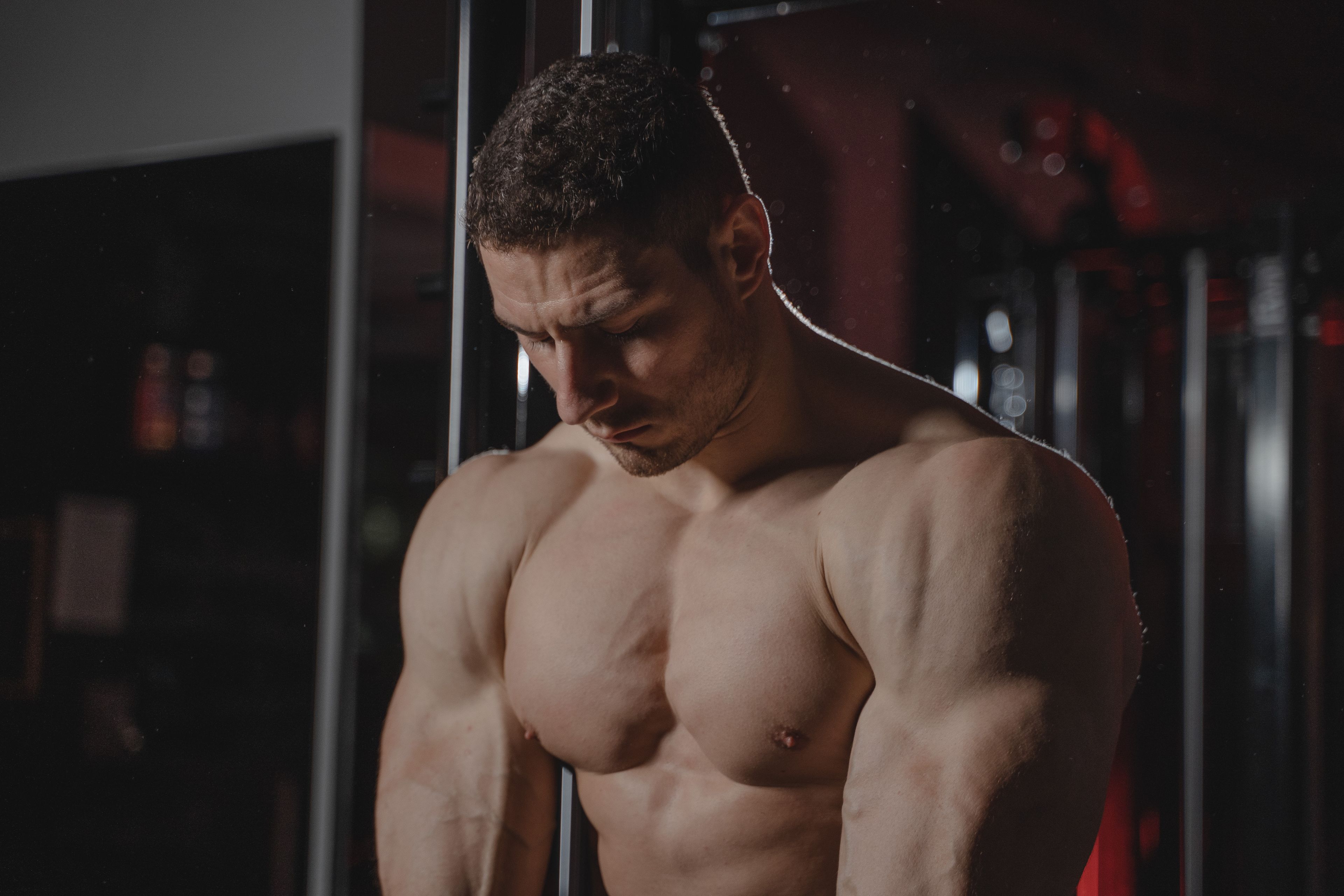
A bro split trains one or two muscle groups per day, five days a week, so each muscle gets one big session a week. It still works: when weekly sets are equal, research finds little difference in muscle growth versus higher-frequency splits. It stalls when a missed day wipes out a muscle’s week, or when one-session volume turns into junk sets.
What is a bro split?
A bro split is a body-part split: five training days, each devoted to one area—typically chest, back, shoulders, legs, and arms—so every muscle gets one high-volume session a week. It’s the opposite of full-body or upper/lower training.
A typical week is chest Monday, back Tuesday, shoulders Wednesday, legs Thursday, arms Friday, then the weekend off. Training frequency means how often you train a muscle; direct sets target it, while indirect sets work it as a helper. Pressing and pulling also train your triceps, biceps, and delts. The Arnold split trains each muscle twice a week, compared with once on a bro split.
A six-day PPL groups workouts by push, pull, and legs, and trains muscles twice weekly. Five training days are within ACSM guidance for advanced lifters, while intermediate lifters are advised to train three to four days. See workout splits and where each stalls for other options.
What does a good 5-day bro split look like?
Give each day 13–20 hard working sets, lead with a heavy compound for 5–10 reps, then add angles and isolation work for 8–20 reps. Rest 2–3 minutes on compounds. The template below gives the big muscles 10–14 direct sets a week.
LiftDecode 5-day bro split template
| Day | Exercises (sets × reps) |
|---|---|
| Mon — Chest | Bench press 4×6–10 · Incline dumbbell press 3×8–12 · Machine chest press or dips 3×8–12 · Cable fly 3×12–15 |
| Tue — Back | Pull-up or lat pulldown 4×6–12 · Barbell row 4×6–10 · Seated cable row 3×8–12 · Single-arm dumbbell row 3×8–12 |
| Wed — Shoulders | Overhead press 4×6–10 · Dumbbell lateral raise 4×12–20 · Cable lateral raise 3×12–20 · Rear-delt fly 4×12–20 |
| Thu — Legs | Back squat 4×5–8 · Romanian deadlift 3×6–10 · Leg press 3×10–15 · Lying leg curl 3×10–15 · Leg extension 3×12–15 · Standing calf raise 4×8–15 |
| Fri — Arms | Barbell curl 4×8–12 · Close-grip bench press 3×6–10 · Incline dumbbell curl 3×10–15 · Overhead triceps extension 3×10–15 · Hammer curl 3×10–15 · Triceps pushdown 3×10–15 |
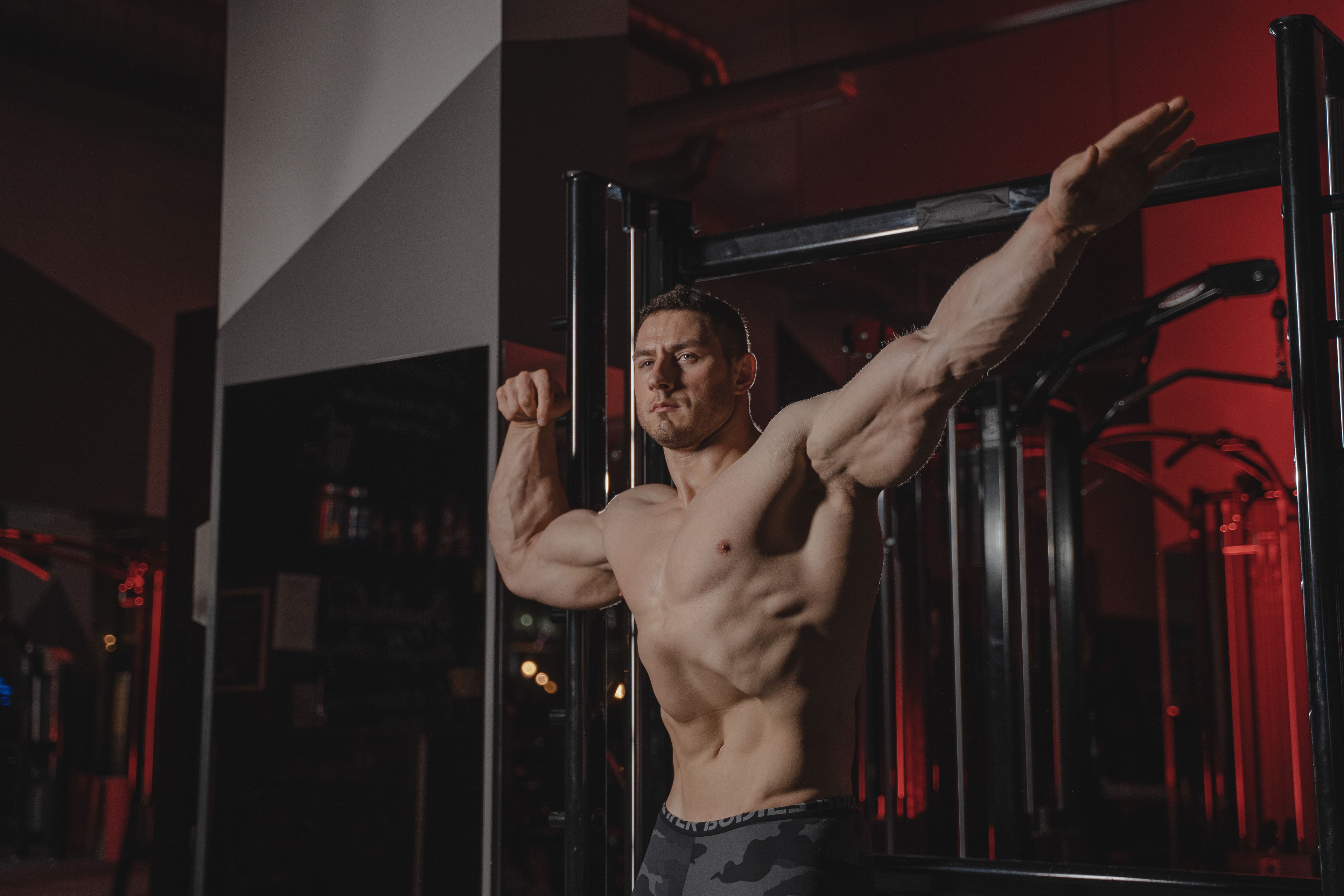
Direct weekly sets: chest 13, back 14, quads 10, hamstrings 6, calves 4, front delts 4, side delts 7, rear delts 4, biceps 10, and triceps 9. Counting each indirect compound set as half, triceps get about 16 total sets, biceps 17, front delts 10.5, and rear delts 9.5; see how to build bigger arms. This half-set method was used in a 67-study analysis (Pelland et al., 2026). Rest 2–3 minutes on compounds and 1–2 minutes on isolation work; trained men in one study gained more strength and quad thickness with three-minute rests than one-minute rests (Schoenfeld et al., 2016).
Is the bro split actually good for building muscle?
Yes, if the weekly sets are there. Early research favored twice-weekly training, but later analyses found that with equal weekly volume, frequency and split type make little difference to growth. The bro split’s problem is execution risk, not biology.
- A 2016 meta-analysis found a larger effect for higher frequency (0.49 versus 0.30) and recommended training major muscles at least twice weekly (Schoenfeld, Ogborn & Krieger, 2016); the higher-frequency groups often did more total volume.
- An update covering 25 studies found no significant difference between frequencies when weekly volume was equal (Schoenfeld, Grgic & Krieger, 2019).
- A 2024 analysis of 14 studies and 392 people found no significant strength or hypertrophy difference between volume-equated split and full-body training (Ramos-Campo et al., 2024).
- One study of 20 trained men found greater forearm-flexor thickness with total-body training, but no strength difference (Schoenfeld et al., 2015).
Keep the split if you enjoy it, hit your weekly work, and recover; frequency alone doesn’t decide your muscle growth.
Where does the bro split stall?
In three places: a missed day erases that muscle’s direct work for the week; the last sets of a 13–15-set session are done too fatigued to count for much; and the main lifts, practiced once a week, gain strength slowly. Each has a different fix.
- Missed day → Chest Monday gets skipped, so chest gets zero direct sets that week → fold it into the next day or use a rolling schedule.
- Fatigue → Reps and load collapse by set 10 → split the muscle’s work across two days.
- Slow strength → Bench or squat practice once weekly leaves fewer chances to build the lift → train the main lift twice weekly. Frequency has a positive effect on strength with diminishing returns, while its effect on hypertrophy is negligible when volume is accounted for (Pelland et al., 2026).
- Overlap → Triceps and front delts work on chest, shoulder, and arm days → monitor elbow and shoulder fatigue. More weekly sets tend to mean more growth, but with diminishing returns (Schoenfeld, Ogborn & Krieger, 2017).
Frequency is only one suspect. Missed sessions, too few sets, sleep, and food can produce the same stall; check whether frequency is really your bottleneck.

Bro split vs PPL: which should you run?
Run PPL or upper/lower if you sometimes miss sessions or want your bench and squat to climb; run a bro split if you rarely miss, love focused sessions, and mainly want size. With equal weekly sets, both grow muscle similarly.
- Bro split: Five days, one big session per muscle, easy to plan, but fragile when you miss a day.
- Six-day PPL: Trains each muscle twice weekly in shorter per-muscle sessions, but takes more gym days.
- Four-day upper/lower: Also trains each muscle twice weekly, in fewer days; it fits many schedules.
- Hybrid: Keep the body-part days and add a smaller second chest/back or legs session.
Volume-equated split and full-body routines showed no significant difference in strength or hypertrophy in a 2024 analysis (Ramos-Campo et al., 2024). Choose the schedule you can follow consistently; push pull legs, 3- and 6-day versions give you options.
How do you progress a bro split so it keeps working?
Use double progression: keep an exercise in a rep range, add reps over time, then increase the load once every set reaches the top. Keep the same exercises for six to eight weeks, and stop most sets one to three reps short of failure.
- Put the heaviest compound first, while you’re freshest.
- Choose a rep range and record your load and reps.
- Add reps while keeping your technique consistent.
- Once every set reaches the top of the range, add the smallest weight jump.
- Keep most sets one to three reps in reserve.
For example, incline dumbbell press at 60 lb (27 kg) for 3×8–12 becomes 12, 12, 12; next week, try 65 lb (29.5 kg). Muscle confusion: why constant variety stalls progress explains why changing exercises too often makes progress harder to track.
The ACSM recommends increasing load by 2–10% once you exceed the target reps by one or two (ACSM position stand, 2009). Training to failure isn’t required: a 2022 analysis found no significant difference between failure and non-failure training for strength or hypertrophy (Grgic et al., 2022).
If you’re stalled, take the quick, one-tap diagnosis to sort out whether frequency, missed sessions, volume, recovery, or another factor is the likelier bottleneck.
FAQ
What is better, a bro split or PPL?
For muscle growth with equal weekly sets, neither is clearly better (Schoenfeld et al., 2019). PPL trains each muscle twice a week, which protects you against missed days and gives you more practice on the main lifts. A bro split suits you if you rarely miss sessions and enjoy focused workouts.
Is the bro split actually good?
Yes, if each muscle gets enough hard weekly sets and you add weight or reps over time. Its weaknesses are practical: one missed day can remove a muscle’s whole week of direct work, and a long single-muscle session can end with low-quality sets.
What is a good 5-day bro split routine?
Train chest Monday, back Tuesday, shoulders Wednesday, legs Thursday, and arms Friday. Start with a heavy compound for 5–10 reps, then add moderate-rep work for 13–20 hard sets total. Use double progression and keep your exercises consistent for six to eight weeks.
How many sets per muscle on a bro split?
This template gives you 13 direct chest sets and 14 direct back sets each week, with arms and delts also getting indirect work from pressing and pulling. More weekly sets can support more growth, with diminishing returns, so add sets only while you can keep them hard (Pelland et al., 2026).
Written and maintained by LiftDecode. Training and nutrition education for healthy adults, not medical advice — if you have a health condition or an injury, talk to a professional who can examine you.