How Long to Rest Between Sets for Muscle and Strength
How long to rest between sets: 2–3 minutes on big lifts and 1–2 on isolation work for muscle, 3–5 for heavy strength work. What the research shows and why.
- Published
- Reading time
- 6 min
- By
- LiftDecode

To build muscle, rest about 2–3 minutes between sets of big compound lifts and 1–2 minutes on isolation exercises. For heavy strength work, rest 3–5 minutes. Resting 60 seconds or less slightly reduces growth because it cuts the reps you can do on later sets; beyond about 90 seconds, extra rest shows no clear additional benefit for muscle size.
For more on programming, see sets, reps and rest for hypertrophy.
How long should you rest between sets to build muscle?
Rest at least 60–90 seconds, and closer to 2–3 minutes on heavy compound lifts. A 2024 meta-analysis found a small growth advantage for rests longer than 60 seconds and no clear extra gain beyond 90 seconds. Hypertrophy means muscle growth.
Compound lifts use several joints and muscle groups, like squats, deadlifts, presses and rows. Isolation exercises focus on one muscle, like curls, raises and extensions. Big lifts usually tire you more, so the next set suffers more if you rush your recovery.
A meta-analysis of nine studies found a small benefit to resting more than 60 seconds, with no appreciable difference when rest exceeded 90 seconds (Singer et al., 2024). In 21 trained men, three-minute rests produced greater squat and bench strength and more thigh growth than one-minute rests (Schoenfeld et al., 2016).
Why does resting longer build more muscle?
Because you can do more work. Short rests leave you less recovered, so you tend to lift fewer reps on later sets. Rest is a way to protect your reps, not a muscle-building trick by itself.
A 10-week trial compared four knee-extension protocols in 28 people. The results suggest that total work, or volume load (sets × reps × weight), matters more than the rest interval when work is matched (Longo et al., 2022):
- Three-minute rest: quad size increased 13.1%.
- One-minute rest: quad size increased 6.8%.
- One-minute rest with extra work to match volume load: 12.9%.
- Three-minute rest with work matched to the short-rest group: 6.6%.
As a LiftDecode rule of thumb, if your reps drop by more than two from set one to set three at the same weight, you’re probably resting too little. If you’re also unsure how much work to do overall, see how many sets per muscle group per week.

Where did the "30–90 seconds for hypertrophy" rule come from?
It came from hormone theory. Short rests can cause bigger growth-hormone spikes after training, and older reviews treated those spikes as a sign of more muscle growth. Later research found that short-term hormone changes don’t predict how much muscle people build.
A 2009 review suggested 30–60-second rests for hypertrophy based on greater acute growth-hormone levels (de Salles et al., 2009). The NSCA’s 30–90-second recommendation is also cited in the 2024 meta-analysis, which says the guidelines warrant reconsideration (Singer et al., 2024).
In a 12-week study of 56 young men, exercise-induced growth hormone, free testosterone and IGF-1 changes did not significantly correlate with gains in lean mass or leg-press strength (West & Phillips, 2012). The old rule isn’t dangerous; it can just leave reps on the table.
How long should you rest between sets for strength?
If you’re trained, rest more than two minutes, and take 3–5 minutes on heavy sets. If you’re new to lifting, 1–2 minutes is enough to maximize strength gains. Heavy sets need enough recovery for you to practice each rep at full force.
A review found that trained lifters need more than two minutes to maximize strength, while 60–120 seconds is sufficient for untrained lifters (Grgic et al., 2018). The ACSM recommends 3–5 minutes for heavy loading in intermediate and advanced lifters (ACSM, 2009). For more on building strength after your first year, see how to get stronger after your first year.
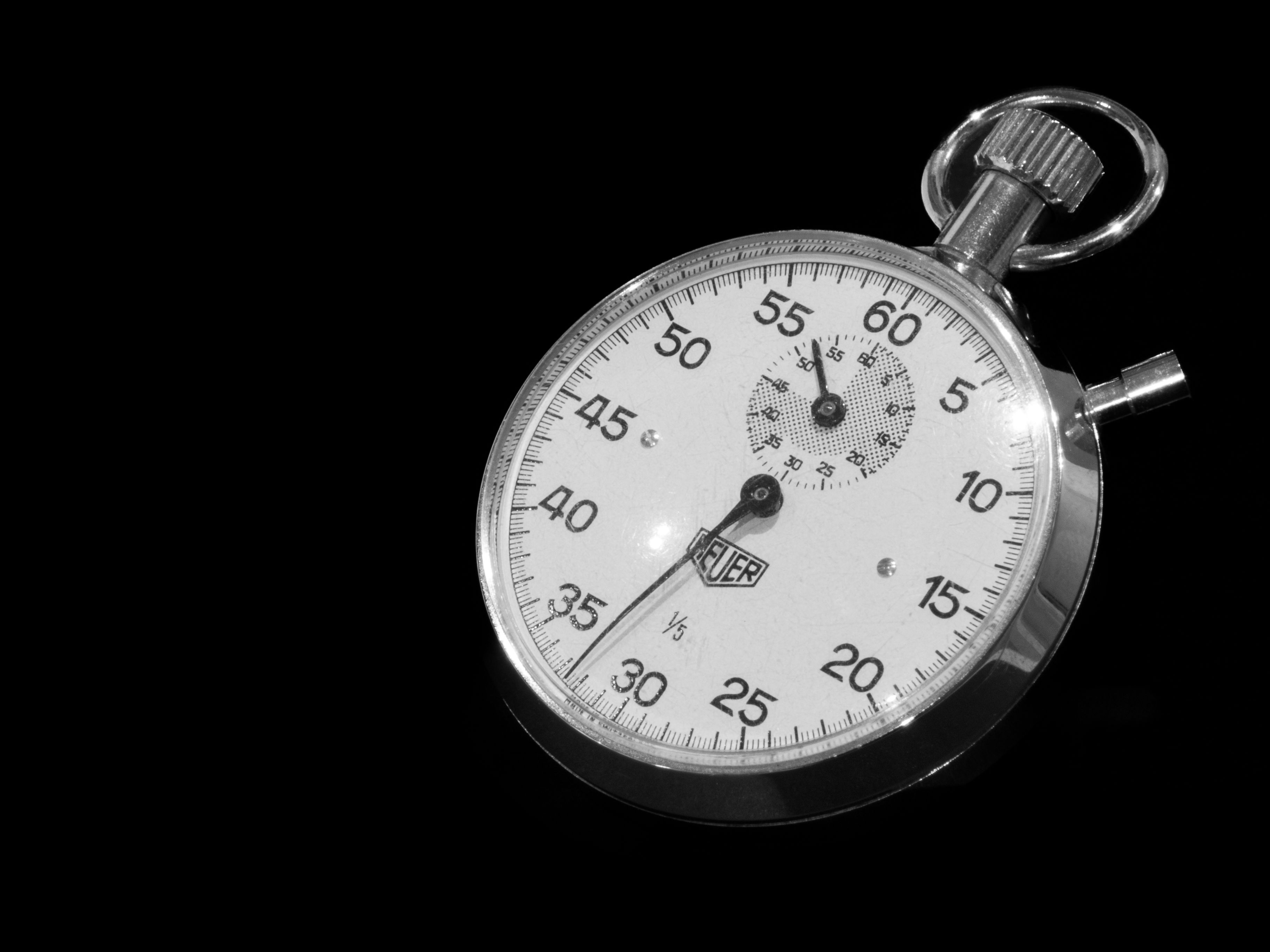
How do you keep workouts short without resting less?
Pair exercises instead of cutting rest. Alternate two lifts that don’t compete, such as a press and a row or curls and triceps work, so each muscle gets time to recover while you stay busy.
- Superset opposite muscle groups; rest about 60–90 seconds between exercises, giving each muscle about 2–3 minutes.
- Use short rests on isolation work; keep full rests for squats, deadlifts and heavy presses.
- If you rest only 60 seconds everywhere, add a set per exercise to make up lost reps.
- Skip the general warm-up and use warm-up sets specific to each lift.
Supersets, drop sets and rest-pause (myo-reps) can roughly halve training time while maintaining volume; warm-ups can focus on the exercise itself (Iversen et al., 2021). See how long a muscle-building workout should be for more ways to plan a session.
Is resting too long ever a problem?
Only for your schedule. Beyond about 90 seconds, research shows no clear extra muscle-size benefit, but that doesn’t mean longer rest hurts growth. Three-minute rests produced more growth than one-minute rests in trained men.
Five-minute scroll breaks can turn a session into one you eventually skip. If longer rests make workouts hard to fit in, pair exercises or adjust your session plan; consistency matters too.
| Goal / situation | Rest between sets | Why | Source |
|---|---|---|---|
| Muscle growth: squats, deadlifts, presses, rows | 2–3 min | Heavy compound sets fatigue you more; 3 min beat 1 min in trained men | Schoenfeld 2016; Singer 2024 |
| Muscle growth: curls, raises, extensions, machines | 1–2 min (at least 60–90 s) | ≤60 s gives a small growth penalty; >90 s no clear extra gain | Singer 2024 |
| Strength, trained lifter | 3–5 min (never under 2) | Needed to maximize strength in trained people | Grgic 2018; ACSM 2009 |
| Strength, beginner | 1–2 min | 60–120 s is sufficient for untrained lifters | Grgic 2018; Iversen 2021 |
| Short on time | 60–90 s with an extra set, or antagonist supersets | Matching total work matched growth | Longo 2022; Iversen 2021 |
| Muscular endurance | Under 90 s | Light loads, high reps | ACSM 2009 |
Rest is one of the quieter causes of a stall, but rarely the only one. If your rests are already sensible, find what’s actually capping your progress.
FAQ
How long should I rest between sets to grow muscle?
Rest about 2–3 minutes on compound lifts and 1–2 minutes on isolation exercises. A 2024 meta-analysis found a small growth benefit to resting more than 60 seconds and no clear extra benefit beyond 90 seconds (Singer, 2024). Recover enough to repeat your reps.
Is 3 minutes of rest between sets too much?
No. In trained men, three-minute rests produced more strength and thigh growth than one-minute rests over eight weeks (Schoenfeld, 2016). Three minutes is a sensible default for squats, deadlifts, presses and rows, unless it makes your sessions so long that you skip them.
Is 4 sets of 12 reps too much?
Not for one exercise; four hard sets of 12 is a normal dose. What matters is your weekly total per muscle: roughly 10–20 hard sets for most lifters (Schoenfeld et al., 2017; Baz-Valle et al., 2022). Rest enough that your reps don’t collapse.
Does resting 1 minute between sets kill gains?
It doesn’t kill gains, but keeping the same number of sets can trim them. In a 10-week trial, one-minute rests grew the quads about half as much as three-minute rests until extra sets matched total work (Longo, 2022).
Written and maintained by LiftDecode. Training and nutrition education for healthy adults, not medical advice — if you have a health condition or an injury, talk to a professional who can examine you.