Squat Form: The Mistakes That Stall Your Squat
Good squat form, step by step: the setup, how deep to go, and the 6 mistakes that quietly stall your squat, each with a video self-check and a fix.
- Published
- Reading time
- 6 min
- By
- LiftDecode
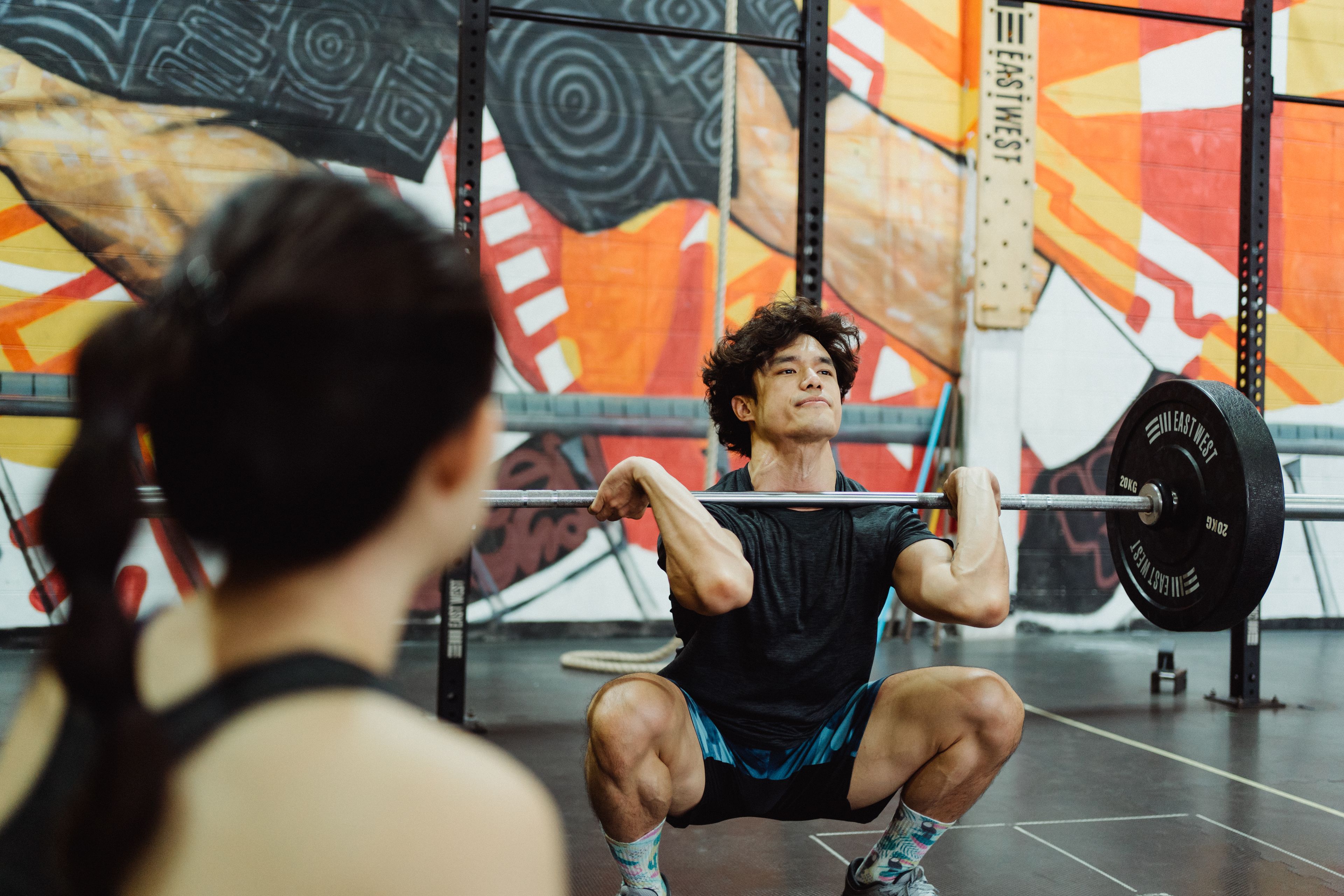
Good squat form keeps the bar over your mid-foot, your knees in line with your toes, and your hip crease at least level with your knees, with your chest and hips rising together. When a squat stalls, the weight often makes it shallower, more hips-first, and more forward-tipped. See our exercise form guides for every big lift.
How do you set up for a squat?
Set the bar at mid-chest height. Get under it with your upper back tight, unrack with both feet under the bar, and walk it out in three steps. Stand about shoulder-width, toes slightly out, and brace with a deep belly breath before each rep.
- Place the bar on your upper traps for high-bar or rear delts for low-bar. Keep your hands as close as your shoulders allow and wrists straight.
- A wider stance may increase glute activity: one study found it was higher at the widest stance (Paoli et al., 2009).
- High-bar tends to mean more knee bend and an upright torso; low-bar means more hip bend and forward lean, with more erector, adductor, and glute activity (Glassbrook et al., 2017).
How do you squat, step by step?
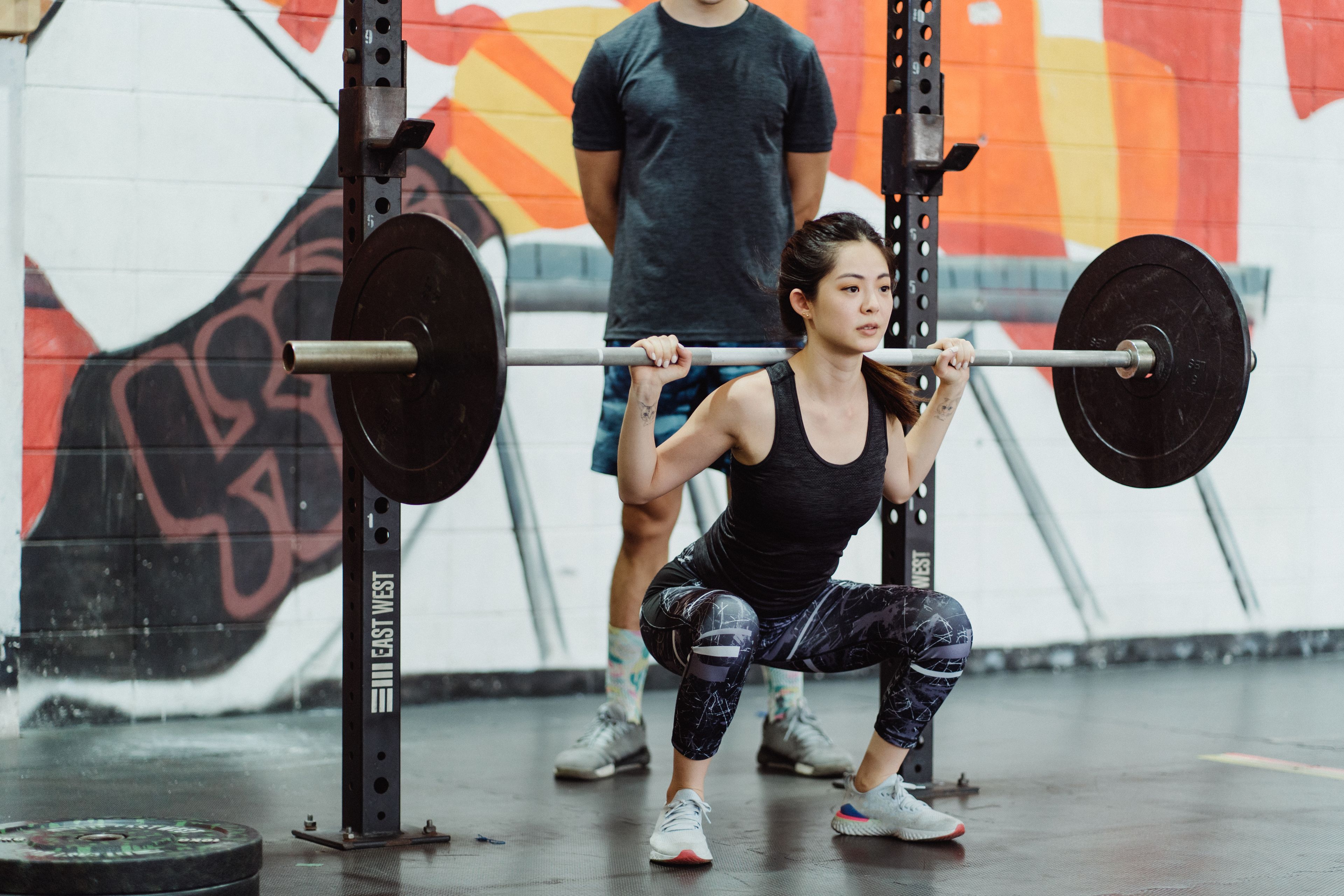
Break at the hips and knees together, let your knees travel over your toes, and descend until your hip crease is below your knee. Stay tight at the bottom, then push the floor away with your chest and hips rising together.
- Brace, then unlock your hips and knees at the same time.
- Keep your whole foot planted and your weight over mid-foot.
- Descend under control until your hip crease passes below the top of your knee, the common powerlifting depth standard (squat definition and depth rule).
- Drive up with your chest and hips rising together as the bar travels over mid-foot.
Which squat mistakes stall your progress?
Six faults can stall a squat: depth shrinking as load climbs, hips shooting up, the bar drifting forward, knees caving in, heels lifting, and holding knees behind toes. Film from the side at hip height and from the front; compare a warm-up with your top set. Across 22 studies, heavier squats showed more forward trunk lean and horizontal bar movement early in the ascent (Sports Medicine – Open, 2025).
| Mistake | Looks like | Why it stalls you | Video check | Fix / cue |
|---|---|---|---|---|
| Depth creeps up | Top sets high | You add weight to a shorter lift | Compare hip crease and knee | Use a depth marker; count reps at depth |
| Hips shoot up first | Chest drops out of the hole | Load shifts to hips and back | Do chest and hips rise together? | “Chest up, push the floor”; pause or front squat |
| Bar drifts forward | Bar curves toward toes | Balance can end the rep | Does bar stay over mid-foot? | Tighten upper back; pressure through whole foot |
| Knees cave in | Knees move inward | Force leaks sideways | Check knees over toes from front | “Knees out, spread the floor”; stop before it appears |
| Heels lift | Heels peel up at depth | You lose your base | Watch heels at depth | Try heeled shoes or plates under heels |
| Knees held behind toes | Shins vertical, torso leans | Hip torque rose from about 28 to 303 N·m in trained lifters (Fry et al., 2003) | Do knees stay behind toes? | Let knees travel forward |
If your top set is higher than your warm-ups, you’re adding weight to a shorter squat. Some inward knee movement can happen under maximal effort; aim to reduce it, not panic about it.
How deep should you squat, and what does it work?
Squat at least to parallel if you can hold your position. Squats train the quads, glutes, and adductors; in a 10-week study, full squats built more glute and adductor muscle and full-squat strength than half squats.
Among 17 men, full-squat strength rose 31.8% versus 11.3% with half squats; glute growth was 6.7% versus 2.2%, and adductor growth 6.2% versus 2.7%, while quad growth was similar (Kubo et al., 2019). Across 16 studies, full range of motion also beat partial range for strength and lower-limb growth (Pallarés et al., 2021). Try Bulgarian split squat form for a single-leg option, and see how to get bigger legs.
A small pelvic tuck at the bottom is common. The problem is losing position under load, especially if depth becomes inconsistent.

How should you program the squat?
For strength, squat at about 80% of your max or more for two to three sets, at least twice a week, near the beginning of your session. For leg size, weekly hard sets matter more than exact reps; stop sets when form changes.
- Use 3–6 reps for strength or 6–12 for size. ACSM’s 2026 recommendations include at least 10 weekly sets for hypertrophy; training to failure isn’t necessary (ACSM Position Stand, 2026).
- Leave 1–3 RIR (reps in reserve). Similar growth is possible across loads from about 30% of your max, but heavy loads maximize one-rep max strength (Schoenfeld et al., 2021).
- Try pause squats for lost tightness, front squats if hips shoot up, or a box for consistent depth. Compare your average squat weight and squat standards with your training history and follow a progression rule.
Is your squat stalled by technique or by something else?
It’s technique if heavy reps look different from warm-ups: shallower, more hips-first, or with the bar drifting forward. If reps look the same but grind at the same spot, the cause is likelier programming, recovery, or food.
A sticking point is where the bar slows most. In the squat, it is around a thigh angle of 30–32 degrees to the floor (Kompf & Arandjelović, 2017).
- Technique clues: Position changes under heavy loads, you fail just out of the hole, or depth varies.
- Programming or recovery clues: Reps stay clean but won’t move, other lifts stall, you lack a progression rule, or sleep, stress, or diet changed. If reps stay clean and only the squat is stuck, a short block such as Smolov Jr adds practice under load.
If your squat looks the same at 70% and 90% but the bar still stops, technique is cleared. See which cause is actually first to focus on the problem the video doesn’t explain.
FAQ
What is the proper form for a squat?
Keep the bar over mid-foot, brace your trunk, track your knees over your toes, and squat until your hip crease drops below your knee. On the way up, let your chest and hips rise together; check these points on your heaviest set.
What are 5 common mistakes when squatting?
Common mistakes are cutting depth as weight rises, hips shooting up first, the bar drifting forward, knees caving in, and heels lifting. A sixth is holding your knees behind your toes, which piles torque onto the hips (Fry et al., 2003).
Should your knees go past your toes when you squat?
For most people, yes. Blocking the knees behind the toes forced more forward lean and raised hip torque from about 28 to 303 N·m in trained lifters, so let your knees travel forward in line with your toes.
What is the best way for seniors to do squats?
Start with sit-to-stands from a chair, using your hands if needed; lower the seat as it gets easier before adding load. The CDC recommends muscle-strengthening activities at least 2 days a week for older adults (CDC); check with a doctor first if you have a heart or joint condition.
Written and maintained by LiftDecode. Training and nutrition education for healthy adults, not medical advice — if you have a health condition or an injury, talk to a professional who can examine you.