Strength Training for Women Over 40: A Practical Plan
Strength training for women over 40: what perimenopause changes for muscle and bone, why heavier beats lighter, and a 3-day plan with sets, reps and protein.
- Published
- Reading time
- 7 min
- By
- LiftDecode
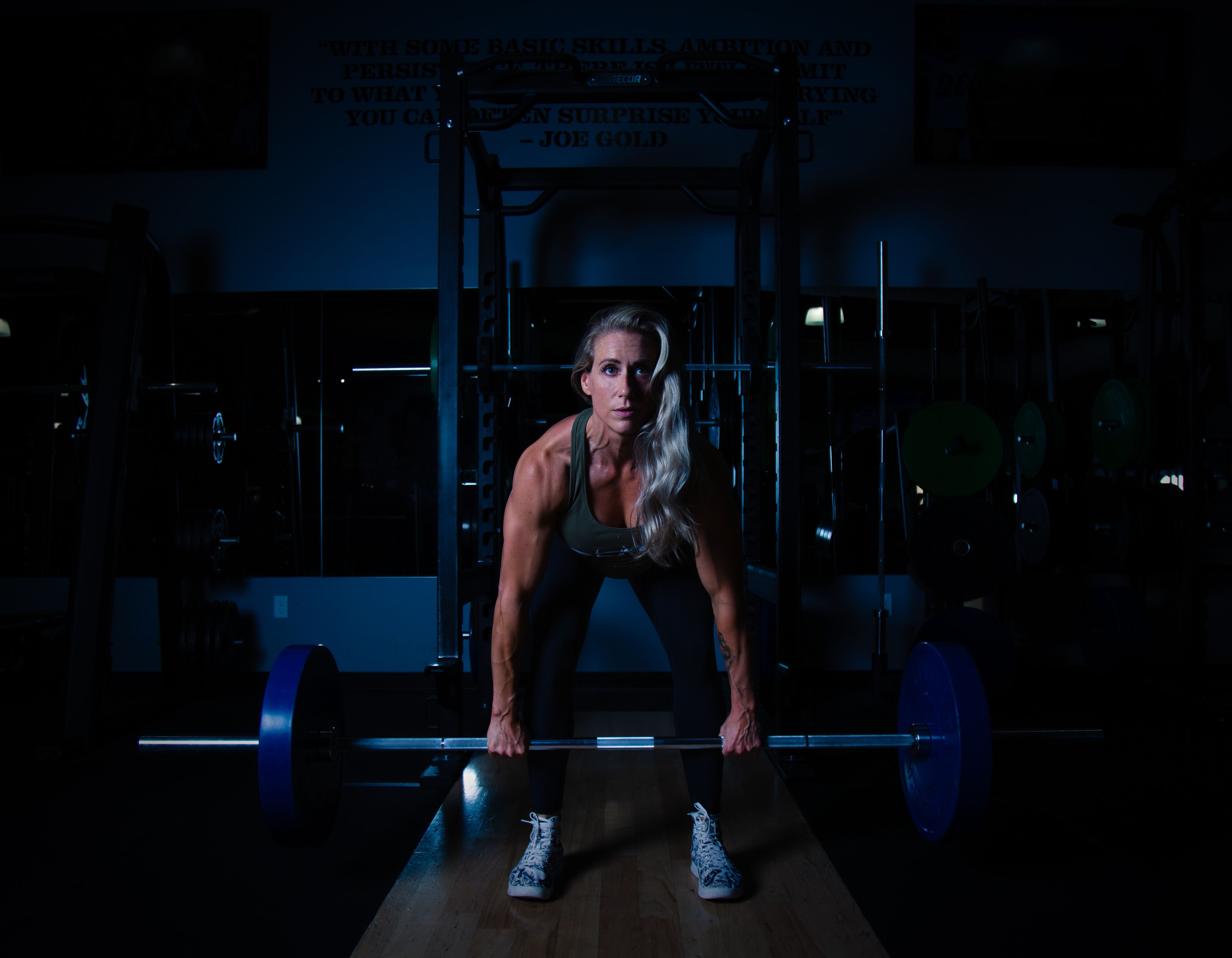
Strength training for women over 40 should get heavier, not lighter. Perimenopause, the transition to menopause, speeds muscle and bone loss around your final period. Two to four weekly sessions of challenging, progressive lifting can help protect you and build strength. Women in perimenopause can gain strength as well as younger women.
What changes for women in their 40s?
Perimenopause usually begins in the mid-to-late 40s and lasts about four years, though it can last two to eight. Around your final period, fat gain speeds up, lean mass falls, and bone loss accelerates—even when your weight barely changes.
The average age of menopause in the U.S. is 52; menopause is reached after a full year without a period (Office on Women’s Health). In the SWAN cohort, fat gain doubled and lean mass began to decline at the start of the transition. These changes continued until about two years after the final period, then leveled off (Greendale et al., 2019).
- In 862 women, bone loss began about a year before the final period.
- Over 10 years, lumbar spine density fell 10.6% and femoral neck density fell 9.1%; much of that loss occurred around the final period (Greendale et al., 2012).
- These years are a good time to build strength.
If muscle gain has become harder, see how to gain muscle when it's stopped coming easy.
Does strength training still work during perimenopause?
Yes. In a 12-week trial, pre-, peri-, and post-menopausal women gained strength and balance to a similar degree, and the training group added lean mass. Hormonal changes alter the backdrop, not your ability to adapt.
The supervised trial included 70 women training four days a week. Hip strength rose about 19–20%, balance 12–13%, and lean mass about 2%, with no significant differences between menopause groups (Med Sci Sports Exerc, 2025). A meta-analysis found no significant sex difference in relative muscle growth; relative upper-body strength gains favored women (Roberts et al., 2020). For the basics, read how to build muscle as a woman.
Which strength training myths hold women over 40 back?
Four myths do the most damage: heavy weights make women bulky, light weights “tone” better, cardio fixes menopause belly, and bone needs only gentle exercise. Heavier lifting builds strength, and fat loss cannot be targeted to one area.
- “Heavy weights will make me bulky.” Men’s circulating testosterone is more than 15 times women’s at any age (Handelsman et al., 2018). Women build muscle with training, but becoming bulky by accident is not how it works.
- “Light weights and high reps tone better.” Muscle growth can be similar with light or heavy loads when sets get close to failure, but heavier loads build strength more effectively (Schoenfeld et al., 2017). “Toning” means building muscle and losing fat.
- “Cardio and crunches will remove belly fat.” MRI in a 12-week one-arm study showed generalized fat loss, not loss confined to the trained arm (Kostek et al., 2007). Lift for muscle; eat to support fat loss.
- “Bone needs only gentle exercise.” Resistance, balance, and weight-bearing exercise support skeletal maintenance (Endocrine Society).
How often and how heavy should you lift?
Lift two to four times a week, training each major muscle at least twice. Choose a weight you can lift for 6–12 reps with one to three reps in reserve—the number you could still do before failure—and increase the load as the top of the range gets manageable.
The CDC recommends muscle-strengthening activity at least two days a week, and a meta-analysis found greater muscle growth from training a muscle twice weekly than once (CDC; Schoenfeld et al., 2016). This three-day full-body plan is LiftDecode’s prescription, not a study protocol.
| Day | Exercise (start → progress to) | Sets × reps | Reps in reserve |
|---|---|---|---|
| 1 | Goblet squat → barbell back squat | 3 × 8–10 | 1–3 |
| 1 | Dumbbell bench press | 3 × 8–10 | 1–2 |
| 1 | One-arm dumbbell row | 3 × 10–12 | 1–2 |
| 1 | Hip thrust (glute bridge to start) | 2 × 10–12 | 1–2 |
| 1 | Plank | 2 × 30–45 sec | — |
| 2 | Dumbbell → barbell Romanian deadlift | 3 × 8–10 | 2 |
| 2 | Lat pulldown | 3 × 10–12 | 1–2 |
| 2 | Split squat | 2 × 8–10 each leg | 1–2 |
| 2 | Seated dumbbell shoulder press | 2 × 8–12 | 1–2 |
| 2 | Farmer’s carry | 3 × 30–40 m | — |
| 3 | Kettlebell → trap-bar deadlift | 3 × 5–6 | 2–3 |
| 3 | Incline push-up → incline dumbbell press | 3 × 8–12 | 1–2 |
| 3 | Seated cable row | 3 × 10–12 | 1–2 |
| 3 | Leg press | 2 × 10–12 | 1–2 |
| 3 | Lateral raise | 2 × 12–15 | 0–2 |
Rest two minutes after the first exercise each day and 60–90 seconds between other sets. When every set reaches the top of its rep range with the listed reps in reserve, add weight.
- Start week one with a weight you could lift three or four more times.
- Add 2.5–5 lb (1–2 kg) for upper-body lifts or 5 lb (2.5 kg) for lower-body lifts, one dumbbell pair at a time.
- For two days a week, do Days 1 and 3 and add one set to each main lift. Walking on other days is useful, but does not replace lifting.
- If you have diagnosed osteoporosis or a fracture from a minor fall, get medical guidance and ideally coached supervision before heavy loading.
For how many reps to build muscle and progressive overload when you can't add weight, use your rep range and logbook to guide the next step.
What should you eat to support strength training?
Aim for about 1.4–2.0 g of protein per kg of body weight daily (0.6–0.9 g per lb), spread across meals of 20–40 g. Avoid aggressive diets: lean mass is already falling during the menopause transition, and under-eating can speed that loss.
For most exercisers, guidance is 1.4–2.0 g/kg daily, with 20–40 g per meal every three to four hours (Jäger et al., 2017).
- At 150 lb (68 kg), that is roughly 95–135 g a day.
- Four meals of about 25–35 g each can cover that range.
- For fat loss, use a small calorie deficit, keep lifting heavy, and aim toward the upper end of the protein range.
How do you know it's working?
In the first month, your lifts should often climb; by 8–12 weeks, daily tasks may feel easier and clothes may fit differently. The scale is a poor marker because muscle gain and fat loss can cancel each other out.
Track what your body can do and how it changes:
- Log weight and reps for your four main lifts.
- Measure your waist and hips monthly, and take photos every four weeks.
- Notice how stairs, carrying groceries, and getting off the floor feel.
A study in young women found significant strength increases by week four and measurable upper-body muscle-thickness increases by week six of a 12-week program (Abe et al., 2000). If lifts stop rising for three or more weeks, check whether sets are hard enough, you are sleeping and eating enough, and weights have increased. For changes after menopause, see strength training for women over 50.
If you’ve been lifting and nothing is changing, possible reasons include weights that never go up, sets that stop too early, protein only at dinner, or short sleep. LiftDecode’s diagnosis asks quick, one-tap questions about training, eating, and recovery to help you see which one is holding you back.
FAQ
How often should a woman in her 40s lift weights?
Lift two to four times a week, hitting every major muscle at least twice. U.S. guidelines set two days as the minimum (CDC); three full-body sessions suit many women, with recovery days between.
What weight should a 40 year old woman be able to lift?
There is no single number; it depends on training history, body size, and the lift. Choose a load that lets you finish your target reps with one to three left, and add weight when that gets easy. Compare with average bench press, squat and deadlift for women if you like, but judge progress by your logbook.
Will lifting heavy weights make me bulky?
No. Men’s circulating testosterone is more than 15 times women’s at any age (Handelsman et al., 2018), and women build muscle gradually with heavy training.
Is it too late to start strength training in your 40s?
Not at all. Lean mass and bone loss accelerate around your final period, and perimenopausal women gained strength as well as younger women in a 12-week trial (Med Sci Sports Exerc, 2025). Start with manageable weights and build steadily.
Written and maintained by LiftDecode. Training and nutrition education for healthy adults, not medical advice — if you have a health condition or an injury, talk to a professional who can examine you.