Calorie Surplus for Muscle Gain: How Big Should It Be?
Calorie surplus for muscle gain: about 10–20% above maintenance (roughly 350–500 kcal) for most, less if you're advanced. Why bigger surpluses mostly add fat.
- Published
- Reading time
- 6 min
- By
- LiftDecode

If you’re trying to build muscle, aim for about 10–20% above maintenance—roughly 350–500 extra calories a day for most people—and gain about 0.25–0.5% of your body weight per week. Advanced lifters should stay near the low end. Bigger surpluses mainly add fat: controlled trials found more fat gain without clearly more muscle. For the rest of your diet for muscle gain, use your weight trend to check whether the surplus is working.
How big should your calorie surplus be to build muscle?
A good starting point is about 10–20% above maintenance. Maintenance is the calorie intake that keeps your weight stable. A review of off-season bodybuilding nutrition recommends this range, with a more conservative surplus for advanced lifters (Iraki et al., 2019).
The exact surplus that optimizes muscle growth has never been pinned down in lifters. Another review advises a conservative 1,500–2,000 kJ (about 360–480 kcal) per day, adjusted by regularly checking body composition and strength (Slater et al., 2019). That range is a useful starting point, not a proven sweet spot.
Worked example: if you maintain your weight at 2,600 calories a day, a 10–20% surplus is 260–520 extra calories.
How fast should you gain weight on a bulk?
Aim to gain about 0.25–0.5% of your body weight per week if you’re a novice or intermediate lifter; advanced lifters should go slower. For a 170 lb (77 kg) lifter, that’s roughly 0.4–0.85 lb (0.2–0.4 kg) per week, or about 2–3 lb (0.9–1.4 kg) per month. The weekly target comes from a review of off-season bodybuilding nutrition (Iraki et al., 2019).
The scale trend is a better check than an app’s calorie estimate. Food logs and maintenance estimates can drift, so weigh yourself regularly and compare weekly averages. Your target rate is faster than the muscle you can build because some of the gain is fat, water, and glycogen; see how to lean bulk for more on keeping that gain controlled.
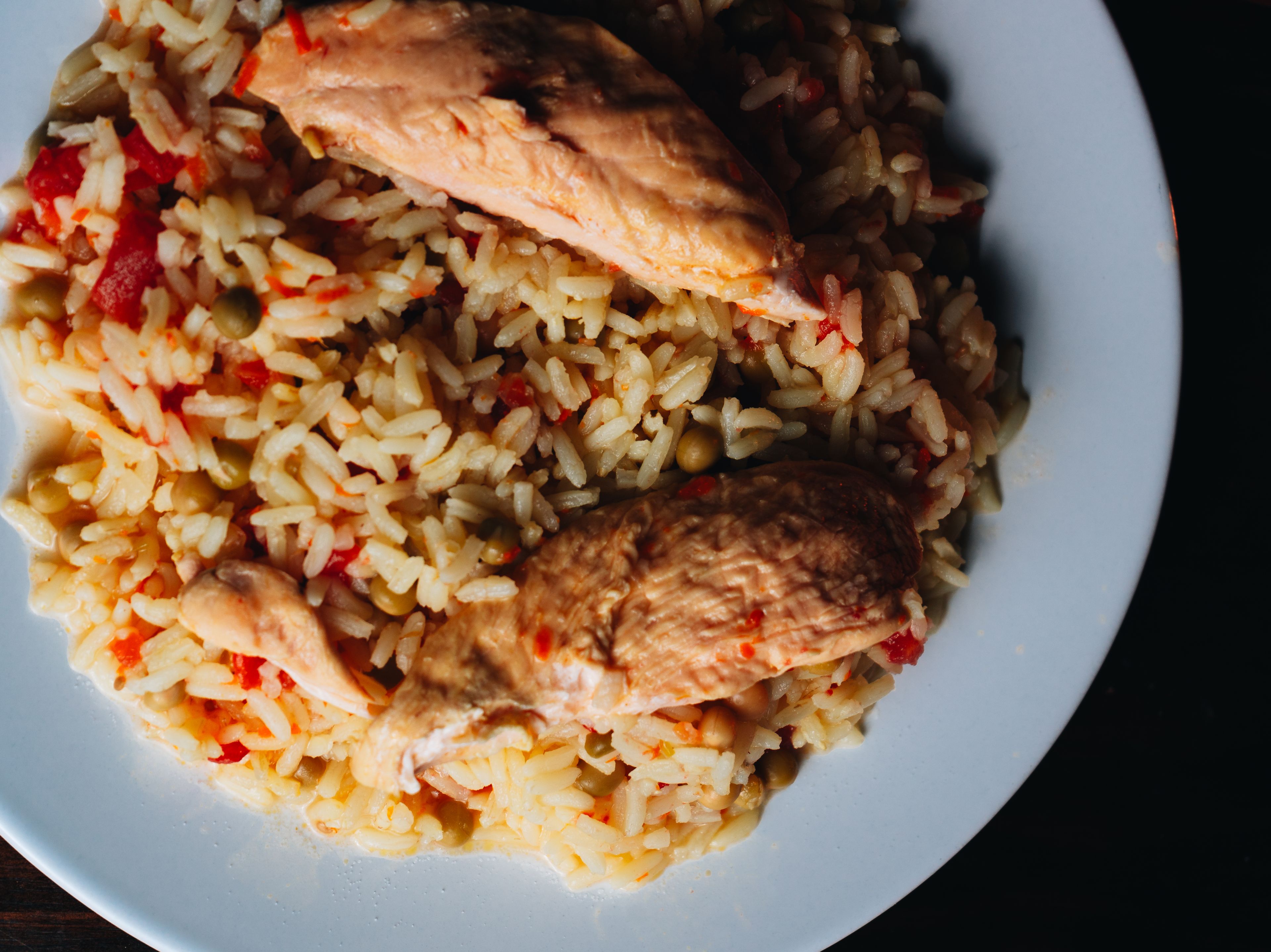
Does a bigger surplus build more muscle?
No. A larger surplus mainly builds more fat, and two controlled trials found that it did not reliably produce more muscle.
In an eight-week trial, 17 trained lifters completed a comparison of maintenance, 5% surplus, and 15% surplus. The 15% group gained more skinfold fat than the maintenance group, without clear group differences in muscle thickness or squat strength. Bench strength rose more in the 15% group, and biceps muscle may have benefited slightly, but the sample was small (Helms et al., 2023).
In a study of 39 elite athletes, the group eating about 3,585 calories a day gained 3.9% of body weight over 8–12 weeks, compared with 1.5% for the free-eating group at 2,964 calories. Fat mass rose 15% versus 3%, while lean-mass gain did not differ (Garthe et al., 2013). Eating everything can make the scale move quickly, but that isn’t proof you’re building muscle faster; why a dirty bulk feels like progress explains the trap.
Why does muscle need so few extra calories?
New muscle is mostly water and stores relatively little energy: about 5,000–5,200 kJ (roughly 1,200 kcal) per kilogram. Estimates of the full energy cost of depositing muscle reach about 7,440 kJ (roughly 1,780 kcal) per kilogram (Slater et al., 2019).
For perspective, here’s the arithmetic for gaining 1 kg (2.2 lb) of muscle in a month:
- 1 kg × 7,440 kJ ≈ 1,780 kcal for the month
- 1,780 kcal ÷ 30 days ≈ 60 kcal per day
That calculation leaves out other costly processes involved in building tissue, which is why the practical surplus recommendation is around 360–480 calories a day, not 60. But it helps explain why a +1,000-calorie bulk usually adds cost in the form of fat without a matching muscle benefit.
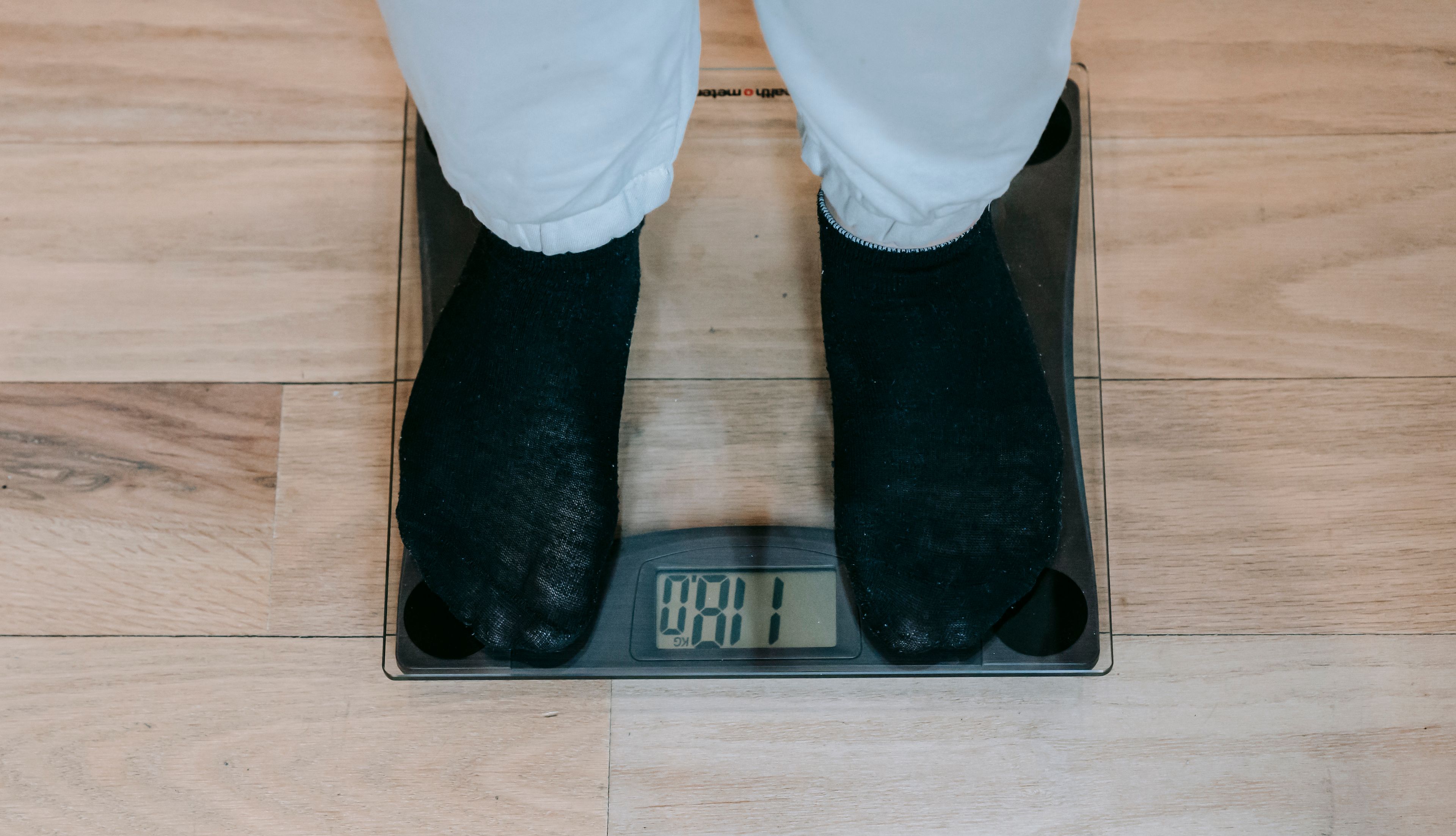
Can you build muscle without a surplus?
Yes, sometimes, but growth becomes harder the further below maintenance you eat. A 2022 meta-analysis found that an energy deficit impaired lean-mass gains during resistance training, and a deficit of about 500 calories a day prevented those gains; strength was comparable (Murphy & Koehler, 2022).
Maintenance is a gray zone. In the eight-week trained-lifter trial, muscle changes at maintenance weren’t clearly different from those at 5% or 15% surplus, but the sample was small (Helms et al., 2023). Beginners and people returning to training may build muscle in a deficit; learn who can build muscle in a calorie deficit.
How do you set and adjust your surplus?
Estimate maintenance, add about 10%, then let the scale steer. Weigh yourself most mornings, compare weekly averages, and adjust by 100–200 calories a day if your rate stays outside the target range for two weeks. The adjustment size is LiftDecode guidance; the 0.25–0.5% weekly target comes from a review of off-season bodybuilding nutrition (Iraki et al., 2019).
- Estimate your maintenance with the bulking calorie calculator.
- Add 10–20%: about 20% as a beginner, 15% as an intermediate and 10% if advanced. This split is LiftDecode’s reading of the review and matches the calculator.
- Weigh daily and compare your seven-day average.
- After two weeks, adjust by 100–200 calories a day to move toward 0.25–0.5% gain per week.
| Lifter | Daily surplus | Example extra calories at 2,600 maintenance | Weekly weight-gain target | Example: 170 lb lifter per week | Source |
|---|---|---|---|---|---|
| Beginner (first year) | ~20% | ~520 kcal | ~0.5% of body weight | ~0.85 lb (0.4 kg) | Iraki et al., 2019 |
| Intermediate | ~15% | ~390 kcal | ~0.375% | ~0.65 lb (0.3 kg) | Iraki et al., 2019 |
| Advanced | ~10% | ~260 kcal | ~0.25% | ~0.4 lb (0.2 kg) | Iraki et al., 2019; Helms et al., 2023 |
| Any lifter, fixed-calorie version | ~1,500–2,000 kJ/day | ~360–480 kcal | Check against the rates above | — | Slater et al., 2019 |
If your weight is rising at the target pace but your lifts are flat, the surplus may not be the limiting factor. If the scale isn’t moving, review your intake and see why you’re not gaining weight. If the scale is rising at the right pace and your lifts and measurements aren’t, food isn’t your bottleneck. See what’s limiting you besides calories.
FAQ
Is a 500 calorie surplus too much?
For a lean beginner, 500 calories is the top of a reasonable range. For an intermediate or advanced lifter, it’s usually more than needed; one review advises about 360–480 kcal per day as a conservative surplus (Slater et al., 2019). If you gain more than 0.5% of your body weight per week, cut back.
Will I gain muscle if I eat 3000 calories a day?
Only if 3,000 calories is above your maintenance and you train hard. The number alone tells you little: it could be a large surplus for one person and maintenance for another. Estimate maintenance, add 10–20%, and check whether your weekly weight trend confirms the surplus.
Can you build muscle at maintenance calories?
Some lifters can, especially early on, but the gains may be slower and harder to see. In an eight-week trial, trained lifters at maintenance, 5%, and 15% surplus did not differ clearly in muscle growth, though the sample was small (Helms et al., 2023). A deficit of about 500 calories a day prevented lean-mass gains.
How fast should I gain weight when bulking?
Novice and intermediate lifters should aim for about 0.25–0.5% of body weight per week, according to a review of off-season bodybuilding nutrition (Iraki et al., 2019). For a 170 lb lifter, that’s roughly 0.4–0.85 lb a week. Advanced lifters should gain more slowly.
Written and maintained by LiftDecode. Training and nutrition education for healthy adults, not medical advice — if you have a health condition or an injury, talk to a professional who can examine you.