What Percent of Men Can Do a Pull-Up? What the Data Show
What percent of men can do a pull-up? Among fitness-screened conscripts, 92%. For men in general, nobody knows. Real pull-up data and targets by bodyweight.
- Published
- Reading time
- 6 min
- By
- LiftDecode
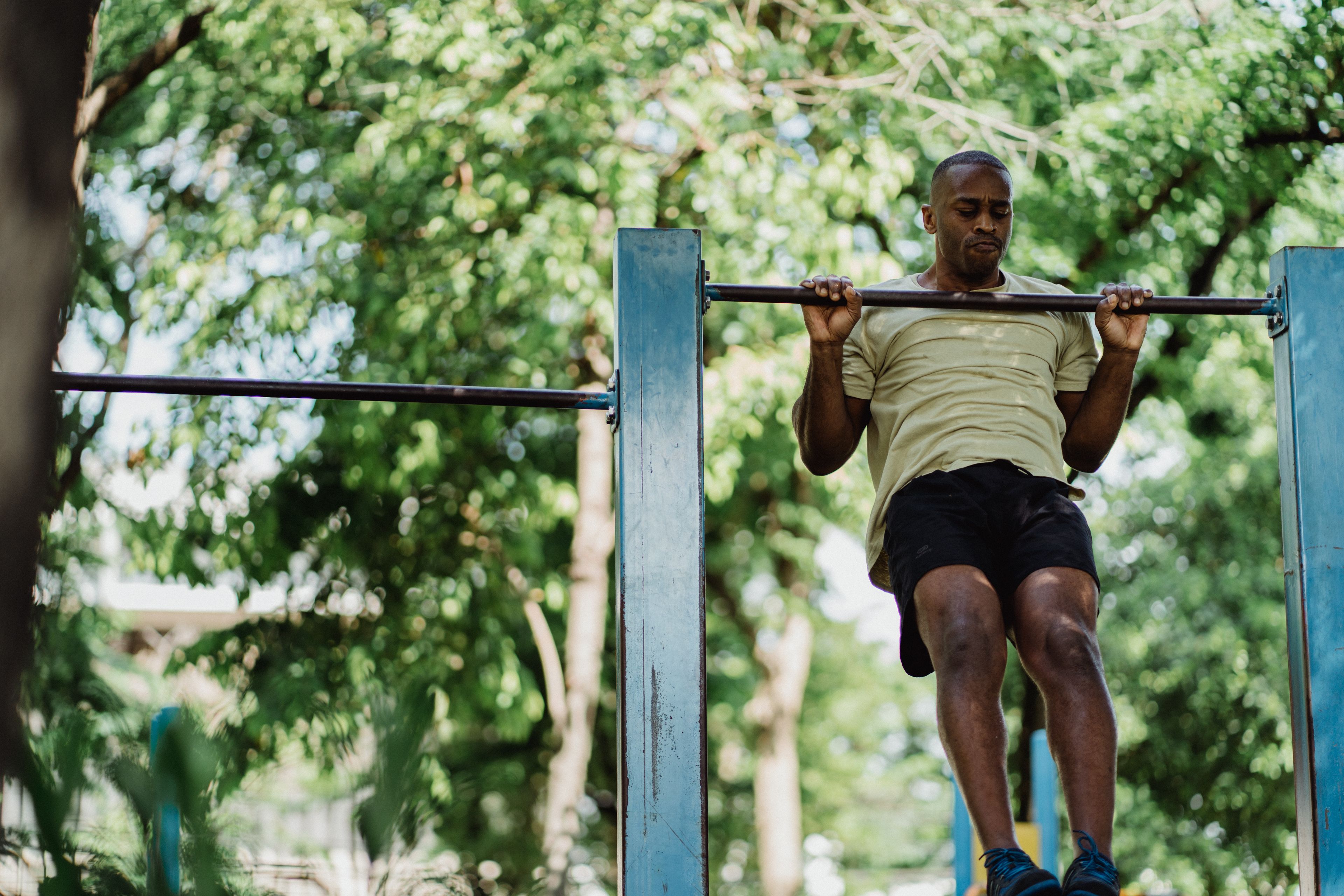
No study has tested pull-ups in a representative sample of men, so the true percentage is unknown. In the largest dataset we found, 92% of Norwegian male conscripts tested in 2020 could do at least one strict pull-up—but conscripts are selected for fitness. Physically inactive university men averaged only about 3–4 reps.
What percent of men can do a pull-up?
Unknown for men in general. Among fitness-screened Norwegian conscripts, 92% of men could do at least one strict pull-up in 2020. Samples of inactive or untrained men do far fewer, and no nationally representative US data exist. For more context on lifting benchmarks, see our strength standards hub.
- The Norwegian dataset covered 87,573 men tested from 2006 to 2020. In 2020, 8% could not complete one vertical pull-up; about 15% of young Norwegians serve, and conscripts are selected based on fitness. The study authors say not to generalize those results to the wider population (Aandstad, 2023).
- The first nationally representative US strength estimates measured handgrip strength, not pull-ups (Perna et al., 2016). The unselected majority of young Norwegians has not been tested in a comparable pull-up dataset.
How many pull-ups can the average man do?
It depends entirely on who is tested: about 3–4 for inactive university men, about 7 for Chinese university men, 8 for Norwegian conscripts, 13 for men who log pull-ups on an app, and 18 for young US Marines who chose pull-ups on their fitness test. The wide range shows why one “average man” number can mislead.
- Physically inactive university men: 30 students averaged 2.7–4.3 reps at baseline across three groups (Sepehri Rahnama et al., 2025).
- Tsinghua University men: 7,107 students averaged 7.42 reps, with a standard deviation of 7.21, in 2019 (Feng et al., 2022). That wide spread means many were near zero while some did far more.
- Norwegian male conscripts: The 2020 average was 8.0 reps, compared with 8.8 in 1923 (Aandstad, 2023).
- Men who log pull-ups: Strength Level reports an average of 13 reps among its users (Strength Level).
- Young US Marines: 19,678 active-duty men aged 21–25 who chose pull-ups averaged 18.0 reps (Keefer & DeBeliso, 2020).
These groups differ in fitness, training, and how they were selected, much like the populations behind how much the average man can lift.
How many pull-ups should you be able to do?
Among men who log pull-ups on Strength Level, novice is about 7 reps at most bodyweights; between 140 and 200 lb, intermediate is about 12–14 and advanced about 19–23, with lower targets for heavier men. Its level definitions correspond roughly to six months of regular training for novice and two years for intermediate (Strength Level).
Men’s pull-up standards by bodyweight (strict reps) (Strength Level)
| Bodyweight (lb) | Beginner | Novice | Intermediate | Advanced | Elite |
|---|---|---|---|---|---|
| 140 | <1 | 7 | 14 | 23 | 32 |
| 160 | <1 | 7 | 14 | 22 | 30 |
| 180 | 1 | 7 | 13 | 21 | 28 |
| 200 | 1 | 7 | 12 | 19 | 27 |
| 220 | <1 | 6 | 11 | 18 | 25 |
| 240 | <1 | 6 | 11 | 17 | 24 |
| 260 | <1 | 5 | 10 | 16 | 22 |
| 280 | <1 | 5 | 9 | 15 | 21 |
| 300 | <1 | 4 | 9 | 14 | 19 |
The standards come from people who log pull-ups on the site, so they reflect a group that skews toward people who already train. Bodyweight and age both affect the benchmarks: intermediate is 9 reps at 300 lb (136 kg), versus 14 at 140 lb (64 kg), and the listed target is 13 reps at ages 25–40, 9 at 50, and 3 at 60. For a consistent test, do a strict pull-up from a dead hang with your chin over the bar, then lower until your arms are straight (Aandstad, 2023); use AMRAP sets to track your max reps.
How rare are 20 pull-ups?
Twenty strict reps is rare outside trained groups. It is Strength Level’s advanced level for a 190-lb (86-kg) man, above the Norwegian conscript average of 8 and slightly above the young-Marine average of 18 (Strength Level, Aandstad, 2023, Keefer & DeBeliso, 2020).
- At 220 lb (100 kg), the advanced benchmark drops to 18 reps.
- Norwegian male conscripts averaged 8.0 reps in 2020; the standard deviation was 5.1.
- Young Marines who chose pull-ups averaged 18.0 reps, with a standard deviation of 5.0. Strength Level defines advanced as more than five years of typical training.
Why can’t more men do a pull-up?
A pull-up lifts your whole bodyweight, so every extra pound counts against you, and many men never practice the movement. Only 35.2% of US men met the muscle-strengthening guideline in 2020 (CDC MMWR); the average US man weighed 199.0 lb (90.3 kg) (CDC FastStats).
- Bodyweight matters mechanically. Pull-up standards fall as bodyweight rises, and body composition affected pull-up strength in college men. In a study of 35 men, one-rep max pull-ups moved 1.16 times body mass, while lat pulldowns reached 0.93 times body mass (Johnson et al., 2009).
- Practice matters. A lat-pulldown number does not translate one-to-one to pull-ups; the movements load you differently. See our lat pulldown form guide for technique.
- Your current rep count can change. Norwegian male conscripts’ average vertical pull-ups rose 84% from 2006 to 2020 (Aandstad, 2023).
What if your pull-ups are stuck?
Treat pull-ups like any lift: practice them often, add a rep or load when you hit your target, take sets close to failure, and watch bodyweight and recovery. If reps haven’t moved in six to eight weeks, one of those levers may be missing.
- Practice the full movement regularly.
- Add a rep or load after hitting your target.
- Take working sets close to failure.
- Track bodyweight and recovery alongside reps.
If you can’t do one yet, use assistance or slow lowering to practice the movement, and track your reps as you build strength. Our strict pull-up form and why reps stall guide can help you check your technique. You may have more than one cause; find out what’s holding your pulling strength back and choose a practical next step.
FAQ
Can the average male do a pull-up?
Nobody has tested a representative sample, so we can’t say. Among fitness-screened Norwegian conscripts, 92% of men could; inactive university men averaged about 3–4 reps. The average US man weighs 199 lb (90.3 kg), and most men don’t strength-train regularly—both make pull-ups harder.
How rare are 20 pull-ups?
Rare outside trained groups. Twenty strict reps is Strength Level’s advanced level for a 190-lb (86-kg) man, above the Norwegian conscript average of 8 and the young-Marine average of 18. On Strength Level’s definitions, advanced usually reflects more than five years of training.
How many pull-ups should I be able to do?
Among men who log pull-ups, about 7 strict reps is novice, roughly six months into regular training, and 12–14 is intermediate, around two years in. The intermediate target is a little lower if you’re heavier; at age 50, Strength Level lists 9 reps.
What population of men can do pull-ups?
Young, fit, selected men almost all can: 92% of Norwegian male conscripts in 2020 could do at least one, and young US Marines averaged 18 reps. Groups that don’t train do far fewer. No dataset covers men in general, so any single “percent of men” figure is a guess.
Written and maintained by LiftDecode. Training and nutrition education for healthy adults, not medical advice — if you have a health condition or an injury, talk to a professional who can examine you.