Pull-Up Form: Strict Technique and Why Reps Stall
Pull-up form done strictly: setup, the pull step by step, and the 4 mistakes that stall your pull-up reps, plus how to tell a form stall from a training one.
- Published
- Reading time
- 7 min
- By
- LiftDecode
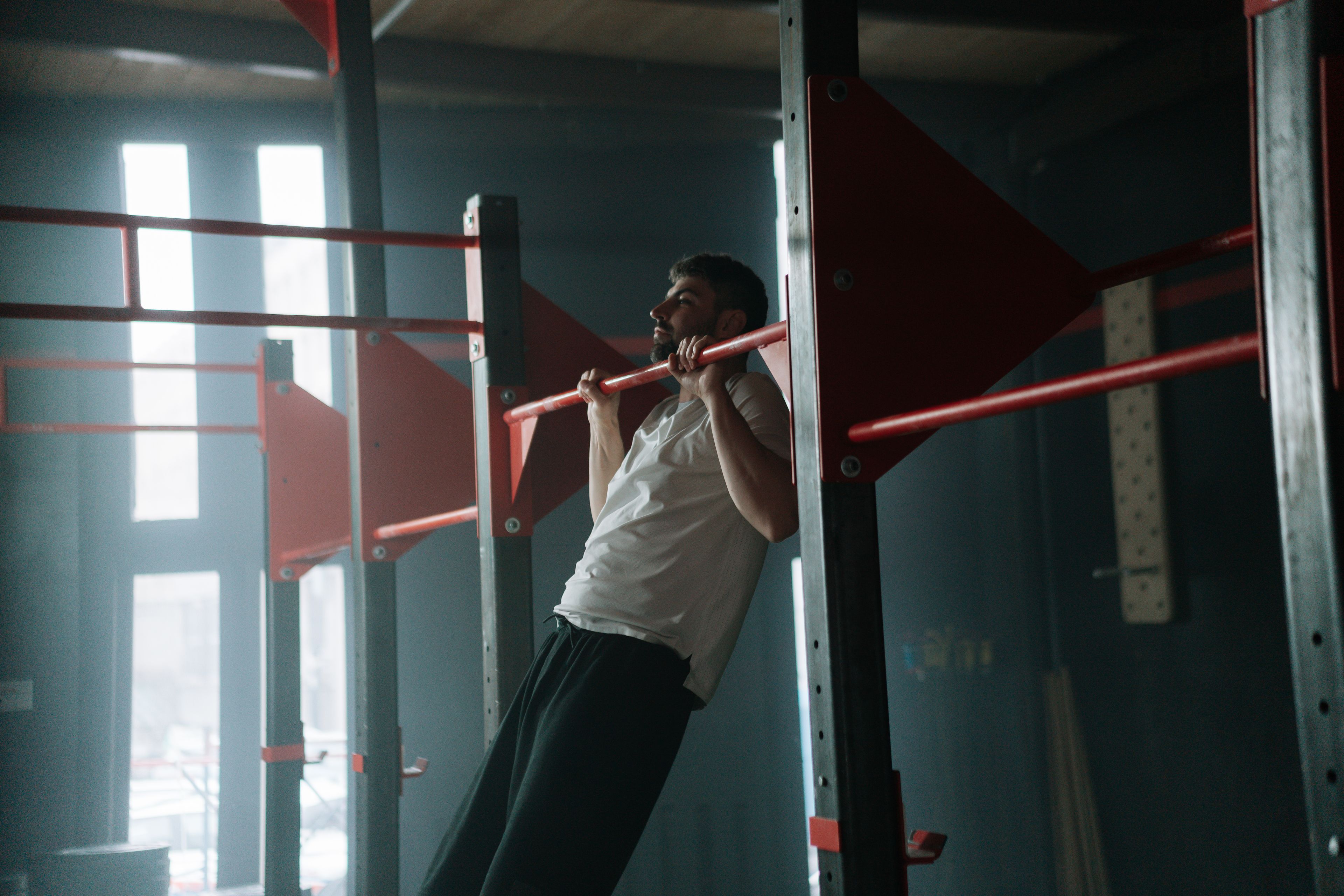
Good pull-up form means starting from a dead hang with straight arms, pulling your shoulder blades down first, then driving your elbows toward your ribs until your chin clears the bar, with no swing or kick. Lower all the way back down. If your reps have stalled, check whether they have gotten shorter or swingier before you blame strength. For more help, see our form guides for the main lifts.
How do you set up for a pull-up?
Grip the bar overhand, a little wider than your shoulders, with your thumbs around it. Hang with your arms fully straight, legs together and slightly in front, ribs down and glutes tight so your body stays in one piece and doesn’t swing.
- Grip: Use an overhand grip just outside shoulder width. An underhand grip is usually called a chin-up.
- Dead hang: Let your elbows straighten fully. A dead hang means you start each rep with straight arms.
- Body: Keep your legs together, ribs down and glutes tight in a hollow hang.
- Stillness: Start each rep from a stop, rather than carrying momentum from the last one.
A pull-up suspends your body from your hands, usually with a grip wider than shoulder width; the top can mean your chin over the bar or your chest to the bar, depending on the standard (Wikipedia’s pull-up overview). For a consistent count, use chin over bar and a full dead hang.
How do you do a strict pull-up, step by step?
Pull your shoulders down away from your ears, then drive your elbows down toward your back pockets until your chin clears the bar. Pause briefly, lower under control until your arms are straight again, and start the next rep from a still hang.
- Pull your shoulders down and back before bending your arms. This is scapular depression: pulling your shoulders down.
- Drive your elbows down and slightly back, bringing your chest toward the bar.
- Clear the bar with your chin without craning your neck.
- Lower in about 2 seconds until your elbows are fully straight and you reach a dead hang.
Count only reps you’d accept on video: full range, no swing, and the same standard from the first rep to the last.
Which pull-up mistakes stall your reps?
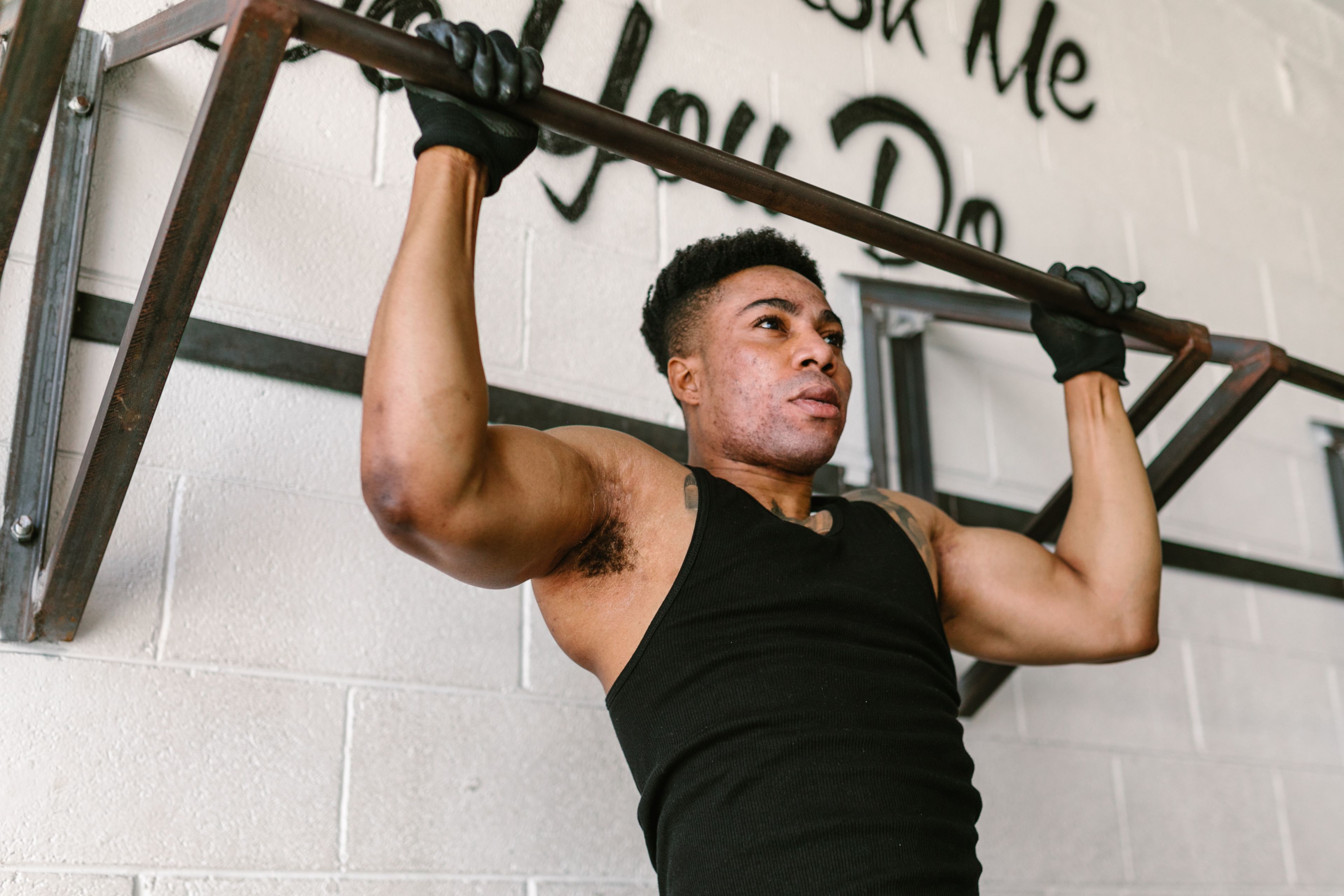
Four faults cap most pull-up numbers: half reps, an unintended kip or swing, shrugging and craning instead of pulling with the back, and grinding every set to failure. The first three inflate your count without building strength; the fourth piles on fatigue.
- Half reps: Bent elbows at the bottom or a chin that never clears the bar leave the hardest parts untrained. Check from the side for straight elbows below and chin over the bar above; count only full reps and pause for a second at the top. Full range produced greater strength gains than partial range across 16 studies (Pallarés et al., 2021).
- Swinging or kipping: Knees driving up and hips swinging let momentum do more of the work. In a study of 11 athletes, kipping produced less biceps activity than strict reps and shifted work toward the abs and hip flexors (Dinunzio et al., 2019). Keep your feet still and pause at the bottom.
- Shrugging and craning: Shoulders rising toward your ears and your neck reaching for the bar can shorten the rep. Keep space between your ears and shoulders at the top; cue “shoulders in your back pockets” and “elbows to ribs.”
- Every set to failure: If the last reps crawl and your form breaks down, stop most sets one or two reps short. That’s RIR, or reps in reserve: the clean reps you could still do. In an eight-week study of 29 trained men, stopping when rep speed had fallen by 25% improved all measured outcomes, while stopping at 50% did not (Sánchez-Moreno et al., 2020). Velocity loss means how much slower a rep gets than the first rep in the set.
What muscles do pull-ups work, and which grip is best?
Pull-ups are a lat exercise first, with the biceps, lower traps and pecs helping. Grip changes the helpers more than the lats: chin-ups add biceps and chest, while overhand pull-ups add lower-trap activity. Pick a grip your shoulders like and keep it.
Lat activity was high across pull-up variations in a study of 25 participants; chin-ups showed more biceps and pec activity, while pull-ups showed more lower-trap activity (Youdas et al., 2010). A review found broadly similar lat activity across grips, with slightly lower activity on wider overhand grips (2026 review). Very wide grips don’t add lat activity, and shoulder-width, palms-forward pull-ups kept the shoulder in a more favourable position than wide or reverse grips in a study of 11 experienced men (Prinold & Bull, 2016).
| Variation | Grip / style | What changes |
|---|---|---|
| Pull-up | Overhand, just outside shoulder width | More lower-trap activity than chin-up |
| Chin-up | Underhand, shoulder width | More biceps and pec activity |
| Wide-grip pull-up | Overhand, very wide | No extra lat activity; less favourable shoulder position |
| Kipping pull-up | Hip swing (glide kip) | Biceps activity about 27 %MVIC points lower; more abs and hip flexors; more reps from momentum |
Neutral grip is also a valid option. If a wide grip bothers your shoulders, narrow it.
How should you program pull-ups to keep adding reps?
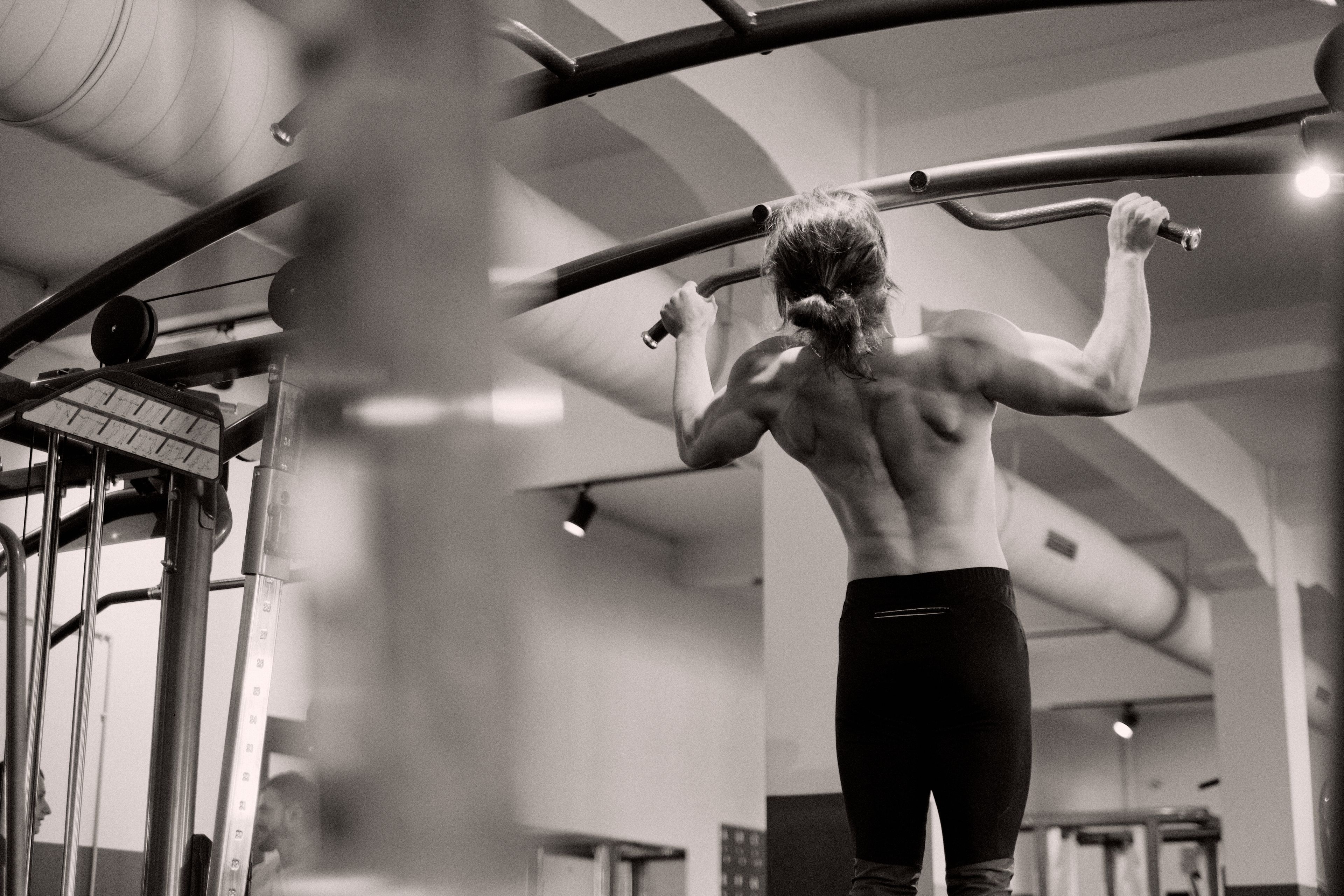
Train pull-ups two or three times a week, stopping most sets a rep or two short of failure. At about 3 sets of 8–10 strict reps, add weight. Below 5 strict reps, build with slow negatives, band-assisted reps or pulldowns.
- Spread your work across the week instead of relying on one all-out session. ACSM’s 2026 recommendations support at least two weekly strength sessions and say training to failure is not necessary (ACSM Position Stand, 2026).
- Once you can do about 3 sets of 8–10 strict reps, add load with a belt or a dumbbell held between your feet.
- If you have fewer than 5 strict reps, use slow negatives, band assistance or pulldowns. Our guide to lat pulldown form can help you build pulling strength.
- Track your progress with progressive overload when you can’t add weight. If your bodyweight rises, your reps may stay flat even as your pulling strength improves.
Are your pull-ups stalled by technique or something else?
It’s technique if your reps have gotten shorter, swingier or more shruggy as you chase numbers. If they’re strict and still stuck, look at training frequency, failure, progression, bodyweight, recovery and food; gaining weight alone can hold reps flat.
Technique signs
- Elbows stay bent at the bottom or your chin doesn’t clear the bar.
- Your hips swing, or your shoulders shrug as the set gets hard.
Training and recovery signs
- You train pull-ups infrequently, take every set to failure or have no clear progression.
- Your recovery, food or bodyweight has changed while your strict reps remain the same.
If your form has changed, clean up the rep standard first.
If every rep is strict and the number still won’t move, form is cleared. The quick diagnosis checks how you progress, effort, recovery and bodyweight changes, then ranks what to fix first.
FAQ
Which form of pull-up is best?
The strict one you can do through full range: dead hang to chin over bar, with no swing. Overhand, underhand and neutral grips all train the lats heavily; chin-ups add more biceps and chest (Youdas et al., 2010). Choose a grip your shoulders tolerate and stick with it.
How many pull-ups should a 200 lb man be able to do?
There’s no single right number; bodyweight, body fat and training history all matter, and heavier lifters usually do fewer reps. Compare against real data rather than gym lore with our guide to what percent of men can do a pull-up.
Should you go all the way down on pull-ups?
Yes. Straighten your elbows fully at the bottom. The dead hang is the hardest part of the rep and the part half-rep sets skip; full-range training builds more strength than partial range in the research (Pallarés et al., 2021).
Is kipping cheating?
Not in CrossFit-style training, where it’s a separate skill. For building pulling strength, the swing lowers biceps work and moves effort to the abs and hips, so the count no longer reflects back and arm strength. Keep strict and kipping reps in separate logs.
Written and maintained by LiftDecode. Training and nutrition education for healthy adults, not medical advice — if you have a health condition or an injury, talk to a professional who can examine you.