Overhead Press Form: Fix the Press That Won't Move
Overhead press form for the standing, seated and military press: setup, bar path, elbow position, and the mistakes that stall your press, with a fix for each.
- Published
- Reading time
- 7 min
- By
- LiftDecode
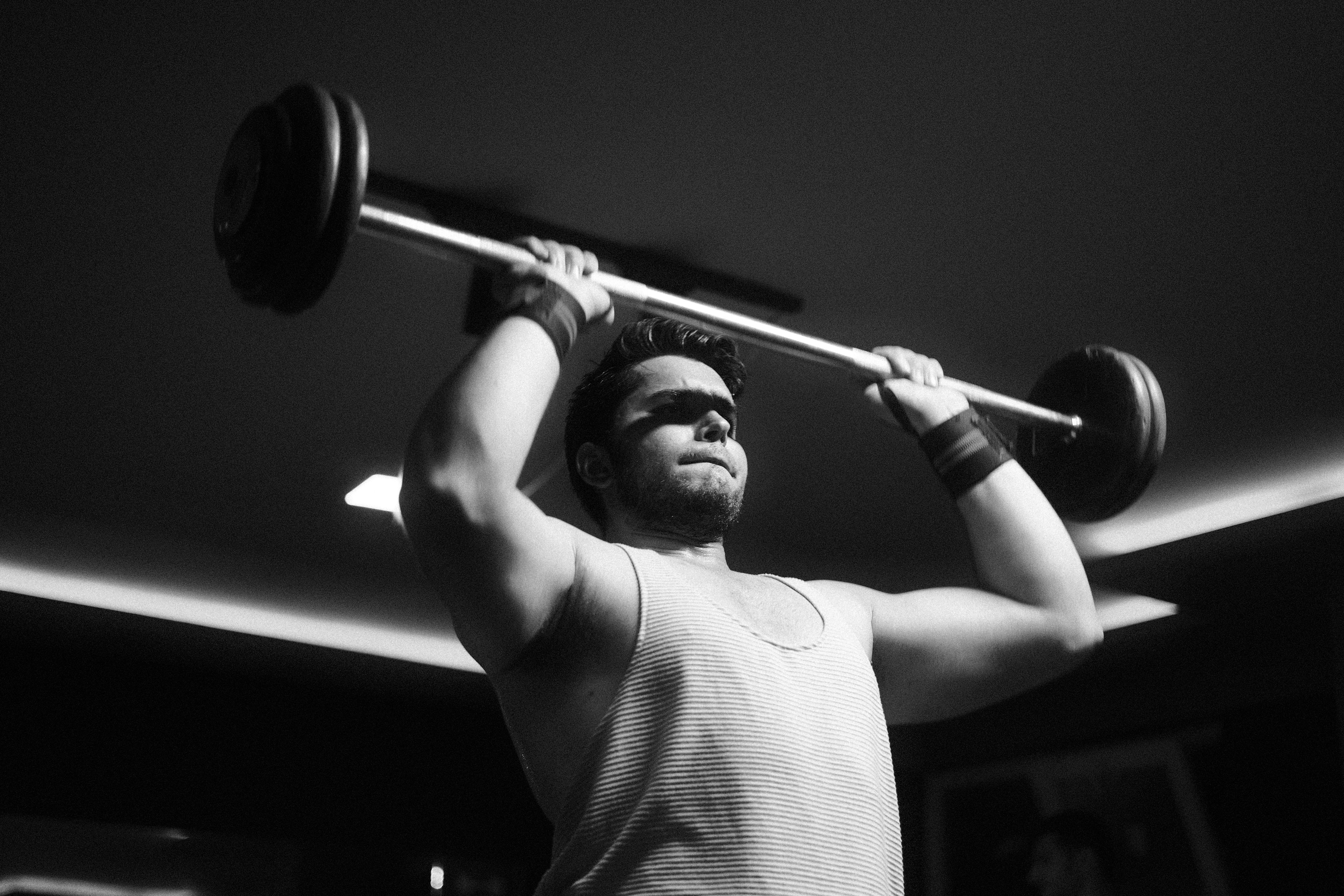
The overhead press starts with the bar on your front delts and forearms vertical. Press over your mid-foot as your head moves out of the way, then lock out with your body stacked beneath the bar. If it stalls, check for a lean-back, a drifting bar, or elbows behind it. See more form guides for every major lift.
Overhead press, shoulder press, military press: what's the difference?
These names often describe the same shoulder-to-overhead movement. “Overhead” or “strict press” usually means standing with a barbell and no leg drive. Traditionally, a “military press” uses heels together; “shoulder press” often means seated or uses dumbbells.
| Variation | How it’s done | What it changes |
|---|---|---|
| Overhead / strict press | Standing barbell, no leg drive | Baseline; full-body bracing |
| Military press | Strict press, heels together | Narrower base; harder balance |
| Seated shoulder press | Seated, barbell or dumbbells | Less balance demand |
| Standing dumbbell press | Two standing dumbbells | Highest delt activity; lowest 1RM |
| Behind-the-neck press | Bar lowered behind head | More posterior delt, upper trap, triceps on descent |
| Push press | Knee dip and drive | Leg drive; overloads lockout |
The press can be seated or standing, and names overlap in common use (Wikipedia: Overhead press). The technique below applies across versions; balance and equipment change the feel.
How do you set up for the overhead press?
Unrack at collarbone height. Grip just outside your shoulders, rest the bar on your front delts, and keep elbows slightly forward so your forearms stay vertical. Stand hip-width, squeeze your glutes, and brace with ribs down.
- Set the rack at upper-chest or collarbone level.
- Grip just outside shoulder width, thumbs around the bar, wrists nearly straight.
- Rest the bar on your front delts and upper chest.
- Keep elbows slightly forward and forearms vertical.
- Stand hip-width with knees locked; heels together for a traditional military press.
- Squeeze glutes, brace abs, keep ribs down, and breathe.
In 11 trained men doing seated barbell presses, narrower grips increased load and range of motion, while wider grips reduced elbow joint moments (Gundersen et al., 2026). Start just outside shoulder width; adjust only if you can keep forearms vertical.
How do you overhead press, step by step?
Brace, move your chin back, and press close to your face. Once the bar clears your forehead, bring your head and chest forward through the window. Finish with the bar over your shoulders and mid-foot, then lower it to the start.
- Breathe, brace, and tighten your glutes.
- Move your head back slightly without leaning your torso.
- Press close to your face in a nearly straight line.
- Bring your head forward under the bar once it clears your forehead.
- Lock your elbows, shrug slightly, and stack the bar over shoulders and mid-foot.
- Lower under control to your front delts; re-brace before the next rep.
“Lockout” means elbows fully straight with the bar balanced overhead. Use the same path down so each rep starts strong.
Which overhead press mistakes stall your press?
Common faults move the bar away from your shoulders or shift work elsewhere: leaning back, looping around your face, starting with elbows behind the bar, dipping your knees, or stopping short of lockout.
Leaning back to finish the rep.
Looks like: Hips push forward and torso tilts back. Why it stalls you: It turns the press into an incline and shifts work to your lower back. Video check: Compare ankle, hip, and shoulder alignment from the side. Fix: Squeeze glutes, keep ribs down, and reduce the load until your torso stays vertical.
Pressing around your face.
Looks like: The bar loops forward and finishes in front of your head. Why it stalls you: The longer lever makes the bar harder to control. Video check: From the side, the bar path should be nearly vertical. Fix: Use “chin back, then head through,” keeping the bar close.
Elbows behind the bar at the start.
Looks like: Elbows point down and back. Why it stalls you: Your forearms aren’t vertical, so effort pushes forward instead of up. Video check: Check your forearms from the side at the start. Fix: Bring elbows forward and try a slightly narrower grip.
Knee dip (accidental push press).
Looks like: Knees bend before the bar leaves your shoulders. Why it stalls you: Leg drive takes work from the strict press and makes your logbook compare different lifts. Video check: Knees should stay locked. Fix: Lock them; program push presses separately if you want leg drive.
Soft or forward lockout.
Looks like: Elbows stay bent or the bar finishes ahead of your head. Why it stalls you: Skipping a solid finish leaves the lockout untrained. Video check: At the top, the bar should be over your shoulder joint and mid-foot, with your head through. Fix: Push your head through and finish with a shrug.
A sticking point is where the bar slows most. In a seated Smith press study, it appeared only above about 75% of 1RM, with the slowest point about 46% of the way up (Hernández-Belmonte et al.). Shoulder torque matters more early; elbow torque grows in importance near lockout (Evangelista et al., 2025).
What muscles does the overhead press work?
The press mainly works the front delts, with side delts, triceps, upper traps, and upper chest helping. Standing and dumbbell versions challenge the delts more through balancing; barbell presses allow heavier loads and work the triceps more.
In 15 men, standing dumbbell presses produced the highest deltoid activity but the lowest 1RM: about 7% below standing barbell and 10% below seated dumbbell presses. Triceps activity was about 39% greater with standing barbell than dumbbells; seated barbell presses showed about 25% less posterior delt activity than standing (Saeterbakken & Fimland, 2013). See bench press form for shared pressing muscles.
Behind-the-neck pressing shifts emphasis toward posterior delts, upper traps, and triceps on the way down; front pressing uses more anterior delt and pec activity while lifting (Padovan et al.). It requires shoulder mobility, so skip it if it hurts.
How should you program the overhead press?
Press two or three times a week, mostly for 3–8 reps. When every rep is clean, add the smallest available weight (1–2.5 lb per side); the press often needs smaller jumps than your squat.
- Put the press early if it’s a priority.
- Try one heavier day and one volume day; build triceps and side delts.
- Use fractional plates or add reps before weight with progressive overload when you can’t add weight or double progression.
- Track push presses or pin presses separately from strict presses.
ACSM’s 2026 position stand recommends strength work at 80% 1RM or more, 2–3 sets per session, at least twice weekly, full range of motion, and early placement in the session (ACSM Position Stand 2026). For hypertrophy, it recommends at least 10 weekly sets per muscle; failure isn’t necessary.
Is your press stalled by technique or by something else?
It’s likely technique if heavy reps add a lean-back, knee dip, or bar loop. If strict reps stall at the same height, try smaller jumps, more weekly practice, or more recovery.
| Technique is likely if… | Programming or recovery is likely if… |
|---|---|
| Your lean grows with load | Your jumps are too large |
| Bar path changes as reps get hard | You press only once a week |
| You stall with a clear position fault | All pressing has stalled, sleep is poor, or you’re dieting |
A forehead stall can point to the start of the press; a lockout stall may call for more triceps work.
If your press looks strict on video but still won’t move, the quick diagnosis ranks progression, weekly dose, recovery, and food by what to fix first.
FAQ
Should I keep my elbows in or out during the overhead press?
Keep them slightly in front of the bar and in from straight out to the sides, with forearms vertical from front and side. Elbows behind the bar push it forward; a grip just outside the shoulders helps most lifters find position.
How much should a 200 lb man overhead press?
There’s no single right number; it depends on training age. Compare yourself with published standards for your bodyweight and experience in our guide to how much the average man can lift.
Is a 70 lb shoulder press good?
It depends on the variation: 70 lb dumbbells in each hand and a 70 lb barbell are different lifts, and seated is easier than standing. Track your trend; if strict reps haven’t moved in six weeks, try smaller jumps and more weekly practice.
Is the military press harder than the overhead press?
Slightly, with the traditional heels-together stance, because the narrower base makes balance harder and removes leg drive. The pressing muscles are the same.
Written and maintained by LiftDecode. Training and nutrition education for healthy adults, not medical advice — if you have a health condition or an injury, talk to a professional who can examine you.