Building Muscle After 50: Yes, You Still Can
Building muscle after 50 works: adults over 50 add lean mass and 24–33% strength from lifting. Why strength matters more than size, and a 3-day plan.
- Published
- Reading time
- 7 min
- By
- LiftDecode
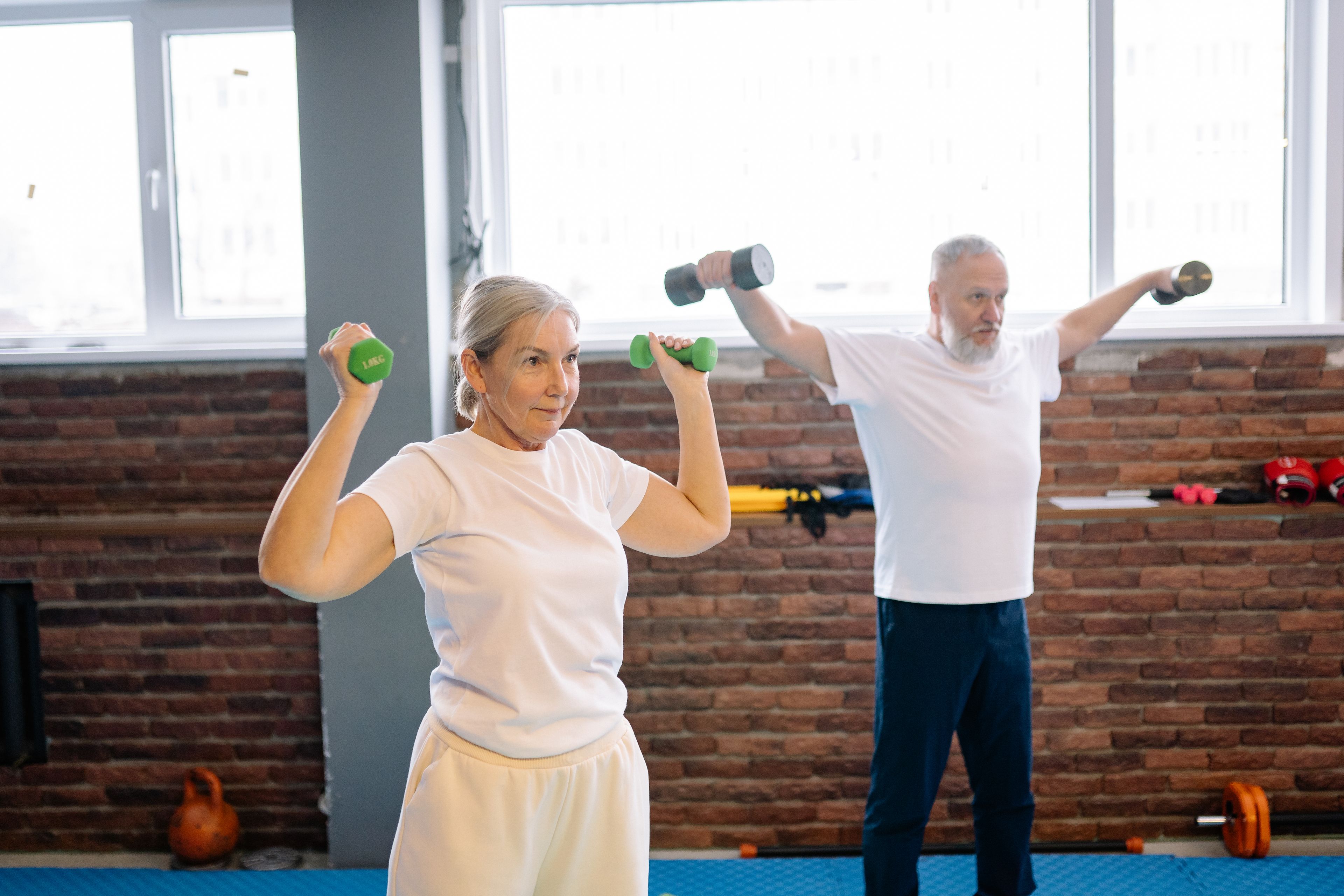
Yes — you can build muscle after 50: adults over 50 add lean mass and gain roughly a quarter to a third more strength from regular lifting. What changes is the priority. Strength and power fade faster than size, so lift progressively heavier, move with intent, and eat protein at every meal.
Can you really build muscle after 50?
Yes. Across dozens of trials in adults over 50, resistance training added about 2.4 lb (1.1 kg) of lean mass and raised strength by roughly 24–33%. Older age slows gains; it doesn’t stop them.
- In a review of 49 studies and 1,328 adults, higher-volume programs gained more lean mass (Peterson et al., 2011).
- Across 47 studies, strength rose 29% on leg press, 24% on chest press, 33% on knee extension, and 25% on lat pulldown; higher intensity produced greater gains (Peterson et al., 2010).
- In one small study, frail nursing-home residents around age 90 nearly tripled strength in eight weeks (Fiatarone et al., 1990).
If building muscle has stopped coming easily, start with how to gain muscle when it’s stopped coming easy.
What is sarcopenia, and why does strength matter more than size?
Sarcopenia is age-related muscle failure, and Europe’s expert group now defines it first by low muscle strength, not low muscle size. Strength drops two to five times faster than mass as we age, so a plan that only chases what hypertrophy means misses the quality that matters most.
The expert consensus describes sarcopenia as a muscle disease rooted in changes that build up across a lifetime. It is common in older age, but can start earlier; low strength is its key characteristic (Cruz-Jentoft et al., 2019).
Muscle mass declines gradually, while strength can fall sharply: at 75, reported yearly strength losses are 3–4% in men and 2.5–3% in women. Studies measuring both in the same people found strength declined two to five times faster than muscle mass, and low strength more consistently signaled disability risk (Mitchell et al., 2012).
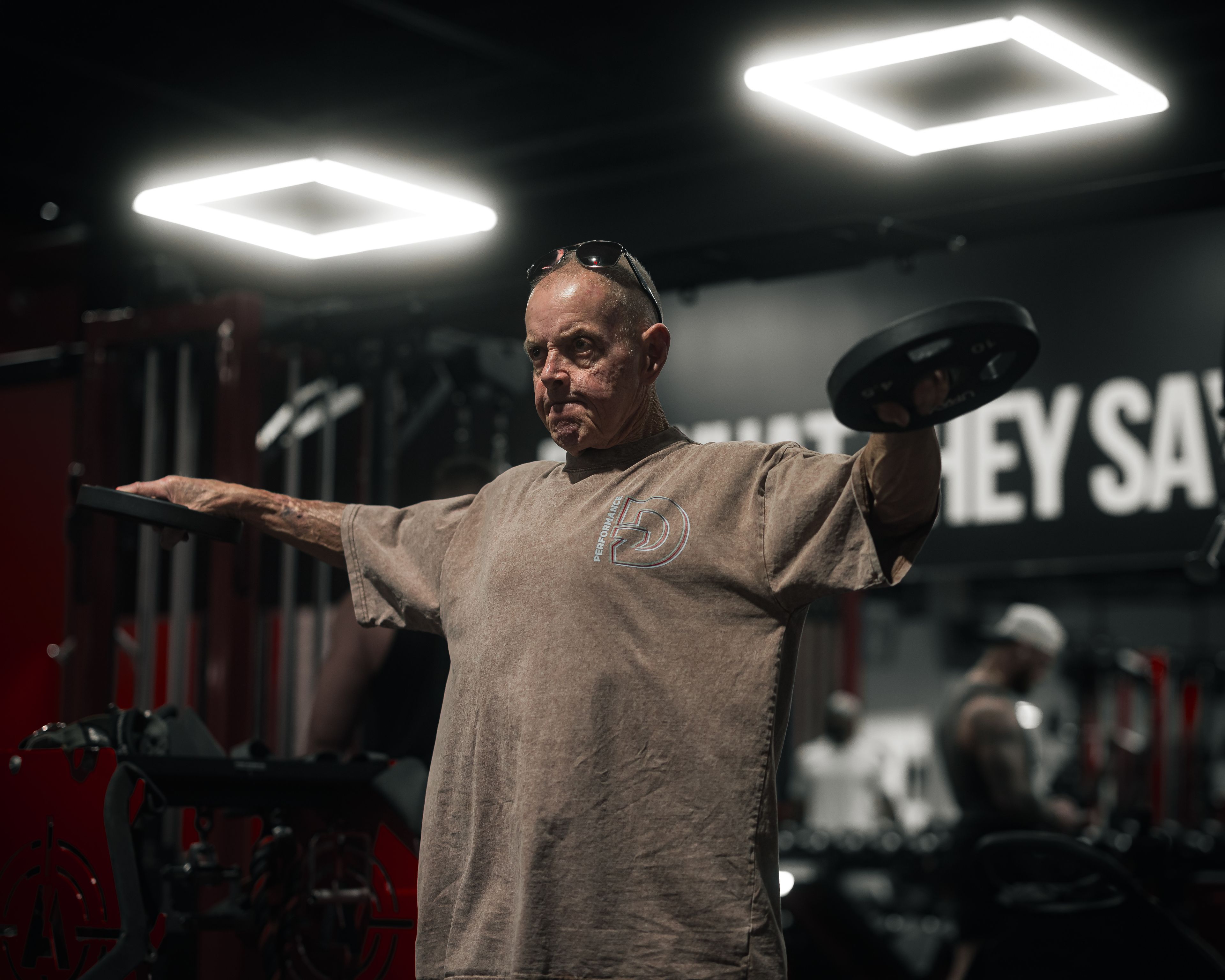
Train for strength and power: use challenging loads and lift each rep briskly, while lowering it under control.
Which myths stop people over 50 from building muscle?
Four myths hold people back: light weights are enough, walking replaces lifting, dieting comes before lifting, and a break erases all progress. Heavier work builds more strength, aerobic activity doesn’t replace muscle-strengthening, lifting protects muscle on a diet, and gains survive short breaks.
- “Light weights only.” Higher-intensity training produced greater strength gains in older adults. Build toward challenging weights over several weeks (Peterson et al., 2010).
- “My walking covers it.” U.S. guidance lists muscle-strengthening on at least two days a week separately from aerobic activity, with balance work as well (CDC).
- “Diet first, lift later.” In weight-loss studies of adults over 50, 81% of diet-only groups lost at least 15% of their weight as fat-free mass, versus 39% of groups that also exercised, mostly aerobically. Keep lifting while losing weight (Weinheimer et al., 2010).
- “A break erases it.” Muscle size showed no significant drop after 12–24 weeks off, but declined after longer breaks of 31–52 weeks (Grgic, 2022).
How should you train to build muscle after 50?
Use three full-body sessions a week, each with a squat or leg press, hinge, push, pull, and loaded carry. Choose weights you can lift 6–12 times with two or three reps in reserve (the reps you could still complete before failure); lift briskly, lower slowly, and add weight when it gets easy.
LiftDecode’s prescription: Use the first 3–4 weeks to learn the movements and finish each set with about three reps left. Then work closer to your limit, usually leaving one or two reps.
Three-day plan for building muscle after 50 (for example, Monday / Wednesday / Friday)
| Day | Exercise | Sets × reps | Reps in reserve | Note |
|---|---|---|---|---|
| 1 | Goblet squat → back squat | 3 × 6–10 | 2–3 | Up briskly, down in ~2–3 s |
| 1 | Dumbbell bench press (or push-up) | 3 × 8–12 | 2 | |
| 1 | Seated cable row | 3 × 10–12 | 2 | |
| 1 | Step-up | 2 × 8–10 each leg | 2 | Balance + power |
| 1 | Farmer’s carry | 3 × 30 m | — | Grip, posture |
| 2 | Trap-bar deadlift | 3 × 5–8 | 2–3 | Stand up fast |
| 2 | Lat pulldown | 3 × 8–12 | 2 | |
| 2 | Seated dumbbell shoulder press | 2 × 8–12 | 2 | |
| 2 | Leg press | 2 × 10–12 | 1–2 | |
| 2 | Single-leg stand / Pallof press | 2 × 30 s each side | — | Balance |
| 3 | Leg press or split squat | 3 × 8–10 | 2 | |
| 3 | Incline dumbbell press | 3 × 8–12 | 1–2 | |
| 3 | One-arm dumbbell row | 3 × 10–12 | 1–2 | |
| 3 | Romanian deadlift (dumbbells) | 2 × 8–10 | 2 | |
| 3 | Suitcase carry | 3 × 20–30 m each side | — |
This LiftDecode template is our prescription, not a study protocol; it includes muscle-strengthening and balance work recommended for older adults and builds toward the higher intensities linked with bigger strength gains (CDC; Peterson et al., 2010).
- When every set reaches the top of its rep range, add 5 lb (2.5 kg) for lower-body lifts or 2.5 lb (1 kg) for upper-body lifts, or use the next dumbbell size.
- Keep at least one rest day between sessions; see how many rest days a week lifters need.
- For bone and menopause specifics, see strength training for women over 50; in your late 40s, see strength training over 40.

What should you eat to build muscle after 50?
Aim for at least 1.0–1.2 g of protein per kg of body weight daily, and around 1.6 g/kg if you lift hard. Spread it across three or four meals, each with roughly 0.4 g/kg—about 25–40 g.
- Adults over 65 need 1.0–1.2 g/kg daily, with at least 1.2 g/kg suggested for active older adults; people with severe kidney disease should follow medical advice (Bauer et al., 2013).
- Among lifters, gains in fat-free mass plateaued around 1.62 g/kg per day, and protein’s added benefit was smaller in older people. Powder can’t do the work of training (Morton et al., 2018).
- Older men needed about 0.40 g/kg per meal to maximize muscle protein synthesis, compared with 0.24 g/kg in younger men (Moore et al., 2015).
- Example: At 170 lb (77 kg), aim for about 30 g per meal. Get protein from food first; ask your doctor before adding supplements if you take medication.
Use the protein intake calculator to estimate a daily target.
How do you know it’s working?
Your logbook should move first: more weight or reps every week or two in the first few months. Daily tasks tend to feel easier next; visible size changes usually come last.
- Track top sets for your main lifts, and record a simple floor-to-standing or sit-to-stand count monthly. Compare your numbers with your own earlier results.
- If progress stalls for three or more weeks, check effort, sleep, protein, and whether your weights ever increase.
- If you have heart disease, uncontrolled blood pressure, diabetes, a recent joint replacement or surgery, or haven’t exercised in years while managing a health condition, get your doctor’s OK first.
When progress stops after 50, age is an easy first explanation, but the cause may be fixable: loads that never increase, not enough protein at breakfast, poor sleep, or too much time spent on other exercise. Find out what’s actually holding you back.
FAQ
Can you build muscle after 50?
Yes. A review of 49 studies found that lifting added about 2.4 lb (1.1 kg) of lean mass on average in adults over 50, with higher-volume programs adding more (Peterson et al., 2011). Gains may be slower than at 25, but strength can improve quickly in the first months.
How many times a week should a 50 year old lift weights?
Two to three times a week is a sound target. Guidelines set two days of muscle-strengthening each week as the minimum (CDC). Three full-body sessions with a rest day between them give you regular practice and recovery.
What supplements should a 50 year old take to build muscle?
None are required. Training and enough protein from food—about 1.0–1.2 g/kg daily at minimum, more if you lift hard—do the work. A protein shake is convenient food; if you take medication or have kidney problems, ask your doctor first.
Can you reshape your body at 50?
Yes. Lifting builds muscle while a modest calorie deficit trims fat, so your shape can change even if your weight barely moves. Keep lifting through a diet, since dieting without exercise costs more muscle (Weinheimer et al., 2010).
Written and maintained by LiftDecode. Training and nutrition education for healthy adults, not medical advice — if you have a health condition or an injury, talk to a professional who can examine you.