Texas Method: The Intermediate Jump and Why It Breaks
The Texas Method explained: volume, light and intensity days, what a weekly PR demands, and what to change when Friday stalls — before you blame the program.
- Published
- Reading time
- 7 min
- By
- LiftDecode

The Texas Method is a three-day intermediate strength program: a hard volume day of 5 sets of 5, a light recovery day, and an intensity day where you try to set a new five-rep record. It replaces “more weight every session” with a new record every week. It works until Monday’s volume costs more than four days of recovery can repay.
If you’ve finished the Starting Strength novice program after a few resets, the Texas Method may be the next step. It’s one of many programs and splits, and where each stalls; the right choice depends on what you can recover from and what you want to improve.
What is the Texas Method?
The Texas Method is a weekly strength program built on three days: Monday is a volume day (5×5 on squat and a press), Wednesday is a light day, and Friday is an intensity day where you set a new five-rep max (5RM). It is the classic next step after a novice linear progression, published in Rippetoe and Kilgore’s Practical Programming for Strength Training.
The program grew out of Glenn Pendlay’s gym, where lifters who hit a record on their first set of five could skip the remaining sets. That became the one-set Friday test. Starting Strength’s official guide also lists the Texas Method as an intermediate example for lifters who have built strength with linear progression.
| Day | Purpose | Squat | Press (bench or overhead) | Pull | Extras |
|---|---|---|---|---|---|
| Monday — volume | Stress | 5×5 at about 90% of Friday’s 5RM | 5×5 at about 90% of its 5RM | Deadlift 1×5 | — |
| Wednesday — light | Recover | 2×5 at about 80% of Monday’s weight | The other press, 3×5 lighter | — | Chin-ups 3 sets; back extensions or glute-ham raises 5×10 |
| Friday — intensity | Test | Work up to a new 5RM (1×5) | Monday’s press: new 5RM (1×5) | Power clean 5×3 or power snatch 6×2 | — |
How does the weekly Texas Method template work?
Monday supplies the stress, Wednesday keeps you moving without adding fatigue, and Friday shows whether you adapted. The squat is done all three days; bench press and overhead press alternate by week, with pulls placed where they cost least.
- Monday — volume: Squat and one press for 5×5 at about 90% of the Friday 5RM; deadlift 1×5. Purpose: create enough stress to drive adaptation.
- Wednesday — light: Squat 2×5 at about 80% of Monday, the other press for 3×5 lighter, then chin-ups and back extensions or glute-ham raises. Purpose: practise and recover.
- Friday — intensity: Work up to new five-rep records on squat and Monday’s press; power clean 5×3 or snatch 6×2. Purpose: test the week’s adaptation.
The template typically adds 5–10 lb (2.5–5 kg) to the Friday record each week (Stoic’s Texas Method overview). That weekly intermediate progression is a sharp change from adding weight session to session.

Who is the Texas Method for?
It’s for lifters whose session-to-session linear progression has ended despite a few resets, who still recover well and can train three days a week, and whose goal is strength on the barbell lifts. True beginners usually progress faster on a linear program, while lifters focused mainly on muscle size may need more weekly work per muscle.
Good fit
- You’ve reset a few times and can no longer recover on a novice linear progression, as the original Texas Method description advises.
- You want to build strength and can handle a demanding Monday followed by a Friday test.
Poor fit
- You’re a true beginner or mainly want muscle size.
- You can’t reliably train three days a week or recover between sessions.
Squat gets about eight work sets per week; each press averages about 4.5 weekly sets because bench and overhead press alternate. One study of trained lifters found strength gains peaked with about 80% of one-rep max, two days per week per muscle group, and four sets (Rhea et al., 2003). The Texas Method is built for barbell strength, not a dedicated hypertrophy block.
Why does the Texas Method break?
Because it runs on a one-week clock. Every Friday is a test, and Monday’s volume keeps getting heavier; eventually 5×5 at about 90% of your best five-rep weight takes more than four days to recover from.
A 5×5 at 405 lb (184 kg) costs more to recover from than the same work at 225 lb (102 kg). If Friday stalls while Monday feels fine, Monday may be too costly; if both stall, the weekly dose may be wrong; if Monday grinds while Friday creeps, recovery may be short. A bad week of sleep or food can show up in the Friday test.
| Stall pattern | Likely cause | First fix |
|---|---|---|
| Friday stalls, Monday feels fine | Monday dose too costly for four days’ recovery | Cut Monday sets or lighten the 5×5 |
| Both Monday and Friday stall | Weekly dose wrong, or recovery short | Check sleep and food, then adjust Monday’s sets or reps |
| Friday 5s stall after Monday adjusted | Set of five no longer the right test | Switch Friday to triples, doubles, then singles |
The Texas Method is a weekly undulating scheme, but its fixed timeline can become the limit. Adjust the work and recovery before assuming CNS fatigue is the cause. For advanced trainees, the ACSM recommends periodized loading across 1–12RM, with emphasis on 1–6RM (ACSM position stand, 2009).
What do you change when Friday stops moving?
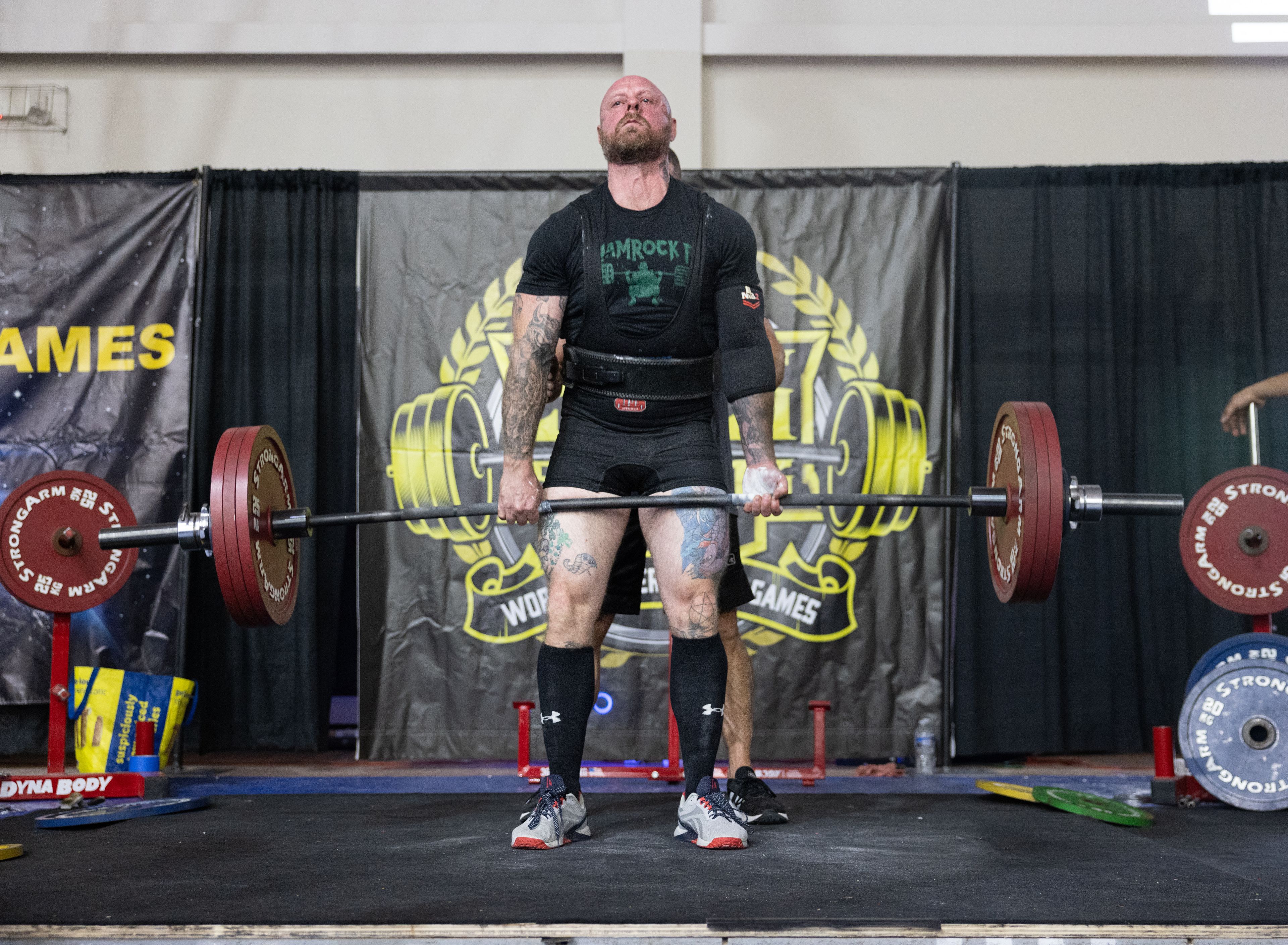
First, cut Monday: drop a set or lighten the 5×5 so you arrive on Friday recovered. If Friday still stalls, change its target from a set of five to heavier, shorter work: triples, then doubles, then singles.
- Check sleep, food, and missed sessions. A weekly-PR program exposes these first.
- Reduce Monday: try 4×5 or 3×5, or use lighter weight.
- Change Friday from 1×5 to triples, then doubles, then singles.
- Keep intensity-day deadlift work under five total reps.
- If both levers are exhausted, move to multiweek cycles.
A common Friday sequence is 2×3, 2×2, 5×1, then 3×1; you can reset lighter or advance after that (Lift Vault’s Texas Method program). The intensity-day options also include ascending singles or doubles and sets across. Use RPE, the 1–10 effort scale to judge Monday’s effort rather than turning every set into a grind.
Check whether the program is the real bottleneck once you have ruled out sleep, food and missed sessions, before rewriting Monday.
How long should you run the Texas Method, and what comes next?
Run it as long as Friday keeps producing records after you’ve adjusted Monday and moved through triples, doubles, and singles. Most lifters get a few months from it; when weekly PRs stop despite those changes, move to a program that tests every few weeks instead of forcing more Fridays.
- Still setting records: Keep running the program while you can recover.
- Weekly records have stalled: Try Wendler’s 5/3/1 and its training max, which raises the max by 5 lb (2.3 kg) for upper-body lifts or 10 lb (4.5 kg) for lower-body lifts per cycle (Jim Wendler).
- Your main goal is physique: Choose an upper/lower split with more sets per muscle.
Use the quick, one-tap diagnosis if you’re unsure whether recovery, Monday’s workload, or the weekly testing schedule is holding you back. It can help you identify the next adjustment that fits the pattern you’re seeing.
FAQ
How does the Texas Method work?
It runs on a weekly loop. Monday’s volume day, 5×5 at roughly 90% of your best five, creates stress; Wednesday’s light day, squat 2×5 at about 80% of Monday, supports practice without adding much fatigue; Friday tests adaptation with a new five-rep record (70’s Big).
How long should you do the Texas Method?
Keep going while Friday records continue after you trim Monday’s volume and move Friday through triples, doubles, and singles. Most lifters get a few months from it (Lift Vault); when records stop despite both adjustments, move to a program that tests every few weeks.
Is the Texas Method good for building muscle?
It’s a strength program first, with about eight weekly squat work sets and fewer press sets, and no direct arm or shoulder work. Size gains depend partly on eating enough; if muscle size is your main goal, an upper/lower or push/pull/legs split with more weekly sets per muscle is usually a better fit.
Should I do the Texas Method right after Starting Strength?
Only when linear progression is genuinely over: you’ve microloaded, rested longer, and reset, but a lift still stalls. Starting Strength’s official guide lists the Texas Method as an intermediate example. You can move lifts over one at a time as each one stalls.
Written and maintained by LiftDecode. Training and nutrition education for healthy adults, not medical advice — if you have a health condition or an injury, talk to a professional who can examine you.